Surprise at the price of holidays: why is tourism becoming more expensive?
The World Economic Forum places Spain as the third most attractive and, at the same time, sustainable destination

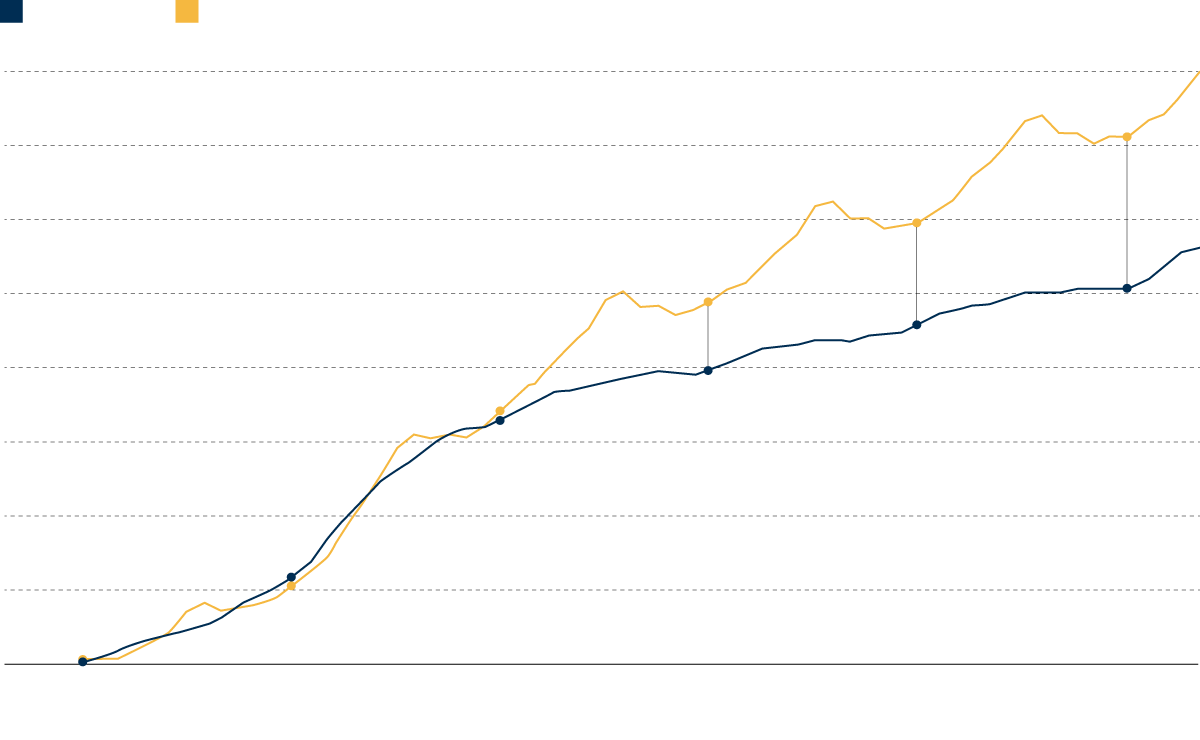
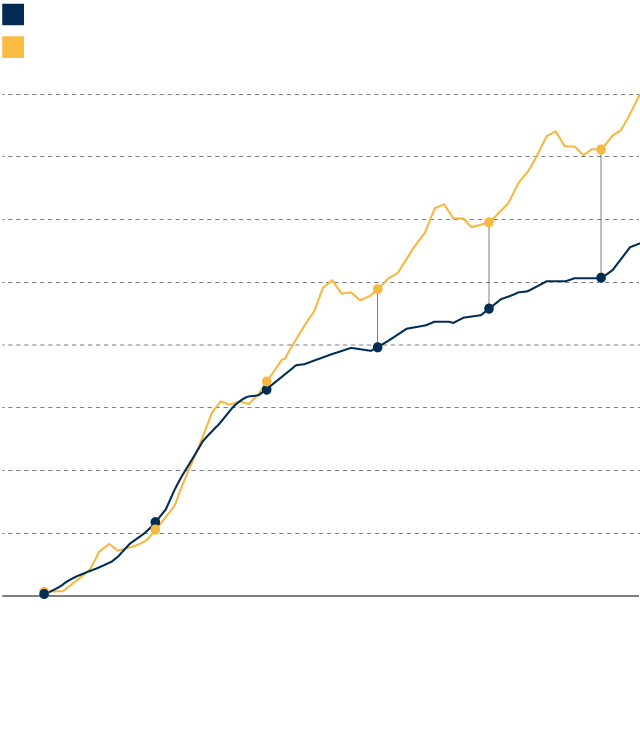
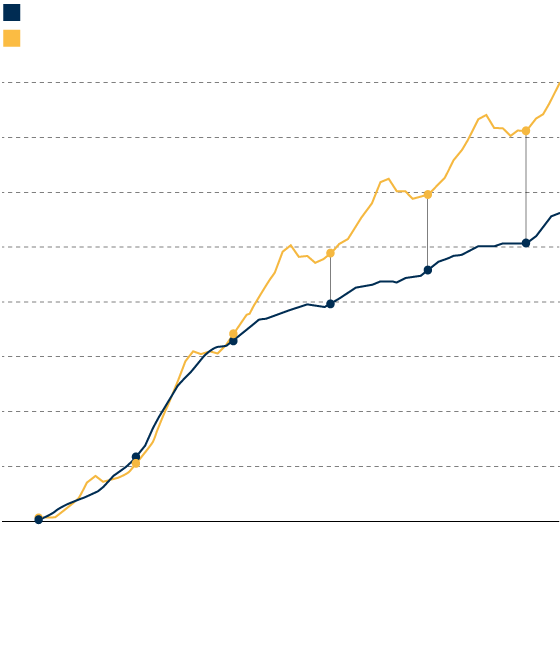
BarcelonaThe World Economic Forum puts figures to the feeling that traveling is becoming increasingly expensive. The organization that gathers the elite of the global economy and politics in Davos warns that, since 2024, tourism prices have soared above inflation in 75% of destinations, according to a recent report consulted by ARA. The Travel & tourism development index 2026 concludes that the tourism sector worldwide has lost price competitiveness in the last two years, even though the influx of visitors on a global scale has continued to grow.
General CPI
CPI for catering and accommodation services
140
+10.24
135
+6.78
130
+4.63
125
120
+0.59
115
110
105
-0.52
+0.03
100
Jan 2021
Jan 2022
Jan 2023
Jan 2024
Jan 2025
Jan 2026
Note: Index prepared by the WEF based on a selection of countries determined by data relevance
General CPI
CPI for catering and accommodation services
140
+10.24
135
+6.78
130
+4.63
125
120
+0.59
115
110
105
-0.52
+0.03
100
Jan
2021
Jan
2022
Jan
2023
Jan
2024
Jan
2025
Jan
2026
Note: Index prepared by the WEF based on a selection of
countries determined by data relevance
General CPI
CPI for catering and accommodation services
140
+10.24
135
+6.78
130
+4.63
125
120
+0.59
115
110
105
-0.52
+0.03
100
Jan
2021
Jan
2022
Jan
2023
Jan
2024
Jan
2025
Jan
2026
Note: Index prepared by the WEF based on a selection of
countries determined by data relevance
Price is one of the seventeen pillars analyzed by the World Economic Forum (WEF) to evaluate the suitability of 110 countries as tourist destinations: it also takes into account, for example, infrastructure, environmental sustainability, and the impact on the local economy. According to Esade professor and lecturer at the Pompeu Fabra University business school (UPF-BSM) Josep-Francesc Valls, "for the first time, this report makes it clear that tourism is no longer the same as before" because, "until now, what mattered was the number of tourists and expenditure, whereas now what matters is whether it is an activity that generates economic value for the territory."
According to the WEF, the factors driving prices upward "vary depending on the economy," although it admits that, "possibly," the increase in the costs of energy, food, and labor "contribute" to the generalized price hike. In parallel, the increase in expenses is occurring in a context where demand is increasingly high and many destinations are reaching their maximum capacity to absorb it, so companies can pass the cost increase on to the final price without fearing the loss of clientele.
Beyond prices, the investment made by the tourism industry continues to remain below the demand the sector receives, despite improving compared to a couple of years ago. The WEF believes that the deficit will continue until the year 2033 and reminds that tourism "depends on capital-intensive and long-term assets," such as transport infrastructure, accommodation, and points of interest. "If investment does not keep pace with demand, pressures on maximum capacity, costs, and localized overcrowding may intensify," the report concludes.

Best and worst destinations in terms of prices
According to the Travel & tourism development index 2026, the most price-competitive destinations are Egypt, Kazakhstan, Malaysia, Nepal and Indonesia –which includes Bali, one of the most iconic destinations in the Indian Ocean–. The top of the list also includes powers such as India, Vietnam and the Philippines, although what abounds most are less common destinations, such as Algeria, Angola, Pakistan, Bangladesh, Nigeria, Oman and Azerbaijan.
To reach this conclusion, the WEF assigns a score with two decimals between 1 and 7 and, the higher it is, the better positioned they are in the ranking. It takes into account the cost of hotels, tourist apartments and fuel, and the parity of tourist prices in relation to the purchasing power of the local population.
The least price-competitive destinations are Switzerland, Iceland, Israel, Ireland and the United Kingdom. Occupying the last positions on the list are advanced economies such as the Netherlands, Denmark, Italy, Singapore and Greece. Spain occupies position 88 out of 110, ahead of competitors on the northern shore of the Mediterranean.
Spain, on the world podium
Despite not standing out for its prices, Spain is the third best-positioned tourist destination. In line with previous studies, the WEF has assigned it the highest score after Japan and the United States. The entity points out that advanced economies "continue to set the pace" – accounting for nine of the top ten positions – but warns that economies in the Asia-Pacific region and emerging economies "are gaining ground," thanks to prices, natural resources, and sustainable patterns.
Valls maintains that Spain is "one of the world's great attractions," but expresses "grave concern" over the poor score it receives in the area of sustainability of tourism demand, that is, ensuring its continuity. "It does not mean that we offer more expensive prices because the services are also expensive, but rather that, in the state of maturity of tourism in Spain, our costs are very high," he laments.
The paradigmatic example is the new climatic conditions, from high temperatures to drought, passing through fires and torrential rains. According to this expert, "the tourist does not flee from climate crises, but rather, if they are managed well, they return."
"Spain has an extraordinary tourist offer: infrastructure, services, natural and cultural resources... but, on the other hand, the capacity for all this offer to maintain demand is not clear, nor is it clear that it is capable of having a socioeconomic impact on the territory."
Focus on the protests in Barcelona
The World Economic Forum reminds that "the increase in visitors does not automatically translate into socioeconomic improvements" and that the creation of skilled jobs and GDP multipliers have been "more modest" than the volume of activity recovery after the pandemic.
The organizer of the annual Davos meeting argues that "managing tourism growth is just as important as generating it." The only "anti-tourism protests" it explicitly mentions in the 83 pages of the report are those in "Barcelona, the Balearic Islands, and the Canary Islands." According to the international organization, they "illustrate the growing debate on how to manage the increase in tourism in the most popular destinations," where the industry's impact on housing, overcrowding, and local quality of life "can provoke opposition" from the citizenry.
