Only half of the salary increases for inflation reach workers, according to Pimec
The Catalan employers' association denounces a "hidden tax increase" due to the refusal to deflate personal income tax

-
CAT -
CAST
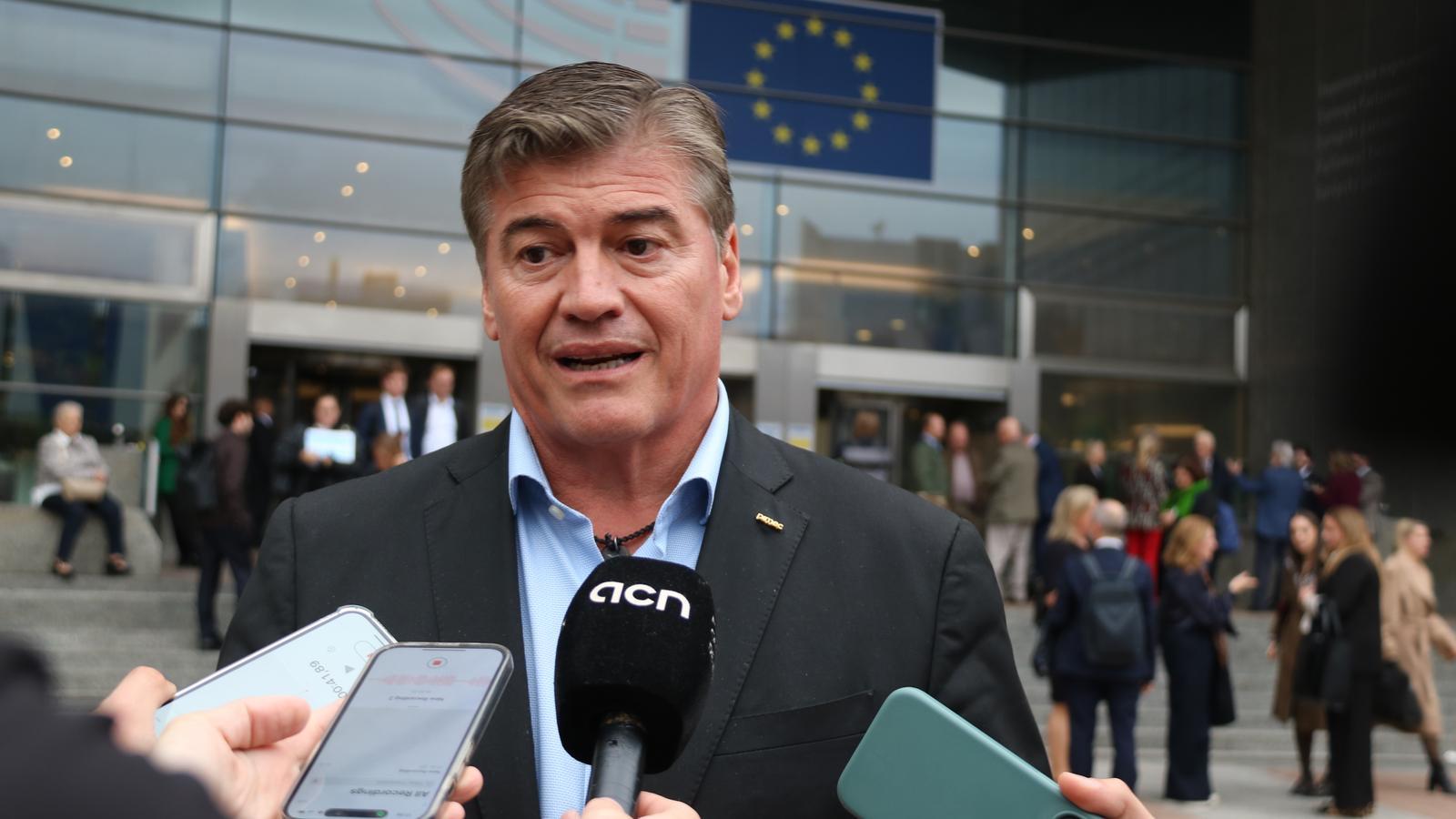
BarcelonaAn important part of the costs that companies assume to improve salaries in line with inflation is not reaching the pockets of workers. This is how the Catalan employers' association for small and medium-sized enterprises, Pimec, details it in a report published this Thursday dedicated to the so-called "fiscal drag, or progressivity in the cold. It is the dysfunction that arises when salary increases associated with price increases do not have a fiscal replica in the form of IRPF deflation. "A perversion occurs, and that is that we raise salaries, but this does not translate into more purchasing power," denounced the president of the business association, Antoni Cañete.
According to the study, for every 100 additional euros of labor cost assumed by the company to absorb salary increases, the worker receives between 48 and 56 euros; while the remaining 44 to 52 euros end up in public coffers. Thus, a net improvement of 100 euros per month in the payroll represents an expense of between 180 and 210 euros. The trend is exacerbated by the intense salary increases that have recently been applied to balance price pressures, which already exceed 22% in the last five years, according to the document.
From the employers' association's Economy and Taxation committee, they have warned that, with the current format, not only does the expense per worker increase with salary increments: the effective IRPF rate applied to labor income has also increased. According to the study, presented by the committee's president, Sílvia Gabarró, the tax burden on salaries has increased by between 1.3% and 3.2% between 2020 and 2025, a period that concentrates the inflationary pressures caused by the war in Ukraine.
A "silent tax hike"
According to Gabarró, this imbalance particularly affects lower incomes: salaries of 18,000 euros per year, with the increases applied to balance inflation in recent years, contribute 167% more to public revenue compared to the deflated alternative. The relative increase is more modest in middle and high incomes: real contributions rise by 18% compared to indexed ones in the case of salaries of 25,000 euros per year, and by 14% in the middle-high bracket, of 35,000 euros per year. "It is a silent increase in taxes," reasoned Gabarró, who called for a complete deflation of personal income tax to undo the grievance.

The increase in effective rates responds, according to the employers' association, to the freezing of contribution brackets; but also to other factors that remain intact, such as the minimum tax-exempt amounts or personal bonuses, which also do not scale with salary increases. Overall, workers would be losing between 2.8% and 4% of their purchasing power due to this paradox.
"It is a silent increase in taxes," reasons Gabarró, who calls for a complete deflation of personal income tax to undo the grievance. Cañete, for his part, has pointed out as "absolutely unfair" that companies "make a salary effort that benefits the Treasury, and not the workers." "It is unfair and makes us less competitive"; concluded the president.
