"It is unacceptable": member states lash out against Spain for linking EU enlargement to Catalan
The debate has lasted seven minutes and Germany, Sweden and Lithuania have replied to the Spanish executive

-
CAT -
CAST
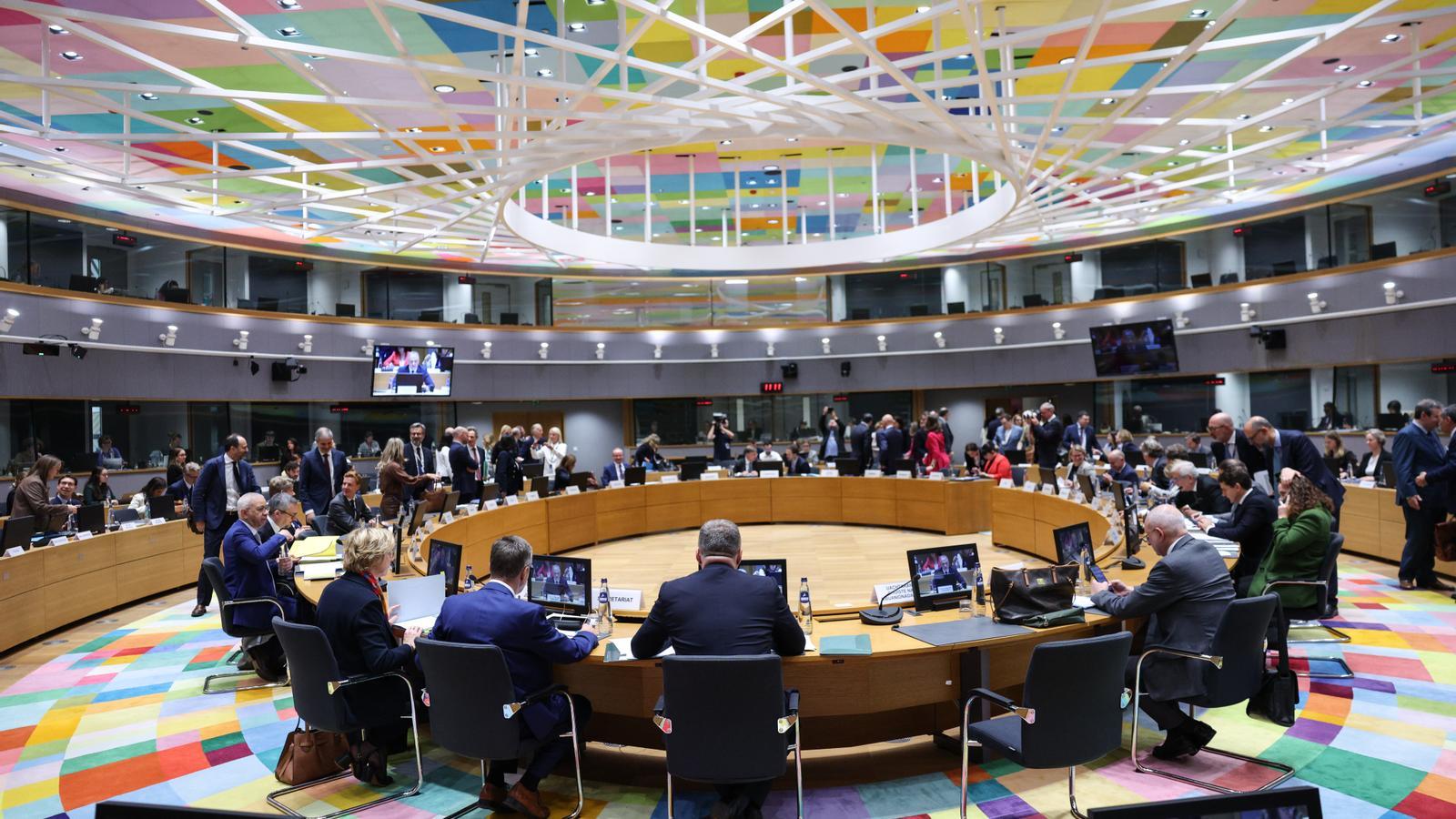
BrusselsSpain has returned to bring this Tuesday the official status of Catalan to the European Union. As the Minister of Foreign Affairs, José Manuel Albares, had already announced, the Spanish executive has explained to the EU General Affairs Council that it links the recognition of Basque, Galician, and Catalan to the accession of new states to the community club. It considers it "unthinkable" that another language be added to the official regime of the EU (such as Montenegrin or Albanian) if the official status of the co-official languages of the Spanish state has not been accepted beforehand.
The proposal, however, has not pleased the member states. Germany, Sweden, and Lithuania have criticized the Moncloa for conditioning the expansion of the EU on the recognition of the languages. All three countries took the floor during the debate at the Council, which lasted only seven minutes, to reply to the Spanish executive, according to what diplomatic sources explained to ARA. "It is unacceptable," asserted the Lithuanian representative, Sigitas Migtus, in response to a question from this newspaper. In the same way, the Swedish minister defended that the entry of new countries into the European club "is one thing" and that the discussion about Catalan "is another."
Berlin, which had already put spokes in the wheels of the initiative, has asked Spain for "a little more European spirit" when using the entry of new countries as a bargaining chip to "obtain better conditions." "I do not agree at all, because we have a responsibility towards this Europe," asserted the German minister, Gunther Krichbaum. The leader questions whether the Moncloa's request has anything to do with the integration policy, and for this reason, he defends that "it should not block or stop the accession process."
The Spanish executive has defended before the rest of the member states that Catalan must be official before languages like Montenegrin or Albanian, which have far fewer speakers. "It is time to put an end to a discrimination that affects 20 million people," emphasized the Spanish representative, secretary Fernando Sampedro, in statements before the meeting. Nevertheless, the number two of the Ministry of Foreign Affairs has avoided making the recognition of the languages a red line and has limited himself to saying that he trusts they will be recognized "before other member states are incorporated."
The initiative is generating "broad understanding" among the majority of member states, according to Moncloa. In a statement released after the meeting, the Spanish executive claims to have appealed to the motto "United in diversity" to defend an issue it considers "a priority," and remarks that no partner has rejected the proposal.
Without momentum and at an inopportune moment
Spain is putting this issue back on the table for the first time since the last debate among European ministers in July 2025. This time, it coincides with the budget negotiations in Congress, in which Pedro Sánchez's government needs the support of the Catalan pro-independence parties.
The initiative for the recognition of the language was already arriving in Brussels without any path forward. In this Thursday's debate, the matter was not put to a vote nor was any binding decision taken. Sánchez's executive limited itself to presenting its vision to the rest of the partners. But for it to be approved, the unanimous support of the Twenty-seven would first be needed. A milestone that, at this moment, remains far off for the Moncloa.
The Palau de la Generalitat also defends Spain's action in the EU. "There had never been such a forceful and persistent action for Galician, Basque, and Catalan in the European sphere. No government had ever put so much pressure on European institutions," argued the government spokesperson, Sílvia Paneque. However, the Minister of Territory also acknowledged that for the moment there are some countries that "have doubts about this issue" and which "have not been convinced."

