Lagarde warns that Europe cannot miss the AI opportunity
The president of the ECB considers that the barriers that slow down business growth must be eliminated
-
CAT -
CAST
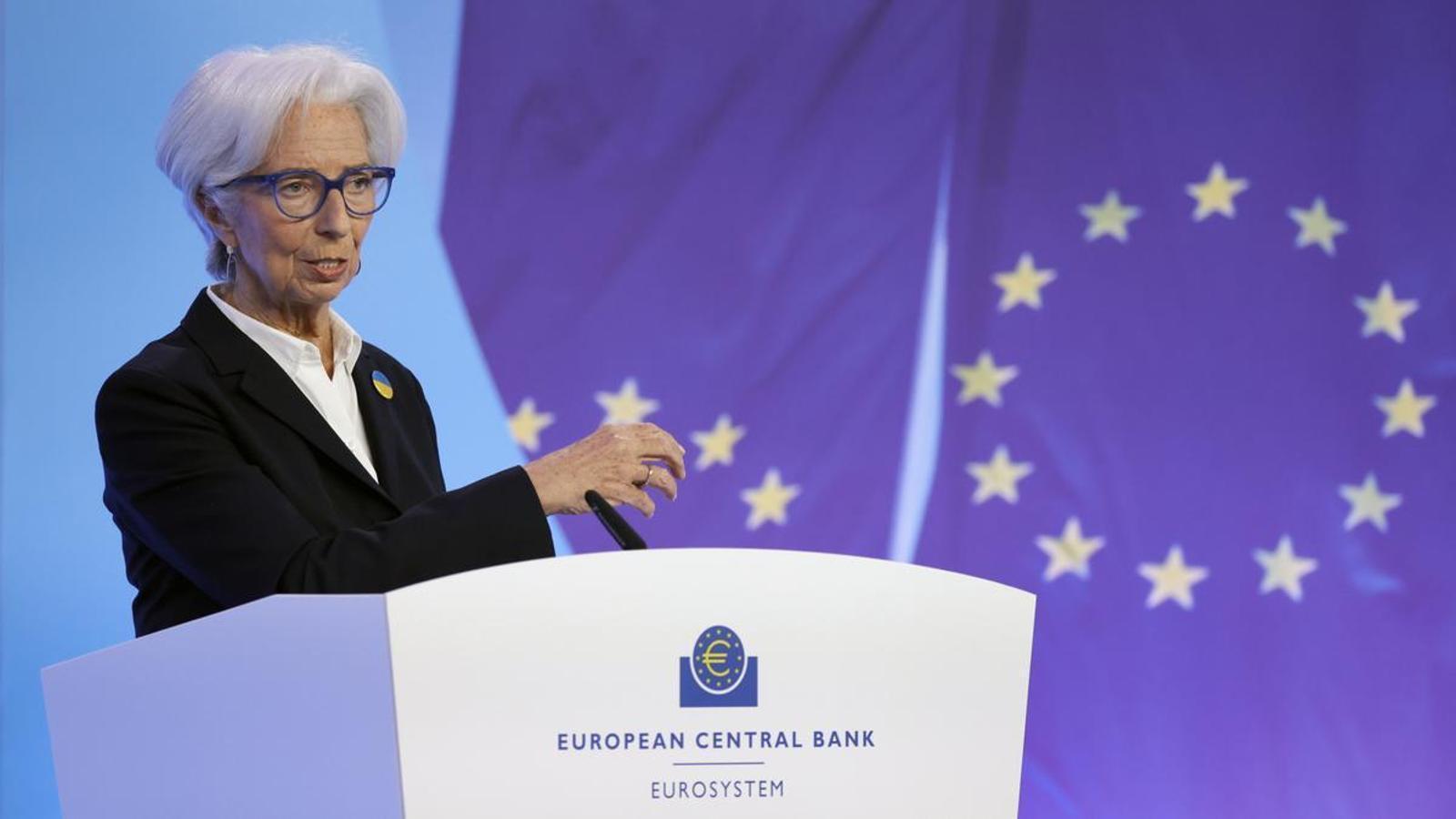
BarcelonaChristine Lagarde, President of the European Central Bank, assured this Wednesday that the European growth model of recent decades, driven by globalization, cheap energy and a stable world order, "is eroding". Thus, according to the ECB leader, it is unlikely that the European growth rate will return to what it was before. For this reason, Lagarde has pointed out the need not to miss the revolution that artificial intelligence represents and has assured that, to achieve this, it will be necessary to reduce the fragmentation of the European market to allow for more investment and for companies to gain scale to compete.
Europe was largely left out of the first digital revolution, as the commercial benefits derived from the spread of information and communication technologies were disproportionately captured by other parts of the world, the Frenchwoman recalled during her speech at an event of the World Economic Forum. "We cannot afford to repeat this experience with AI, the second digital revolution," Lagarde warned.
In this regard, the ECB President considered that Europe has important strengths, including the world's largest network of trade agreements, as well as first-class manufacturing capabilities and a highly qualified workforce. For Lagarde, "the challenge is to turn this internal resilience into a source of more durable long-term growth", which requires better leveraging the scale of the European internal market, allowing companies to grow throughout the EU. "Scale is particularly important," she argued.
Two barriers
"The question is whether Europe can create the conditions for this investment to spread and grow," Lagarde questioned. For the president, the two main obstacles are the fragmentation of the single market, where companies continue to compete too much within national borders, which weakens the competitive pressure to adopt new technologies, and the fragmentation of capital markets, which can end up incentivizing young and innovative companies to move outside the EU. "These two barriers reinforce each other," lamented the Frenchwoman, as fragmented markets reduce the profitability of growth in Europe, while fragmented financing hinders this expansion, resulting in "fewer companies reaching a global dimension" and a slower diffusion of new technologies in the economy.
Lagarde contextualized her words by highlighting that China has advanced in the value chain and now directly competes with the eurozone in almost 40% of the sectors in which Europe has a comparative advantage. At the beginning of the century, she said, they only competed in 25% of sectors. Furthermore, she assured that cheap energy has also disappeared as an advantage for European industry: high energy consumption industries in the European Union are paying, on average, more than double for electricity than in the United States, and around 50% more than in China. In parallel, as she indicated, global trade faces a more restrictive environment, with more than 2,500 trade restriction measures introduced worldwide last year alone, and geopolitical tensions make dependencies and supply chain bottlenecks more visible.
