In Catalonia there are only 38 municipalities without any kind of banking service
The offer of mobile offices has alleviated the lack of branches and ATMs that in 2021 affected 503 municipalities

-
CAT -
CAST
BarcelonaThe tsunami that caused the 2008 financial crisis made hundreds of bank branches disappear and left many Catalan municipalities without these services. As a consequence of this process, in 2021 there were 502 Catalan towns with no access to banking services, 53% of the total, with a population of over 305,000 inhabitants, 3.94% of the total. At the end of 2024 – the latest available data – there were 38 municipalities, 4% of the total, with a population of 11,381 people, 0.14% of the total. The number of municipalities with no such services has been reduced by 92% in this period.
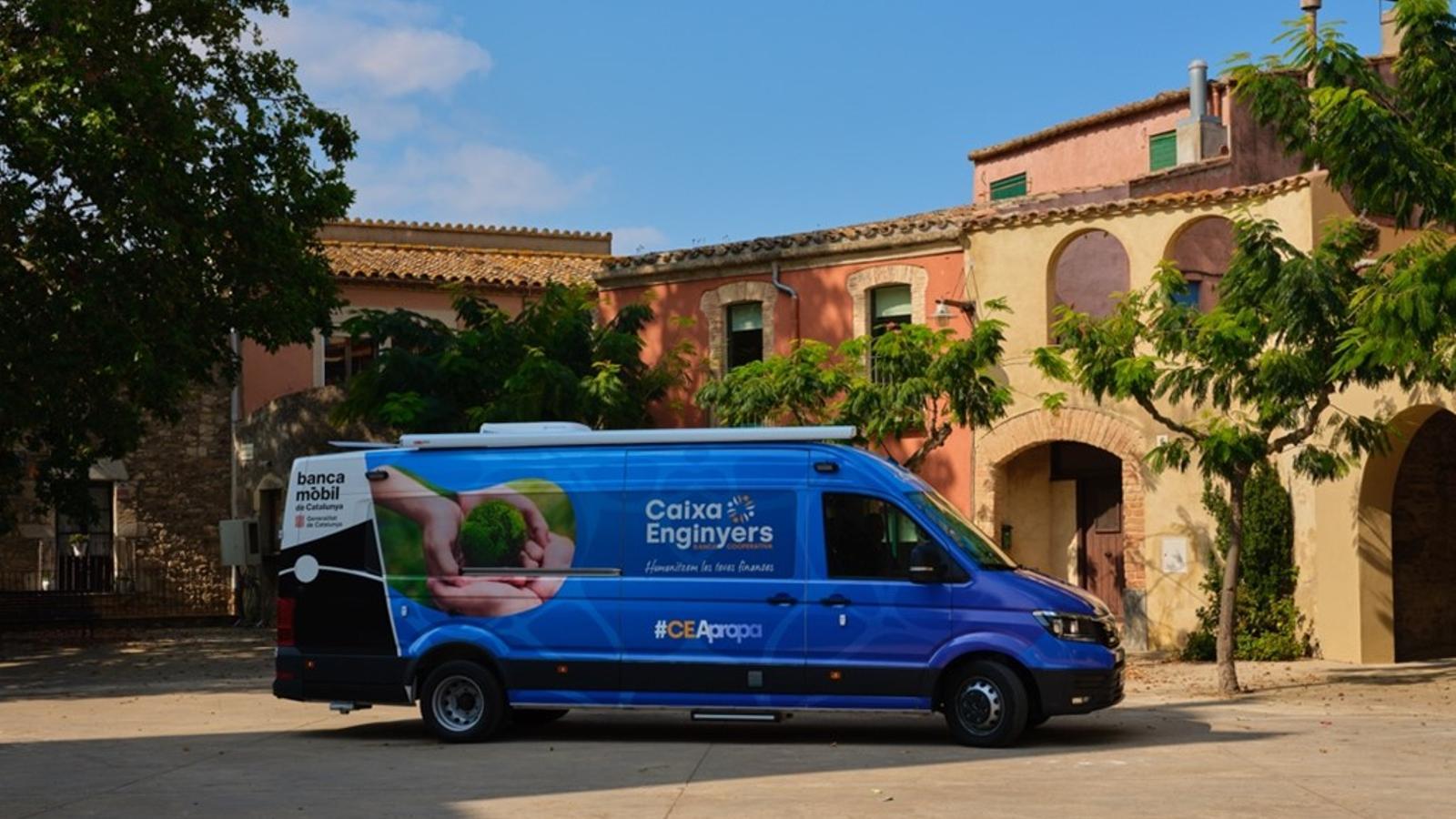
This change occurred due to the public impetus of initiatives such as mobile banking, a service that performs the task of branches using buses that periodically travel to towns that do not have ATMs and which the Generalitat and the Diputació de Barcelona launched in 2024. Thanks to this, Catalonia is currently the autonomous community with the most access points to banking services, with a total of 10,187, which include branches, ATMs, and mobile banks. Only Andalusia surpasses it, with 11,296, according to the latest report on financial inclusion from the Bank of Spain.
Some of the 38 Catalan municipalities that currently have no service whatsoever were offered the mobile banking formula. However, they declined because they have a small population, are made up of several clusters of scattered houses, with no shops or services, and their inhabitants are accustomed to traveling to larger neighboring municipalities that do have all services, including bank branches and ATMs, according to sources from the Ministry of Economy.
In Catalonia, a tender was launched for the provision of mobile banking services to 503 municipalities with a total of 308,000 inhabitants, which were won in 2024 by CaixaBank and Caixa Enginyers. This service is currently provided in 455 locations with a total population of 291,821 people, as some have stopped using it due to a lack of users or for other reasons, according to the Ministry of Economy. During that same fiscal year, the Diputació de Barcelona also launched a similar tender, which was awarded to Prosegur, to provide service to 96 municipalities in the province, with a total of 58,000 inhabitants.
During the 2021-2024 period, which is what the Bank of Spain report analyzes, Catalonia was the second community where access points to banking services increased the most, with a rise of 3.9%. It was only surpassed by La Rioja, with 5.1%; followed by Murcia, with 3%; Castilla y León, with 1.99%, and Navarra, with 1.4%. In 2024, the last year of the analysis, the number of banking access points grew in Catalonia by 4.3%, in Castilla y León by 1.6%, thanks to mobile offices, and in the Balearic Islands by 1.37%. In the rest of the autonomous communities, it decreased.
Only the Community of Madrid and the Region of Murcia have physical access points in all their municipalities. "Catalonia has experienced a very significant improvement in accessibility in recent years," according to the report. Conversely, Castilla y León and Aragón have the largest number of municipalities without access, mainly due to their low population density, although the situation has also improved in both cases, it adds.
In general, Catalonia, along with Andalusia and Madrid, the most populated autonomous communities, are the ones with fewer credit institution offices per 100,000 inhabitants, according to data from the Bank of Spain. And, on the other hand, territories like Extremadura, La Rioja, or Aragon, with less or more dispersed populations, are among those with more. However, in any case, both in the former and the latter, the reduction of networks and supply has been drastic since 2008, the year the financial crisis broke out.

Then, the network of bank branches exceeded 45,000 throughout Spain, with a ratio of 99.02 per 100,000 inhabitants, while last year with about 17,000 it fell to 35.03, a drop of 65%. And during this period, the number of inhabitants has grown by about 2.8 million, more than 6%. In this period, Catalonia has gone from more than 8,000 physical branches and a proportion of 110.64 per 100,000 inhabitants to 25.66, with a total of 2,085 branches, an even greater decrease, of more than 76%. The inhabitants are almost 800,000 more, 10% more. The disappearance of the 10 savings banks that existed in Catalonia has had a lot to do with it, to which the cutbacks by banks were added. We have gone from an era when bank branches were side by side to having to walk much further to find one and having to ask for a number, like when you go to the doctor.
