Government measures curb price increases in April
The cost of living this month has risen by 3.2% annually, two tenths less than in March

-
CAT -
CAST
BarcelonaThe fiscal measures to reduce the cost of electricity and fuel approved a month ago by the Spanish government have had a positive effect on the prices of goods and services consumed by families, which has allowed to moderate the inflation that had soared in March as a consequence of the energy crisis derived from the war in Iran.
Thus, prices have increased this April by 3.2% compared to a year ago, according to advanced data from the consumer price index (CPI, the indicator that measures the evolution of the cost of living) published this Wednesday by the National Statistics Institute. This increase represents a decrease of two tenths compared to the 3.4% registered last month.
But where the moderation of inflation has been most noticeable has been in the monthly rate. Between February and March, the CPI increased by 1.2%, while between March and April it has done so at a significantly slower pace, of 0.4%.
On March 20, the executive chaired by Pedro Sánchez approved two decrees with measures to alleviate the effects on the cost of living that the increase in the price of oil and natural gas caused by the war in the Persian Gulf was having. Thus, given the escalation of electricity and gas bills and fuel prices, the Spanish government cut the VAT on electricity and gas from 21% to 10%, in addition to suspending or reducing other special taxes on electricity.
Similarly, it reduced VAT on fuels and approved aid for professional groups that use fuels intensively, such as transporters or farmers, and for low-income families. The law was validated by Congress, unlike a second decree that froze rent prices and which is opposed by PP, VOX, and Junts.
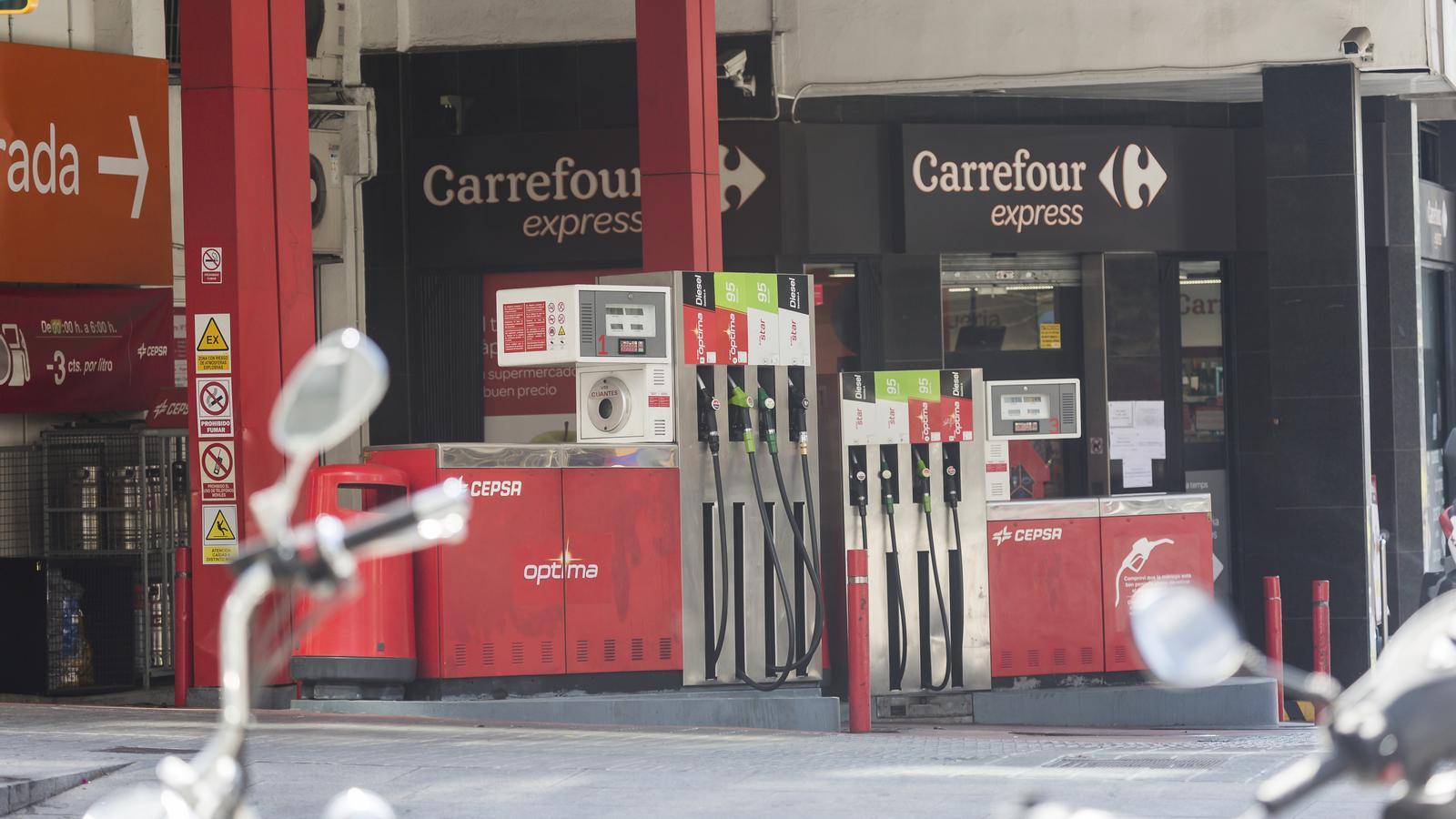
As expected, these measures have had an effect on inflation. Prices have continued to rise, but much more slowly than the previous month, when the government's package of measures had just come into effect. Specifically, electricity is the item in the basket of goods and services that makes up the CPI that has had the greatest downward influence on the annual rate, along with tourist packages, while fuels have indeed had an upward effect on inflation.
The Minister of Economy and Deputy Prime Minister, Carlos Cuerpo, has boasted about the effect of the measures and recalled that Spain is experiencing a lower electricity price increase than the European average, a fact he also attributes to the strong weight of renewables in electricity production in the Iberian market: "Spain, since the beginning of the conflict, is the third country in Europe where wholesale electricity prices have grown the least," Cuerpo said in a statement, which "demonstrates the additional element of energy sovereignty and protection provided by the current energy mix in Spain and the high presence of renewables".
The data published this Wednesday by the INE are provisional. The definitive data will be published on May 14, also broken down by autonomous communities.
Possible increase in bank loan costs
The figure of 3.2% places Spain's inflation rate 1.2 percentage points from 2%, the maximum that the European Central Bank (ECB) sets in the medium and long term. Precisely this Thursday, the monetary institution's governing council will meet in Frankfurt to decide whether or not to approve an interest rate hike, a usual measure when prices rise, as is happening now throughout the euro zone due to the war in Iran.
Despite this, the fact that it is an inflation rise caused by an external shock makes it unclear what the ECB's final decision will be. Rate hikes increase the cost for banks to borrow money from the central bank, and these end up passing on part of this increase to the interest paid by their customers when they request a loan, which slows down the economy because it becomes more expensive for companies and families to borrow money from the bank to invest or consume, and therefore, it causes prices to fall.
However, with the experience of two recent inflationary shocks —2022 with the Russian invasion of Ukraine and 2021 due to problems in international supply chains after the pandemic—, the ECB and other central banks now have more doubts about whether raising credit is the most appropriate measure to curb inflation when it is not caused by an excess of consumption or investment, but by factors that have nothing to do with the evolution of the country's economy.
For now, at the last meeting of the body chaired by Christine Lagarde, the ECB councilors opted for prudence and kept rates unchanged, but at the same time the Euribor —the interest that banks pay to lend money to each other and which serves as a reference for most loans in the Eurozone— has risen in anticipation of a possible increase in the price of money.
