Builders demand that Spain be "investor friendly" to create housing
The sector demands "a 180-degree change" to access more land and financing

-
CAT -
CAST
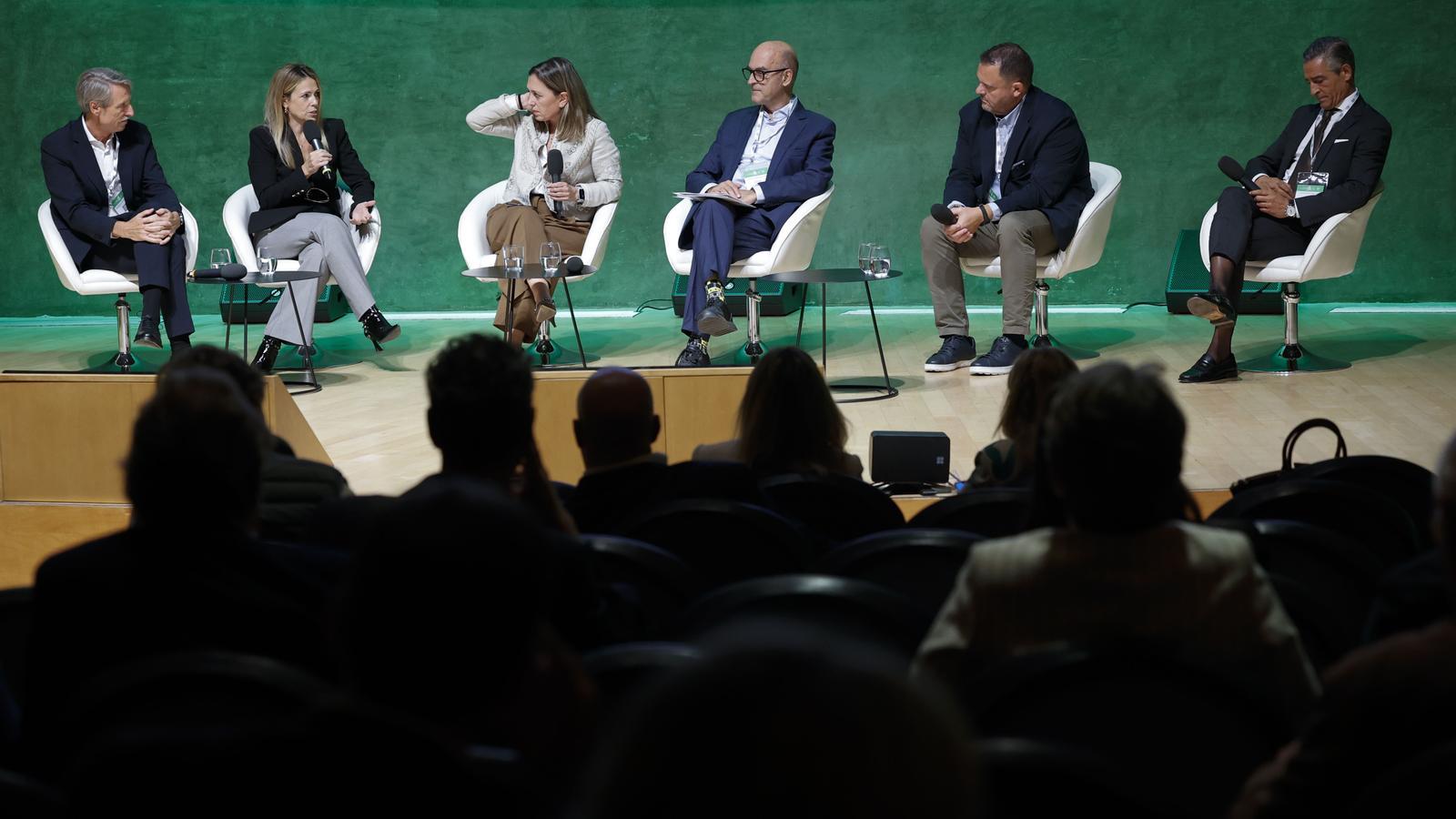
BarcelonaKnowing that a million homes will be missing across the country in two years—according to the Bank of Spain—builders and developers highlighted this Wednesday during the 5th National Housing Congress, held in Barcelona, the obstacles they face in "producing at the rate they historically" had done.
This was stated by the vice president of the industry association for promotion and construction, APCE, Carolina Roca, amidst a dance of reproaches from the various speakers to the governments present in the room. The construction sector has gone from representing 12% of the Spanish economy during the bubble years to nearly 5% today. Roca demanded "drastic and courageous changes" from the representatives of the Spanish executive, the Generalitat, the autonomous communities, and the city councils.
Among the wide range of factors aggravating the housing crisis, Roca highlighted two: on one hand, she demanded doubling land availability—"the law needs to be turned inside out"—and on the other, "come what may, to attract investment." According to Roca, the sector does not have "the necessary capital" to boost supply, and to achieve it, more legal certainty is needed and the State must become an "investor friendly" territory.
In this vein, the fourth deputy mayor of Barcelona, Jordi Valls, referred to investment funds: "We need them. You, as a sector, and us, to seek financing." However, he ensured that he likes some of these funds "and others not," and he distinguished between "those that have patience" and those that "buy a house looking for 20% returns and kick out the neighbors."
In turn, the director general of Housing for the Spanish government, Inés Sandoval, said she trusts that financial institutions "will end up entering" public-private partnership agreements. "Meanwhile, fortunately, we have the public bank, the ICO," she stressed, and boasted about the instruments included in the State Housing Plan to incentivize the creation of supply.
Many reproaches and a meeting point
Among all the divergences noted during the congress between the sector and the administrations, there is one meeting point: exiting the housing crisis implies joint actions. However, the protagonists of the day were the reproaches from the businessmen and the defense of the new regulation by the governments, starting with the two housing decrees that the council of ministers has approved again despite the 'no' from Congress.
"We are part of the solution," claimed the president of APCE, Xavier Vilajoana, at the welcome of the meeting in Barcelona. Sandoval assured that they will not be able to "solve separately" the crisis, and Valls asked to "work together and generate alliances," knowing that sometimes they will "agree and other times not." From the Generalitat, the Secretary of Housing, Lídia Guillén, boasted of the "spaces of agreement and trust" built with the sector to promote the 50,000 Plan.
Instrumentalization of "painful situations"
Vilajoana has lashed out against "people who give their opinions, consult and advise, but who have never built a single home in their life." "I find it quite shameful that painful situations are used to make housing policies," he criticized, in reference to the eviction of Maricarmen Abascal. Instead, he has called for "responsibility": "I would be incapable of deciding how a problem should be fixed if I did not first have all the information and a minimum of experience."
With the electoral call fresh out of the oven, Vilajoana has said that the parties' housing programs "should be practically the same." Mind you, once again he stressed the legal uncertainty that, in his view, builders and developers suffer: "Once the game has started, let no one enter the locker room and say that the rules have been changed."
