Brussels seeks to spur capital to prevent the flight of startups
Commissioner Zaharieva denies that the Twenty-seven are behind in technology and calls on institutional investors to bet more on innovation

-
CAT -
CAST
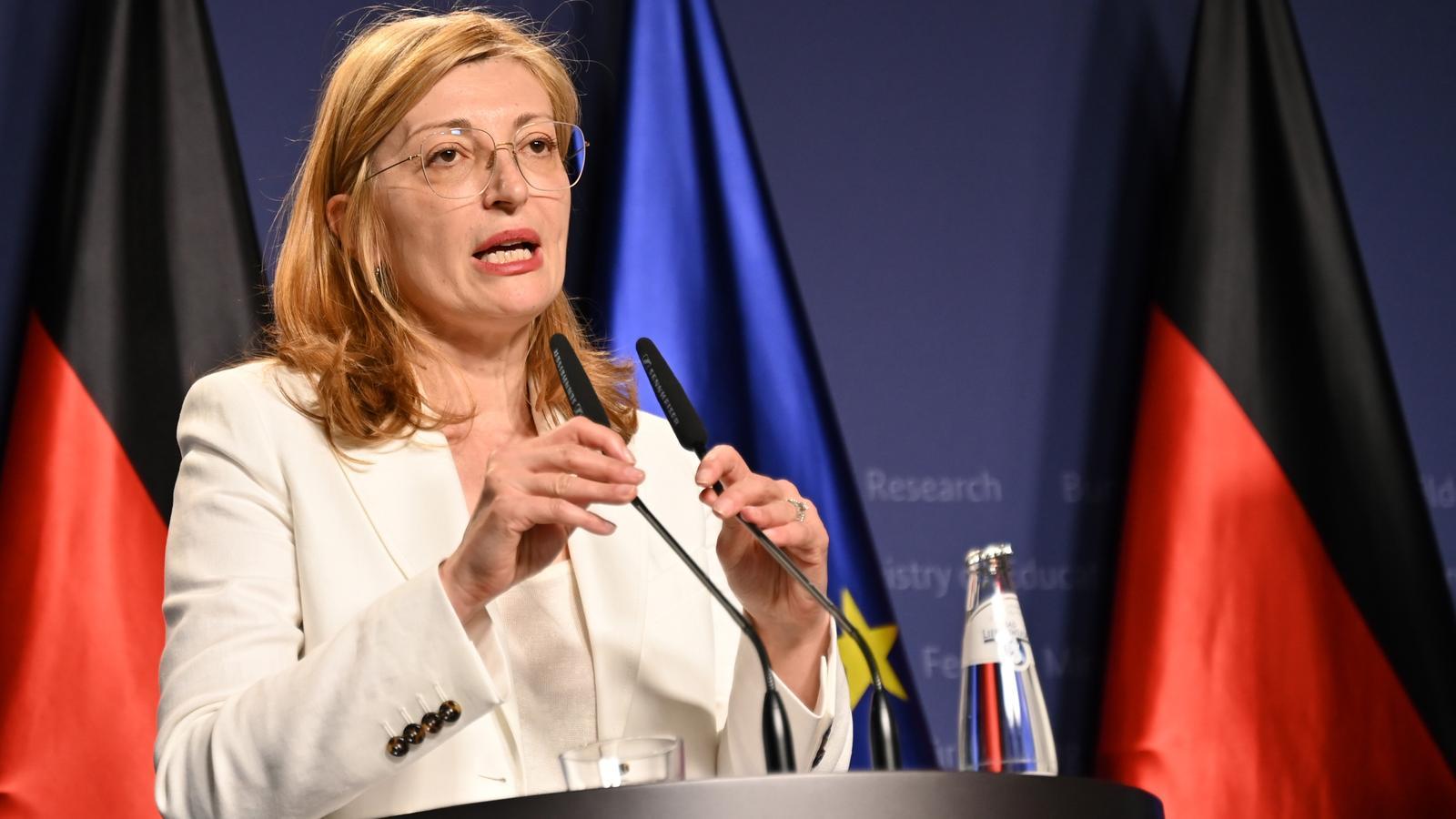
BrusselsThe European Commission is looking for ways to spur European capital to foster its start-up ecosystem. The European Commissioner for Startups, Innovation and Research, Ekaterina Zaharieva, acknowledges a series of obstacles that still hinder the development of innovative sectors in the Twenty-seven. Among the most serious, she has pointed out the regulatory and financial fragmentation of the Union. She has also regretted the lack of venture capital to finance the large rounds and market exits with which many startups culminate their growth. Even more so with the advancement of the startup profile: in the last decade, the startup landscape was eminently digital and service-oriented. Now, with a focus on deep technology, much more capital-intensive, the problem becomes even more serious, according to sources in the technology sector consulted. A technology that, in its development phase, is more than present in the EU: "We have everything we need to lead," Zaharieva states.
In a meeting with journalists in Brussels, Zaharieva – the first to hold the position, created in 2024 – laments the limitations of local venture capital. A suffering shared by European institutions: a senior official from the European Council recently criticized that "companies lack funds for the scalable phase – the stages of greatest growth and size for startups". This wound on the side of community startups stems from the lack of capital to undertake the final rounds of their process, the most demanding in terms of capital. In fact, according to the latest European single market and competitiveness report, the ratio of venture capital investment to European GDP is only 0.06%. According to the same document, this is a tenth of the figure for the US.
The sector confirms that these impediments have, for years – decades, even – been hindering the final stages of growth for local startups. The president of Tech Barcelona and co-founder of Antai Ventures, Miguel Vicente, states in declarations to ARA that the problem has been "especially serious in Spain," because "it has had smaller funds than France, Germany, or the United Kingdom." "We don't have funds with enough muscle for all of this to stay here," he concludes.
The fragmentation of the capital market also anchors the projection of European emerging companies, and defines the attitude of venture capital investors. According to Zaharieva, “many European venture capital firms focus too much on regional investments” and do not have the capacity to become continental. Vicente, for his part, points out that the extreme regulatory diversity of the Twenty-Seven in terms of investment is often the stumbling block: "We need this to be a single market, with the same regulation", to encourage risk investments outside the immediate environment, he says.
"There is no time" for the single market
According to the commissioner, a European savings and investment union would serve to eliminate many of the barriers that emerging companies suffer from. However, the EU does not plan to achieve it before 2028, and the pace of technological innovation makes the date too distant: “We cannot wait until then,” she adds. In this regard, she defends Brussels' investment strategy, through tools such as the European Innovation Council, which has managed to mobilize 3.5 euros of private investment for every public euro activated.
The Commission also has a new vehicle, the Scaleup Europe Fund, of public-private origin, to cover this gap. The new fund focuses on operations of a certain volume, dedicated to companies at key growth moments; and will undertake tickets above 100 million euros. The initiative has 5 billion euros to act as a tractor for particularly demanding financing rounds. Vicente praises the proposal, although he comments that "we need many more, and perhaps some even bigger".
Lack of buyers
Both European authorities and the sector point out that financing is not the only problem: it also becomes complex to reach the final phase of the life of scalable companies, which is the exit. When a business is mature enough to be integrated into a corporation – and leave profits for the funds that have invested in it – European companies often lack the economic capacity to compete. It is a problem, according to Vicente, that "is not sufficiently detected": "The majority of European startups that are sold, are sold to American corporations".
The issue of exits, it must be said, is a potentially even more serious problem than venture capital: through financing rounds, an investor can change the ownership balance of a European startup or scalable company, but the management team normally stays in the region of origin. With an acquisition, "the competitiveness effect does not remain solely in the technological ecosystem; it extends to the entire industry". In other words, large European companies may see that American competitors, or those from other regions with greater investment capacity, escape with community-sourced technology that improves their productive capacity to the detriment of competition.
For the investor and president of Tech, the solution is already given in the Commission's single market strategy: the famous "European champions", sectoral giants that would consolidate through mergers and acquisitions to compete with their transatlantic counterparts. "If instead of having twenty-seven telecommunications companies, we had three, it would be much easier to approach technological acquisitions," he observes. Nevertheless, a regime that spurs continental mergers at the pace the Commission wants has not yet been established.
Saving conservatism
Outside of public reach, Zaharieva highlights the role of institutional investors, such as pension funds, which have a lot of capital, but "do not invest in member states". In this regard, she urges community institutions to "teach" potential investors "the returns and the possibilities of getting involved in venture capital". Among other issues, the commissioner has highlighted the role of the European Innovation Council and the new Scaleup Europe Fund to "motivate institutional investors to approach venture capital"; as well as the collaboration between Brussels and the European Investment Bank to activate this capital. The commissioner herself, however, acknowledges that some national regulations are "too conservative" for these investments to become a reality.
Vicente acknowledges a problem of "management culture" in community institutional funds, historically risk-averse, but also highlights that the Union's financial regulations do not make it easy to mobilize capital in this regard. "It is a problem of risk qualification," she reasons: the regulator is very reluctant to accept that pension funds or insurance companies dedicate resources to this type of product, which is more profitable but less secure. France, for example, circumvented this blockage through the Tibi initiative, which has managed to treat technology as an asset suitable for institutional investors. According to the Ministry of Economy of the French country, the project has already managed to commit more than 30 billion euros since the program began, which has brought together about 176 institutional funds.
