Airlines recommend buying holiday flights as soon as possible
The European Commission is considering increasing the kerosene imported from the US if the blockade of the Strait of Hormuz is prolonged.
-
CAT -
CAST
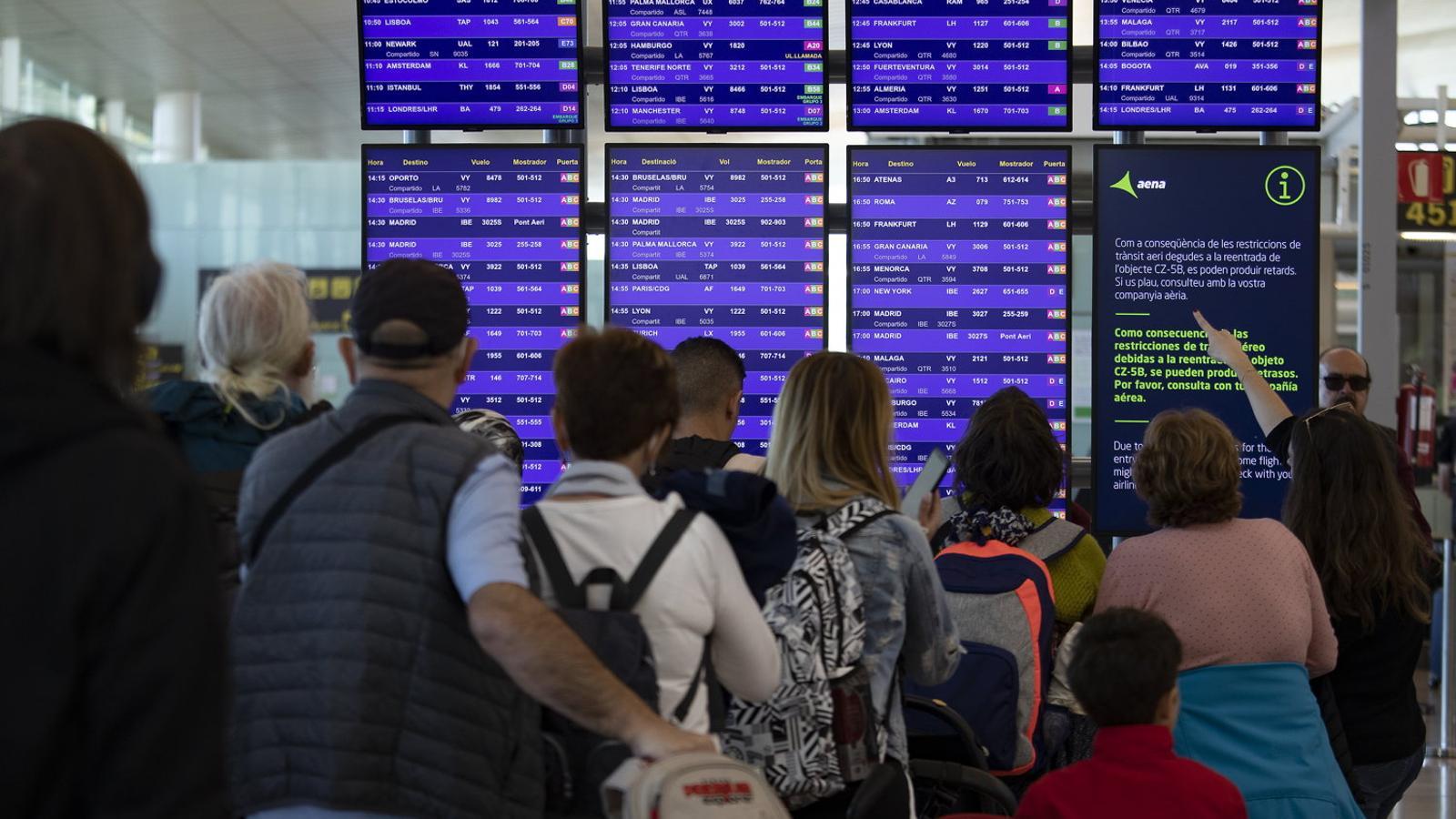
BarcelonaThe war in Iran has fully impacted the aviation sector. With the main Persian Gulf airports threatened and fuel prices soaring, airlines advise buying tickets for this summer with the maximum possible margin to avoid price increases. "The recommendation, as always, is that if you know you will travel this summer, buy as soon as possible," emphasized this Tuesday the president of the Association of Airlines (ALA), Javier Gándara.
The employers' association, which represents 85% of air traffic in Spain, has assessed the current situation as "the highest level of uncertainty ever," although it has not wanted to specify how much tickets may become more expensive. "Prices are set by the interaction of supply and demand: it will depend on how demand evolves and also on how families' disposable income is affected," said Gándara.

What is clear is that fuel is one of the main costs for airlines, representing up to a quarter of their expenses. For this reason, some airlines are announcing that ticket prices will increase, as has already been stated by the low cost EasyJet or the Air France-KLM group. In this regard, Gándara, also general director of EasyJet for Southern Europe, has indicated that the cost of kerosene has soared since the outbreak of the conflict in the Middle East. If previously the metric ton –the unit of measurement for aircraft fuel– stood at 700 dollars, it has now risen to 1,500 dollars.
Today, this item has more than doubled, but ALA emphasizes that Spain has a better kerosene supply than other markets. According to data from the employers' association, of all the kerosene imported, only 11% comes from the conflict zone, unlike other countries with greater dependence. "The supply is guaranteed," Gándara has stated.
With this message, airlines want to allay tourists' doubts amid concerns about a possible kerosene shortage due to the crisis in the Strait of Hormuz. In fact, the historic figure for kerosene consumption in Spain in 2025 is explained by the increase in flights and especially international flights. "It is the result of air traffic increasing by between 5 and 6%," recalls Antoni Peris, vice-president of the Energy Commission of the College of Industrial Engineers of Catalonia, in a conversation with ARA. In addition, the fact that airports such as Barajas in Madrid or El Prat have consolidated as
hubs
, adds the engineer: "They are a hub for South America and Asia and, therefore, operate flights that require more kerosene." The expert recalls that although Europe has a plan to replace kerosene with an alternative fuel such as SAF, which is more "neutral", "companies are barely in the process of incorporating it".
In any case, the Spanish government and the oil sector have also wanted to send a message of reassurance regarding the "guarantee" of the supply of this fuel because Spanish refineries produce 80% of the kerosene consumed in the country.
Safe destination
In this context, Spain and other Mediterranean destinations are positioning themselves as some of the safest, which will lead more tourists to opt for spending their holidays there. A conjunctural effect that the sector already detected with episodes like the Arab Spring.
For the moment, airlines do not foresee cancellations and have scheduled almost 260 million seats for this summer season, which has begun in April and will extend until October. A figure that represents a growth of almost 6% compared to last year.
In the case of Barcelona airport, the predicted increase in seats will be 7.6%, despite the infrastructure being at maximum activity, especially during peak hours in the summer months. "There are still time slots and days with capacity to grow," stated Gándara. Given this limitation in flight operations, airlines, as EasyJet is doing, are opting to bring larger planes to Barcelona, with more seats, and thus be able to continue growing.
Brussels is considering importing kerosene from the US.
Brussels considers importing kerosene from the US.On the other hand, the European Commissioner for Transport also announced that Brussels will create a community observatory to monitor and control the reserves of fossil fuels in the European Union as a whole, and the refining capacity of these by all member states. In the same vein, the European Commission plans to strengthen coordination between national governments, especially when it comes to purchasing fossil fuels from foreign powers and avoiding competition among European partners.
Beyond emergency measures, the head of Transport at the European Commission has once again insisted that the long-term path to achieving the desired energy autonomy and ceasing to depend on foreign powers is to accelerate the green transition. "We have to depend less on the evolution of the global context, and the only way to achieve this is to produce our energy and our fuels here, in Europe," Tzitzikostas remarked.
