BarcelonaOne of the sectors that have reacted most quickly to the Middle East war has been aviation. The blockade of the Strait of Hormuz has sent fuel prices soaring, one of the main costs for airlines, representing up to a quarter of expenses, and cuts have not been long in coming. Airlines around the world are canceling flights and raising ticket prices in the face of the threat not only of an unprecedented increase in kerosene prices but also of supply shortages.
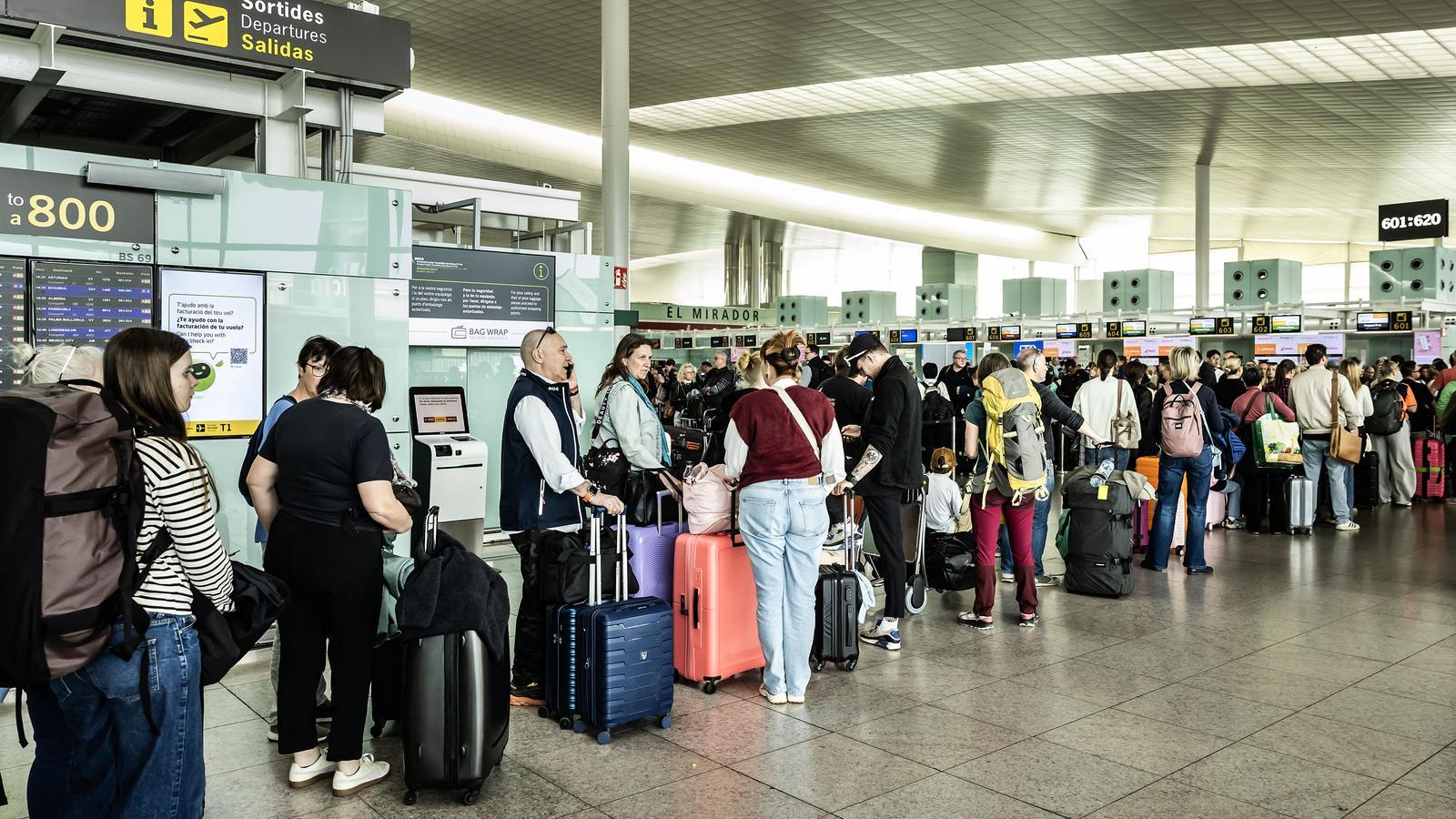
Faced with this scenario, with the summer season already underway, Barcelona airport assures that it is maintaining its planned schedule despite the war in Iran. "At the moment, no reductions during the season are on anyone's table," assured this Friday the chief of staff of El Prat, Vanessa Requena. For now, airlines have not given Aena "any kind of problem," but they are already considering, if the conflict drags on, creating a working group to address the issue. "At the moment, we do not have a situation of concern," remarked Requena.
A message of calm that Brussels is also striving to convey. The European Commission has ruled out an immediate risk of mass flight suspensions due to fuel shortages. "There are no indications of a systemic fuel shortage that could lead to widespread flight cancellations. We are monitoring the situation very closely, also with the International Energy Agency and the sector," said EU spokesperson for Transport and Energy, Anna-Kaisa Itkonen, this Friday.
She said this in response to the International Air Transport Association (IATA), which has warned that, by the end of May, flight cancellations could begin to be seen in Europe due to fuel shortages, as is already happening in Asia. Furthermore, the International Energy Agency (IEA) warned that supply problems could occur in Europe in the coming weeks due to the crisis in the Middle East. According to the IEA, supply from the Asian region accounted for 75% of net jet fuel imports to the European continent before the conflict. However, the Commission has stressed that these estimates refer to Europe as a whole and not specifically to the European Union.
The airlines' reaction: fewer and more expensive flights
With jet fuel prices soaring to 150 and 200 euros per barrel in recent weeks, airlines like Air France-KLM have already warned that they will increase long-haul ticket prices. On the other hand, the Dutch branch of the group, KLM, will cancel 160 flights to Europe in May due to the increase in fuel costs.
A warning that a low cost airline like EasyJet –based at T2 at El Prat– has also issued, which foresees more expensive tickets towards the end of summer, when existing fuel coverages expire. Airlines, especially European ones, have these types of insurances to protect themselves from unforeseen price hikes, but only in the short term.
Protection that U.S. airlines do not have as much. In this regard, American Airlines also plans an increase in baggage fees, considering that it foresees an increase of 400 million dollars in expenses during the first semester alone. On the other hand, Delta announced that it will reduce its capacity by 3.5% and, furthermore, will increase fees for checked bags. Price increases that Asian airlines such as Cathay Pacific and China Eastern Airlines also foresee, which have become the alternative for traveling to Asia from Europe in the face of cancellations and the crisis experienced by Persian Gulf countries with flag carriers like Qatar, Etihad, and Emirates.
US airline JetBlue makes its debut at El Prat airport with a daily route to Boston
Barcelona adds 60 intercontinental routes
Despite the crisis, JetBlue has launched a new intercontinental connection at El Prat airport. The US airline launched a daily route between Barcelona and Boston this Friday, bringing the airport's intercontinental routes to 60. This connection is also offered by Delta and Level. In fact, Level, based in Viladecans, will cut flights to Boston for the summer, not because of the war in Iran, but due to engine supply problems. It will also reduce frequencies to New York, Los Angeles, and Santiago de Chile, and will eliminate the connection to San Francisco.