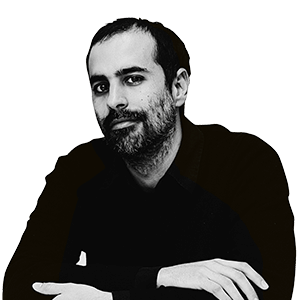
Emmanuel Carrère: "When the mother announced that she was going to die, I immediately started taking notes."
Writer, publishes 'Kolkhoz'

-
CAT -
CAST
BarcelonaKolkhoz, the title of the new novel byEmmanuel Carrère (Paris, 1957), published in Catalan and Spanish by Anagrama, alludes to a communal form of Soviet agricultural exploitation, but, for the Carrère family, the word described the moment when Hélène Carrère de Encausse's three children would gather with their mother in bed to have sex. It is fitting that the title addresses both the history of the Soviet Union and the Carrère family's intimacy, the two axes intertwined in this novel that the writer dedicates to his mother. Hélène Carrère de Encausse (1929-2023), daughter of Russian and Georgian exiles who became the great historian on the Soviet Union in Europe, an expert Kremlinologist and revered in France.
Is writing about a recently deceased mother a writer's way of saying goodbye? A way of invoking her and, why not, making one last tribute? kolkhoz with her?
— Absolutely. In fact, I've written about my mother after her death, but also while she was alive. Ten days passed between the moment my mother told me she was going to die and the moment she actually died. And I started taking notes immediately. I know it might sound intense, but I didn't feel any guilt. I had the feeling it was a magnificent death, with a certain nobility, one of those deaths that crowns a life. And I wrote the notes calmly, because I felt it was a death that needed explaining. It was, in fact, a tribute.
When he wrote A Russian novel (2007), about his collaborationist grandfather, his mother took it as a betrayal and they didn't speak for two years. Here, he was forced to write about his mother's family again. Didn't that cause him any doubt?
— In this case, the mother was already dead, so she couldn't stop talking about it. But that conflicting aspect that arose as a result ofA Russian novel She was no longer present in our relationship. For the past fifteen years, my relationship with my mother had been very relaxed, though she wasn't exactly relaxed herself. But it was a smooth relationship, without difficulties. The big issue had been opened and resolved long ago.
Kolkhoz It begins with your mother's state funeral, presided over by Macron. Your speech becomes almost a summary of the novel. Since you already knew you were going to write a book about your mother, I wonder if you thought, "That will work well for the book."
— No. But that speech was very good. Like all speeches by heads of state, he hadn't written it, of course. In fact, I met the person who had written it and congratulated him. He works for Macron and is a very bright young man. It was a very well-researched and well-written speech, and Macron added some personal touches. But what interested me most, more than the speech itself, was imagining my mother listening to it. My mother had an extraordinary journey through French society. She was a girl who came from a poor, stateless Russian immigrant family with an unpronounceable surname. And yet, she reached the pinnacle of French society, becoming the perpetual secretary of the French Academy. She would have loved to hear him speak.
His father was a secondary figure in his wife's life, always overshadowed by her fame, subordinate to her. In fact, he died shortly afterward. However, in this book, he emerges as an important character, taking up considerable space and significance. Is this an act of reparation on the part of the son?
— Absolutely. And for me, that book was a great surprise. You were talking earlier about the first scene, about the grandeur and splendor of the Republic's tribute. But there's a symmetrical scene, the last one in the book, in which my father walks alone through a village in the Pyrenees. The symmetry relates to the extreme visibility of the first scene and the mystery of the last. And bringing my father back to life, who was invisible his entire life, is the great gift this book has given me.
Your mother inherited her father's contempt for Tolstoy, and you turned War and Peace in her favorite book. She deplored the use of the first person, and you are one of the masters of autobiographical literature. And, against your mother's wishes, you wrote a book about your collaborationist grandfather. Have you built yourself up in opposition to your mother?
— Yes, but it's an opposition that coexists with a very deep similarity and affinity, which I've come to perceive over time. I've received a lot from my mother: a love for literature, for history... These are profound inheritances that don't preclude opposition, and even rebellion.
In the book, you explain that you acquired your passion for truth through your uncle Nicolas. Conversely, you say that your mother had a "curious relationship" with truth.
— My mother was sixteen when her father disappeared, and my uncle was only eight. My mother raised my uncle, and she did so with love and care, but also with lies, telling him that my father had gone on a trip. And a few years later, when my uncle was a teenager, she lied to him again about his mother, who was dying. The situation was complicated for my uncle, with a sister who had raised him but had lied to him. And so, the truth became an obsession for him. He felt great resentment toward his sister, but he couldn't hate someone who had raised him, for whom he felt immense gratitude. My mother bequeathed me many things, but from my uncle, I inherited a taste for the search for truth that, at times, can be obsessive.
He has done several reports on the war in Ukraine. How has his love for Russia and its culture changed as a result of the invasion of Ukraine?
— Love has been frankly affected. Look, I'm not naive either. I never thought Russia was a wonderful country, but it was a country I always viewed positively, and currently, the face Russia is showing is terrible.
Incidentally, how are the son of the great Russian historian and the biographer of received in Ukraine? LimonovA Ukrainian who renounced his country and embraced Russian nationalism?
— It's a problem, a barrier I've encountered. At the same time, the people I know in Ukraine, some of them intellectuals and writers, have an interesting open-mindedness regarding Limonov, and they consider that a book like mine can be a useful tool for understanding fascism. But yes, it's true that some people are surprised that I've written about the subject, but generally it hasn't cost me any friendships in Ukraine.
On Thursday, during a talk at the CCCB, I remarked that Donald Trump was a character from a Philip K. Dick novel. Which writer would Vladimir Putin be a character of?
— The point is that Putin is a much more traditional head of state than Trump. He's a cold, tough, expansionist man with infinite patience... He's an interesting figure, but very traditional from a historical perspective. Trump, on the other hand, is unprecedented. There have been figures like him before, but on a smaller scale, not with that global reach. A character like Trump, so erratic, capricious, cruel, and childish, leading the world, is something we've never seen before. We wake up every morning wondering what new atrocity Trump has committed. Putin, in contrast, while we didn't predict the invasion of Ukraine, is more predictable.
It premiered in theaters this week The Kremlin Wizard, a film by Olivier Assayas, for which you wrote the screenplay based on the book by Giuliano da Empoli about Putin and the advisor who designed his policies. Assayas explains in the ARA that Russia's authoritarian and anti-democratic drift could easily be replicated in any European country. Do you agree?
— Yes. In fact, it's already happening. But there's an aspect that's specific to Russia. We used to think that Russia would move towards Europe. That's what my mother expected, that after the fall of communism, Russia would move towards human rights, democracy... But it didn't happen. It's as if Russia is going in the opposite direction, towards something more archaic and backward. And I think its destiny is very different from Europe's. I don't think there are any European countries that could find themselves in Russia's situation. For starters, they aren't big enough.
You have traveled extensively to Russia. Did you meet people like the protagonist of the film, who is inspired by Vladislav Surkov?
— No, and neither was Surkov. In fact, I didn't even know he existed before reading Giuliano da Empoli's book. The book was a revelation and impressed me. Da Empoli is the first to admit that he doesn't speak Russian and that he'd only been to Russia twice, and that he wrote the book using sources, of course, but mostly with material we could all have found online. His political experience also helped, as he had been Matteo Renzi's right-hand man when he was prime minister in Italy. He says that, ultimately, power is the same everywhere. I disagree, because I think it's not the same in Italy as it is in Russia. For a very simple reason: in Russia you risk your life, in Italy you don't, except in situations involving the mafia.
What he says about Giuliano da Empoli reminds me of what his mother said when she claimed that she researched her history books about Russia by "reading the Pravda"Like everyone else."
— [Laughs] Exactly, "like everyone else"! There's another fantastic phrase of my mother's that goes along those lines. I recommended Giuliano's book to her, and she read it and loved it. And she commented: "When I read this book, it's like I'm reading myself."
In the book, he quotes this definition of left and right made by Françoise Sagan: "For the right, injustice exists and is inevitable. For the left, injustice exists and is unacceptable."
— I think it's the best definition of the division between right and left, even though Françoise Sagan didn't exactly come from the field of political philosophy.
And with which do you identify more, with inevitability or inadmissibility?
— I always place myself in the middle [Laughs]. I think both statements are true. It's like pessimism and optimism. It's inevitable to be pessimistic in your thinking, because otherwise you're a fool. But at the same time, it's necessary to be optimistic in your actions and believe they serve a purpose. Billy Wilder said about the difference between optimists and pessimists that, in 1930s Germany, the optimistic Jews ended up in Auschwitz and the pessimistic ones in Hollywood. It's terrible, but the line is brilliant and true.
Although Kolkhoz It revolves around the lives of your parents, and you also take stock of your own life.
— Obviously, when we see our parents die, we feel orphaned, because we are. They died at 94 and 93, and I was already 64, a reasonable age to become an orphan. And you're left on the front lines, feeling like you're next. The book is imbued with this new existential situation. I don't see it as a testament, but rather as a collection of reflections on the legacy and the transmission of my parents' teachings to me.
In the book, he also mentions his involvement in the film adaptation of his book about Limonov, directed by Kirill Serebrennikov. Are you satisfied with the film's outcome?
— To be 100% honest, I think Serebrennikov is a very talented director who surrounds himself with excellent professionals, but I'm not completely blown away by his work. LimonovBecause I think it presents him as a likeable guy, and that dilutes the reflection on fascism that it contains, perhaps because it's not interested in it.
I kept thinking about what the film would have been like in the hands of his friend Pawel Pawlikowski, the director who was initially supposed to direct the film.
— I was really sorry it wasn't him. I told him, "You're an idiot, you should have directed the film." You might remember that Pawel was the one who changed Limonov's image with that documentary about the Bosnian War, in which he went from being a likeable guy to almost a war criminal. He was practically obligated to direct the film! And after the invasion of Ukraine, he admitted he'd been wrong, that he should have directed it.
One last interesting tidbit. I loved the part of the book where he reminisces about his time as a critic, his passion for horror films, and the hours he spent at the Brady cinema.
— You've been vomited on too, just like Brady did to me?
Not at the moment, fingers crossed. In the book, he speaks passionately about the films of Jess Franco, one of the most prolific horror directors. And I wonder if he knows about the film Pere Portabella made based on the filming ofCount Dracula that Jess Franco filmed in Catalonia in 1969 with Christopher Lee.
— I don't know it! I mean, I haven't even seen all of Jess Franco's movies. I don't think anyone has! [He made over 200.] What's the name of the movie?
Vampire-Cuadecuc.
— I'd love to see it. Send me the link and I'll watch it this afternoon, I have nothing to do.
