The prodigious year of soprano Sara Blanch
The singer from Darmós debuts in the role of Mélisande at La Scala in Milan

-
CAT -
CAST
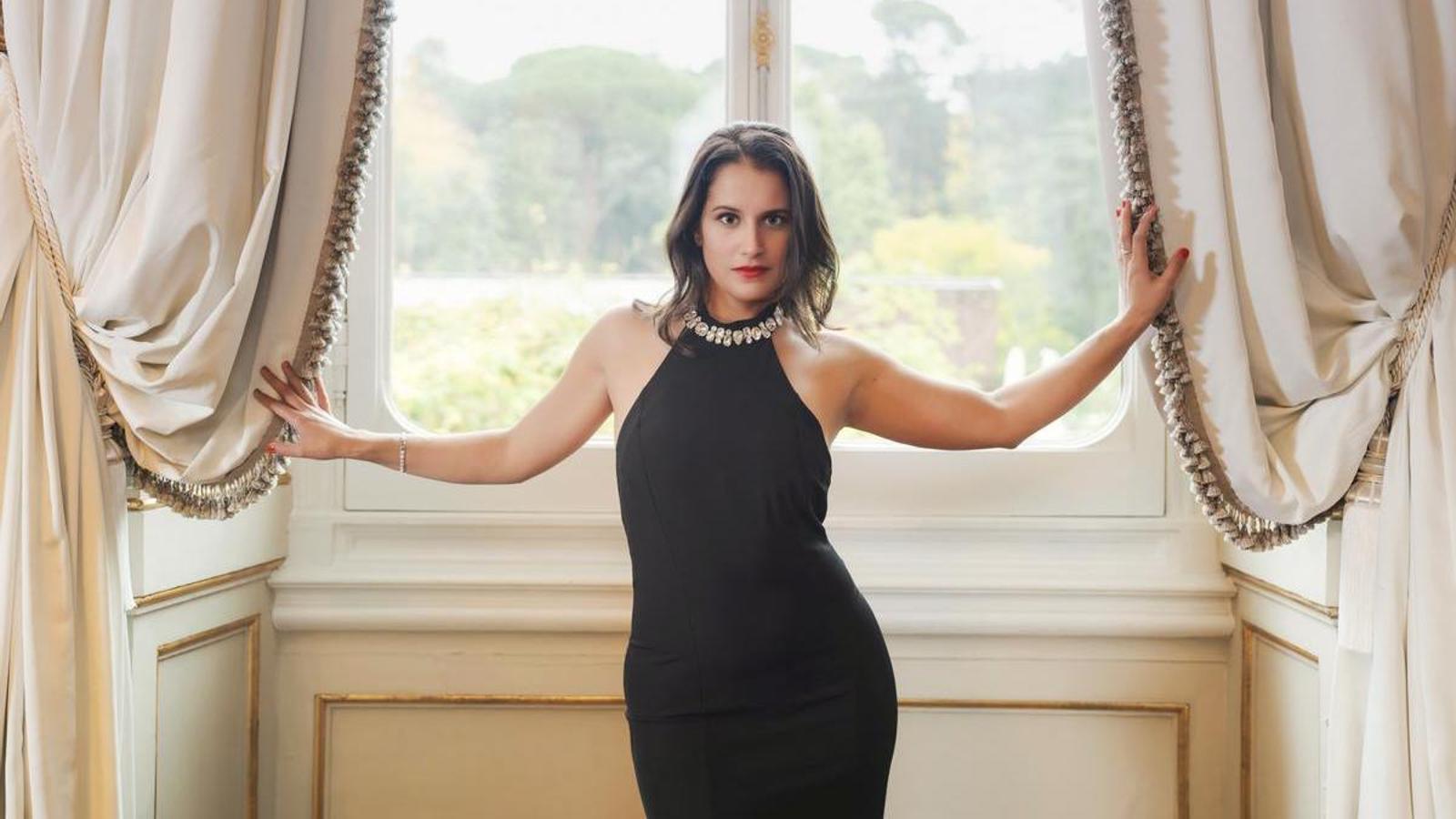
BarcelonaThe National Opera of Paris, La Scala of Milan, the Gran Teatre del Liceu, the Royal Opera House of Covent Garden, the Salzburg Festival, the Peralada Festival... The 2026 agenda is quite eloquent about the magnificent artistic moment of soprano Sara Blanch (Darmós, Ribera d'Ebre, 1989). Until May 9th, she is performing the leading female role in Debussy's opera Pelléas et Mélisande at La Scala, a good testament to the breadth of repertoire that a singer forged in bel canto is tackling, and who at the same time has authoritatively entered the universes of Gluck, Mozart, Richard Strauss, and Britten, among others. "I like to work on different repertoires, as long as they are suitable for my voice, because that way I explore possibilities. It's about looking at the evolution of the voice and where I can go according to the physical and vocal sensations of the moment," she explains to el ARA by phone from Milan. Undoubtedly, 2026 is Sara Blanch's year, a more than deserved reward for the work done and what she can achieve.
The experience as Mélisande, with stage direction by Romeo Castellucci, is being very rewarding. On the one hand, because "it's a different opera that makes you ask questions and reflect" and in which the balance between the vocal and interpretive parts is very important. On the other hand, because it is "a spectacular, quite complex production with immense technical work" that requires the attention of the singers, and because with the Italian stage director, one of the great names in European theater, she works on "the psychological depth of the characters and at the same time perfectly captures the symbolism." It is not the first time Sara Blanch has sung at La Scala, where she debuted in 2024 with L'Orontea, by Cesti.
After Pelléas et Mélisande, Sara Blanch will be the Susanna in Mozart's Le nozze di Figaro, in seven performances at the Liceu from June 5 to 21. She will share the cast with André Schuen, Konstantin Krimmel, Julia Lezhneva, and Adriana González. "I'm really looking forward to it," assures the soprano regarding this production directed by Marta Pazos. Her next engagement will take her to London to play María, the leading role in Donizetti's La fille du régiment, where she will sing with tenor Juan Diego Flórez for the first time. In Salzburg, she will participate in a semi-staged version of Mozart's Lucio Silla, and in Peralada, she will give a lyrical recital with Michael Spyres. "There are so many things this season that I'm taking it step by step," she says.
The Liceu audience, who have always shown warmth towards Sara Blanch, will be able to see her twice in the 2026-2027 season: in January in Puccini's La bohème, where she will share the role of Musetta with another of the great local voices, the Barcelona soprano Serena Sáenz; and in July 2027 in one of the season's most anticipated productions, Mozart's The Magic Flute, as interpreted by choreographer Marcos Morau. Blanch will be Pamina, and Sáenz will be the Queen of the Night, and both star in the photograph accompanying the production's announcement. "We did a session, they did our makeup, put on our costumes and wigs, and photographed us holding onto a broom. Afterwards, they added the fairground ride cart and the tracks [as can be seen in the image]".

Four years ago, Sara Blanch and Serena Sáenz had already alternated a role at the Liceu, that of Norina in Don Pasquale, by Donizetti, a production in which the Rambla theatre placed all its trust in Catalan voices, such as the two of them and also the baritone Carles Pachon. "I have a very, very good memory of that production. First of all, because Norina is a character I had quite internalized, and because it was a good time to enjoy at home and to showcase the talent of local singers," explains Sara Blanch from Italy, the country where she has one of her base camps. "I have a base in Barcelona and another in Bologna, which is where my partner is. When I have work in Italy and Central Europe, I stay more in Bologna, because there is good connectivity. And if I work in France or Spain, I stay in Barcelona and I am closer to my hometown and my parents' house. Let's say I have a toothbrush in three different places," she says.
With an impeccable career and the respect and admiration of fellow artists, Sara Blanch has a small thorn in her side because in the summer of 2025 she had to cancel, for health reasons, a lied recital at the Schubertíada de Vilabertran. "I was really looking forward to it, and I had prepared the program with a lot of enthusiasm and choosing everything very carefully. I hope to be able to do it someday, because it is a repertoire that I really like and I am eager to perform it for an audience," she admits. Of course, she will have to find space for it in an increasingly busy schedule full of great challenges.

