We want a monologue, Empar Moliner
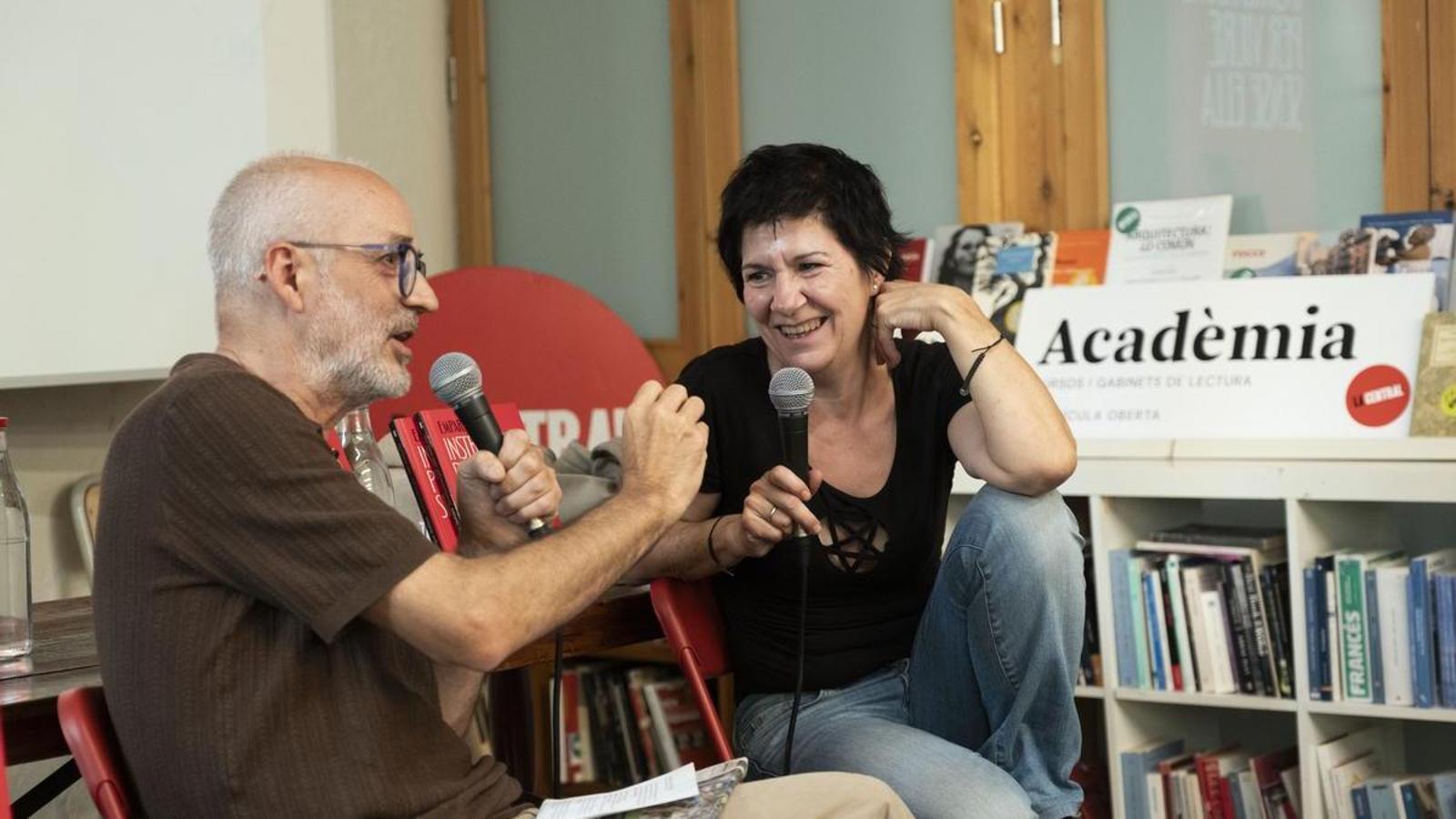
The writer and columnist of ARA debates about article writing with Ignasi Aragay

-
CAT -
CAST
BarcelonaIt seems to me that the event was announced as the presentation of Empar Moliner's latest novel, but no: it ended with the writer performing a monologue standing up worthy of stand-up comedy, telling a story that she assured could only have one ending to be good, a bang-ending, the kind she also uses in her columns for ARA, in her stories, and, I see, in her events. The audience laughed because they felt treated by their favorite writer who, in fact, ended up inviting everyone "to a free hop" at the party we're having for subscribers next week at Damm.
Moliner immediately treated those present with the familiarity that comes from having read and commented on the web for fifteen years – "The readers of ARA are more beautiful," he told them, praising "the intelligent gaze" typical of "the strange endangered race that still reads newspapers" – and announced that Wednesday's event at La Central del Raval would be something else: "Book presentations are on the decline because no one wants to listen to praise, and instead, reading clubs are on the rise, and I find that interesting."
What they did with the deputy director of l’ARA, Ignasi Aragay, was to explain the ins and outs of the columnist's trade, which is the daily job of Moliner and the protagonist ofInstructions for living without her (Group 62). The writer warned that "writing articles is something that can be learned, but it cannot be taught," it's not like a sofrito. To those present who want to try it at home, she only gave them one recommendation and one trick. The recommendation is a trademark of Emili Teixidor: "Keep a diary. Not a day without a line," said Moliner. And the trick is to avoid "palavering." "Everyone can detect yellow journalism. But not everyone detects sappiness, when the author becomes poetic –and here comes the trick—. The bad article writer abuses the paragraph break, because it's like the "crossed out of magicians or the slow motion of a bad movie. They leave the final sentence there alone, to finish it off. Never trust semicolons: they are only used to change the subject.
For Aragay, the key to our columnist is that, in addition to a lot of skill, "she has something very simple: a universal curiosity". That's why they send her to cover now the Pope in Montserrat and now the Tour in Barcelona, because they know she signs up for anything with enthusiasm. "It's a mix of curiosity and boredom. Since you don't want to be bored, you have to write. Curiosity is like taste, it's training. More important than knowing are the desire to know," she said. For Moliner, the "quill has to have a somewhat peripheral vision, look for a different angle, and he gave examples of novelists, such as Vikram Seth or Kazuo Ishiguro. They scattered some literary references like corn that the listeners caught with their beaks.
Aragay cited the letters with an open hand that Oriol Bohigas wrote, while Moliner praised Espinàs' "facts and people, but good". Fuster, Pedrolo and Monzó. Both agreed on a single writer they detest as much as they adore one of his masterpieces: Vargas Llosa and The Feast of the Goat. Moliner did not escape Aragay's flowery language with articles like this week's, which she claims are based on real facts: "There are times you just have to copy, sign, and cash out," the author admitted, taking advantage of Esther Vera's absence from the room.
"Whoever says they suffer..., listen, it would be worse to work!".
