Joan Dausà: "The exquisite might not be interested in us, but there is some truth that is irrefutable"
Musician. Releases the album 'Immortals'
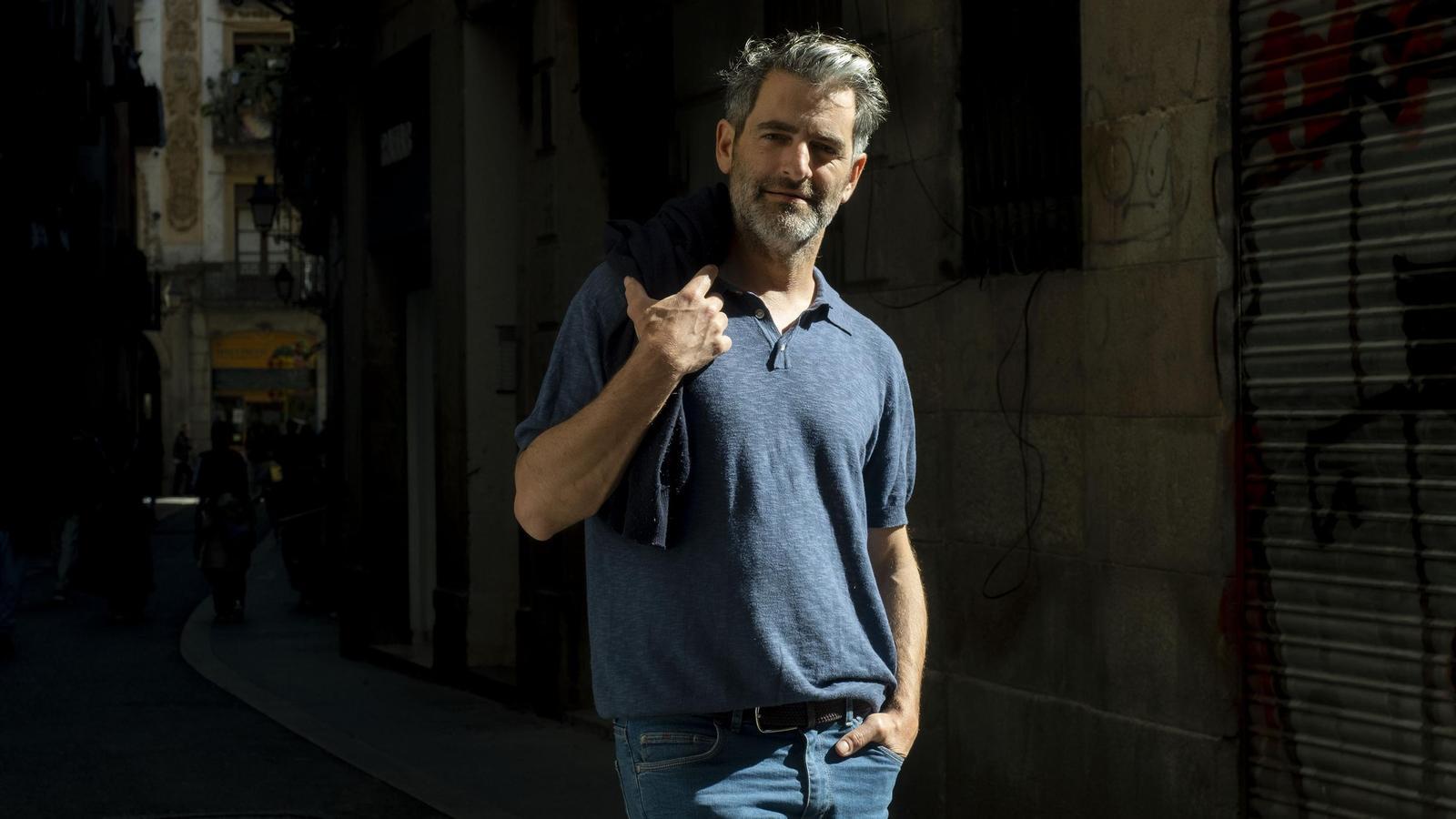
BarcelonaThe injection of self-esteem that filling the Palau Sant Jordi in Barcelona and the Palau de Vistalegre in Madrid meant is very present in the album Inmortales (Promo Arts Music, 2026), produced by Santos & Fluren. From those overcome challenges, and from other circumstances, Joan Dausà (Sant Feliu de Llobregat, 1979) extracts the emotional material for a dozen songs that he will premiere live on April 25th at the Fontajau-Girona pavilion, within the Strenes festival.
Immortal, you say...
— Immortal moments, that last forever and do not die, like the concerts at Sant Jordi and Vistalegre. That's why on the album cover it's me and the audience. We try to repeat moments like this again. It is a statement of intent, and it is an album designed for concerts.
Is this the album with the biggest sound you've ever made?
— I think so. It's a much more worked-out sound than on other albums. Normally, I used to make albums in two or three ten-day sessions in the studio, and with this one I've been going for over a year, a few days each month, working song by song. We wanted to give ourselves time to try out different sounds. We've played and experimented a lot.
Games like the vocal treatment of Antonio Orozco and yours in the song Inmortales. And in Lo podríamos intentar he combines piano, an electronic detail, a bit of autotune...
— Antonio and I have two different voice colors, almost two different styles. I wasn't thinking about it, but suddenly it was incredible to see that the song wasn't as I had imagined it. And about what you mention aboutWe could try it, I was trying to sing with a higher voice, make more elaborate chords, that the lyrics wouldn't be so predictable and on top of that add that icy thing that autotune gives you. They told me that autotune is already out of fashion. Well, perhaps it's time to take it as a sound resource just for one song. I remember the debate with the team: "Joan, are you saying that taking autotune to every concert... Do you mean that you have to spend 3,000 euros for a song?". But it's worth it for that song. And we have bought an autotune card and a computer to get that song done.
You take on challenge after challenge. You played Palau Sant Jordi, then Vistalegre. On April 25th, you will present the album at Fontajau with 6,000 tickets sold before the album even came out, and then you will do a festival tour.
— I want to see what time they schedule us, because it's true that, in our position on the lineup, we have weight. And a responsibility and an audience that isn't 100% ours. We've already played at Cabró Rock and other festivals of this type, but not in this place that generates so much expectation. It's one of the challenges of this tour. Something curious has also happened to me: after Sant Jordi and Vistalegre, I've found myself in a very relaxed place and I have the feeling that the project is already established and we can do whatever we want. And knowing myself, I'll look for things that surprise me. Therefore, we will keep the flame alive.
You start the album with Per una cançó, which seems like a tribute to music.
— It is a tribute to the power of music, to the bonds, to unexpected situations... There is a small anecdote within the song that explains what happened at the Palau Sant Jordi between that couple who did not know each other. I extend the anecdote to say that music can change our lives.
As a spectator, have you experienced concerts that were more than just concerts?
— I don't know if I've lived this much. As I come from the world of theater, it's more natural for me to mix everything up. The other day I was telling someone that I love that Rosalía is doing the confessional at her concerts. All those who criticized me because at concerts I used to play the 'I never have' game or stop a song because I called Barça, what do they say now about Rosalía, who has included a confessional? What I always do is a show that includes a concert, but it's a show. I like the experience to be different.
Above all in the first part of the album, you talk a lot about music, like when you say: "You don't know how much I've missed you".
— Yes, the music and the audience. While making these songs, I've been visualizing the audience, which is something that had never happened to me before. Truly, those two concerts marked me a lot; they were both unexpected and enriching, not because of the number of people, nor the historical challenge, but because of a matter of energy: look what we've been able to do together! That has stayed with me.
You composed the song Els temps tornen a canviar after seeing the film A complete unknown, about Bob Dylan. Normally, you address more romantic than social themes, and precisely here the perspective of the lyrics is more social and political. Is it only due to the influence of Dylan and the film, or also because you had the need to explain that things are very fucked up?
— Twenty years ago, I wrote to Bob Geldof, who didn't reply. I had seen the [charity concert] Live Aid, and I said: we have to do a Live Aid in Catalonia. It's the same Dausà who one day wrote to Lluís Llach telling him why there wasn't a council of wise men to govern the country. He didn't reply to me either, by the way. I've always had this hippie thing of thinking that things can be changed, because I come from the world of 'esplai', from the 'kumbaiá' world. I was asking Bob Geldof for permission to do the Little Live Aid in Catalonia, like Live Aid, but more familiar. I've always absorbed this thing from Bob Geldof, from Pete Seeger and from Bruce Springsteen doing those Pete Seeger sessions... All of this has always amazed me.
And Bob Dylan?
— Yes, I have had Dylan as a reference. When I saw the movie with Timothée Chalamet playing Dylan, I felt envious of that era, when they believed they could transform things. Now that we are all a bit more frustrated, I would like to relive that energy. The song The times are changing again is born from the desire that things can change and from a reflection: perhaps things will not change with weapons, nor with combat, nor by standing naked in front of a tank, but perhaps yes from the consciousness of living life in another way, understanding that perhaps life will end and they will think they have won and we have lost, but perhaps the feeling before dying will be that we have made better use of life than they have. From here is where I believe that the times can change again.
It's almost a version of The times they are a-changin'.
— It is a tribute, AND furthermore, I play it with guitar and harmonica. I wrote this song thinking about Ruben Wagensberg, Alguer Miquel and David Fernàndez. I don't consider myself an activist, because I don't have the knowledge or credibility, but I give them my support with whatever is needed.
On the album, after Els temps tornen a canviar there is De cor i de genolls, which is the most rock song.
— When I had it done, I thought the melody could be by Marc Ros, from Sidonie. Of With heart and on my knees we made many versions. We took it from a song by Florence and the Machine. Stirring and stirring, reducing the text and speeding it up, because initially it was a ballad, suddenly it transformed into something that I thought: how cool to apologize like this. Unintentionally we will cause harm, and intentionally too, so I think it's elegant and a sign of maturity to ask for forgiveness.
Can you explain It's not worth shouting?
— It's a song of resignation. It's a bit the second part ofTimes are changing again. We worked a lot on the production, because at the beginning, this more Nick Cave, more serious intro, scared us. Fluren and Santos were betting a lot on it and I ended up singing it a little more whispered, as if it were a lullaby to my daughter, to take away the darkness it had.
You spoke earlier about the challenge of not making things thought up only for your people. Especially at festivals, what audience do you think you will have? Do you have to change to get closer to them, or do you expect them to come closer to you?
— I have to be the one to approach them. It's something I already worked on during the previous tour at some festivals. When I speak, I can take the opportunity to engage them and incorporate them into the show. But it's about not denying that there are many people out there who don't know you, even people who hate you, or to whom you're not interesting. It's a challenge, but we shouldn't go crazy trying to make the show a party, but rather make it powerful. For example, Caer no hacía daño and Podríamos intentar can be some great moments of the concert without being a party. A concert shouldn't always provoke people to sing and dance, it can also be a moment of artistic impact.
What band will you wear on tour?
— We continue with Dídak Fernández (drums), Fluren Ferrer (keyboard and guitar), Miquel Sospedra (bass) and Anaïs Vila (keyboard and guitar).
Shortly after the Sant Jordi concert, Anaïs Vila released Ara sempre (2024), a magnificent album that surely did not receive the recognition it deserved.
— I think a lot about how to get the timing right with the songs and the character. It's not enough with just the character and it's not enough with just the songs. I saw this at the Institut del Teatre. There were very good actors who didn't connect with the audience, or vice versa, people who connected and who perhaps weren't such good actors. In Anaïs's case, it's about finding the moment, the tone, that connects with you because of their life stage... It's a lot of things. In other words, when I think about why this project has gone well for us, or why it has gone well for me, I think it's this: suddenly some songs connect with people from a character who opens their heart. What do we have in common with Antonio Orozco? Emotional truth, above all. You'll like the style or not, but we are very honest people. The sophisticated might not be interested in us, but there's something about truth that is undeniable, whether you like it or not. And in projects, this truth has to be combined with that moment of getting the songs right with which people also feel accompanied, I think.
