These are the magnificent seven of the Barcelona Autumn Flaix cycle
The second edition of the international shows festival will feature Stefan Kaegi, Oskaras Korsunovas, Piel de Lava and a tribute to Roberto Bolaño

-
CAT -
CAST
BarcelonaThe Flaix de Tardor cocktail of international shows will be served again from October 16 to 29 in five Barcelona venues. It will be the second edition of a mini-festival of seven shows situated at the start of the season, reminiscent of the old Festival de Tardor or the Xavier Regàs Memorial. The cycle serves to provide a concentrated taste of what is happening theatrically abroad, at a time when the Temporada Alta festival is also taking place in Girona-Salt, which does have a core of international companies more stably than in Barcelona. The same Girona producer, Bitó, is the one programming this "explosion of international theater" in Barcelona, says the festival director, Narcís Puig, who has public support from the Barcelona City Council (180,000 euros) and the Generalitat (180,000 euros) and the complicity of the five theaters through which the programming expands. The budget is 435,000 euros. For the Councilor of Culture, Xavier Marcé, the Flaix de Tardor "normalizes a programming of international reference shows" and "uniquely defines the city's cultural offer". Last year, Flaix achieved an occupancy of 89%, with 5,300 spectators.
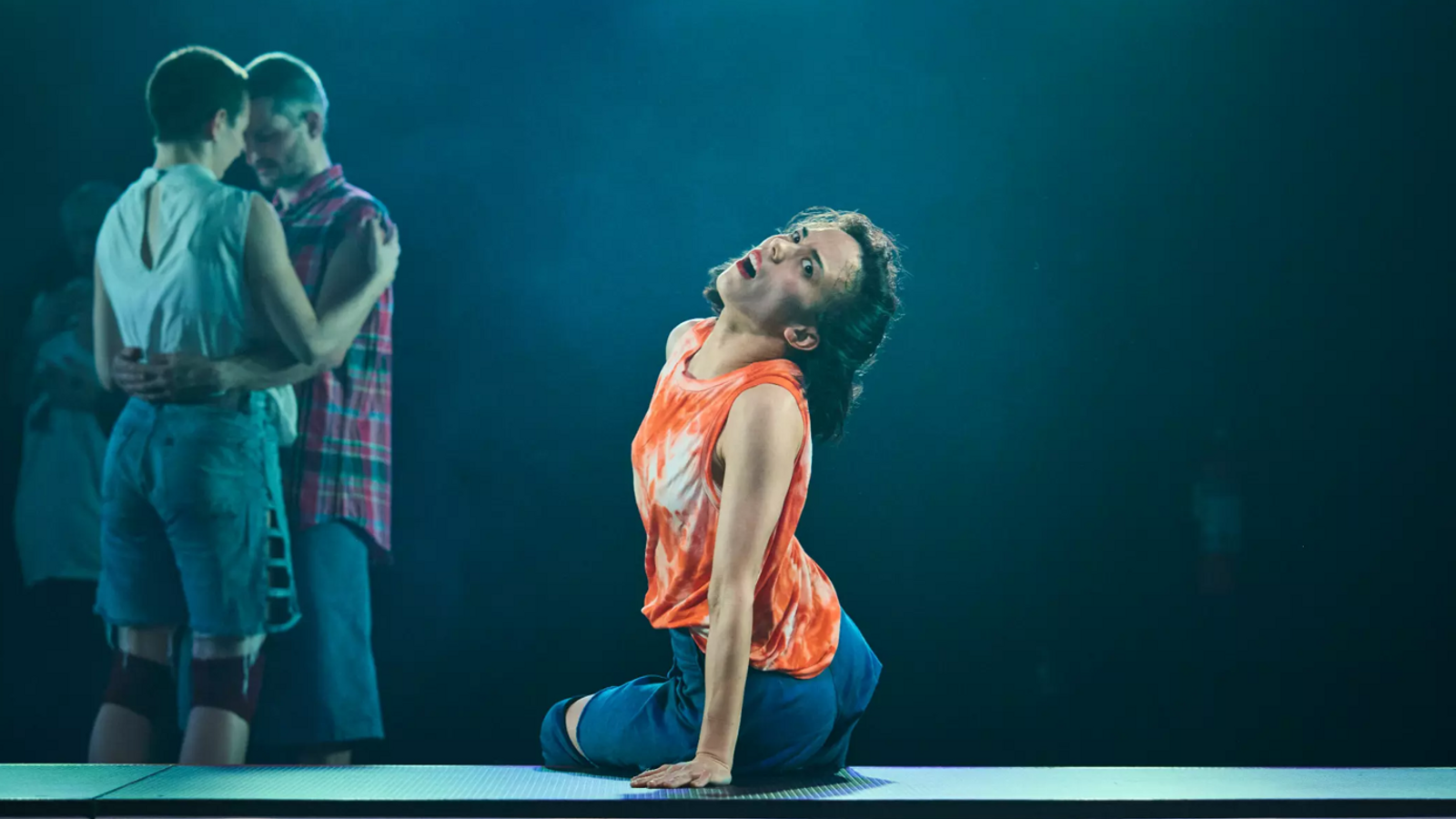
One of Flaix's major premieres will be Spiegelneuronen, a show by some old acquaintances of the city, Stefan Kaegi and Rimini Protokoll, who work in documentary theatre and participatory installations, in alliance with the dancers from the prestigious dance house Sasha Waltz & Guests. The theme of the performance is mirror neurons, those that explain empathy. The stage is literally a mirror that ends up involving the audience in the functioning of the play (October 23-24 at Teatre Lliure). This year's dance production is How romantic, a choreography by Katerina Andreou with Carte Blanche Norwegian National Dance Company —a signing from the Avignon Festival— with fourteen dancers expressing the forms of love (October 16-18 at Mercat de les Flors). And Flaix's Italian production is a portrait of motherhood, Mamma, by Annibale Ruccello, directed and performed by Enrico Ianniello with Fabrizia Sacchi (October 16-18 at Teatre Akadèmia). Still within this European focus, we have the first show by Oskaras Korsunovas's Lithuanian company to land in Barcelona: Sventoji (The Saint), a contemporary reinterpretation based on the figure of Mary of Egypt, a courtesan who after a dissolute life wants to convert to Christianity, and performed by actress Eglé Jackaité (October 28-29 at La Biblioteca).
Directly from the great Latin American festival Santiago a Mil, come the Brazilians Polifónica, who are premiering in Catalonia as part of a tour of Spain. Deserto brings the writer Roberto Bolaño to life from literary or autobiographical texts by the author (October 21-23 at La Biblioteca). The Argentine company Piel de Lava brings to Barcelona a show about masculinity that we already saw in Salt at Temporada Alta. Petróleo is a comedy with four women playing four men on an oil rig (October 27-28 at La Villarroel). And the Chilean Guillermo Calderón reunites the team with whom he made one of his most famous shows, Neva, and continues that play in Navegar por el Neva but with the changes that time has imposed on the characters and performers of the play, one of whom (Jorge Becker) suffered an illness that affected his mobility, speech, and vision (October 27-29 at Teatre Lliure).
