The Catalan producer with three films at the Cannes Festival
Fasten Films premieres at the French festival ‘The end of it’, ‘The sweetest’ and ‘Rehearsals for a revolution’
-
CAT -
CAST
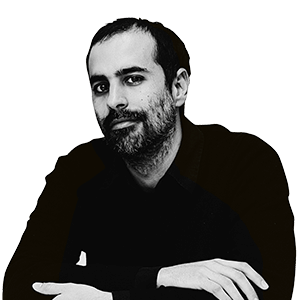
BarcelonaOne of the most important tasks for film producers is to plan the festival strategy and premiere it in the best possible showcase. And there is no better one than the Cannes Film Festival, the most important in the world and with the most projection for auteur cinema. And if having a film in Cannes is already a success for any producer, having three is a celebration. This is the milestone that the Barcelona-based production company Fasten Films, founded nine years ago by Adrià Monés (Sabadell, 1979), has achieved this year, and he could not be happier with the triple Cannes crown. “It’s many years of effort, and sometimes the result is a silence like those in the West, when a tumbleweed rolls by. But being in Cannes gives visibility and life to films, which in the end is what we are looking for,” he says.
In the next edition of the festival, which starts this Tuesday, Fasten Film will premiere The end of it
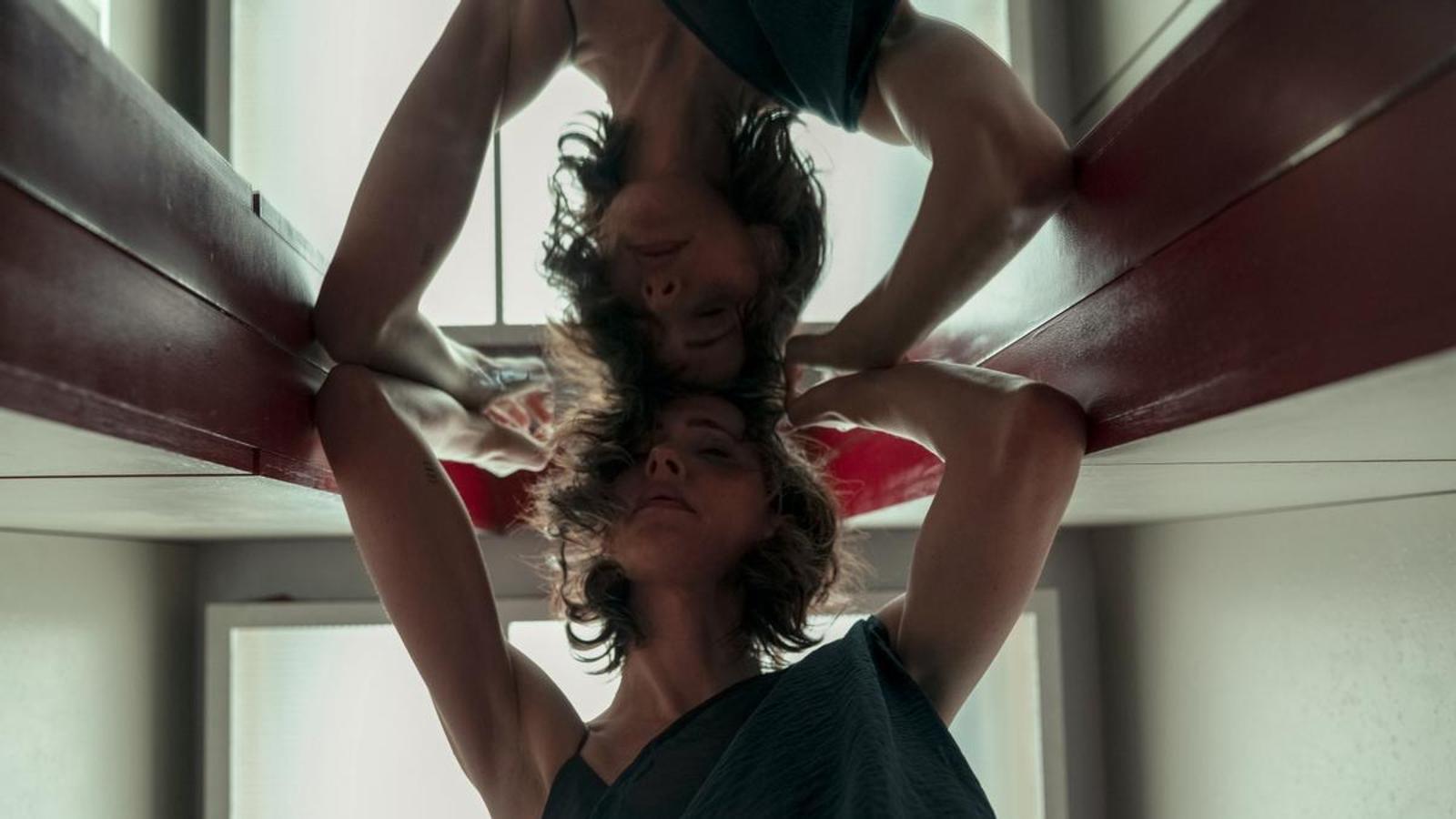
in the Cannes Première section, La más dulce in the Un Certain Regard section, and the documentary Rehearsals for a revolution in the Special Screenings section. The most special project for Monés is probably The end of it, the opera prima by Reus director Maria Martinez Bayona, a science fiction story with a cast led by Rebecca Hall, Noomi Rapace, Gael García Bernal and David Verdaguer. “I met Maria six or seven years ago, when I saw two short films [Mia and Beast] she made while studying in London –Monés explains–. They had so much sensitivity and ambition that I offered to produce anything for her, and she told me about The end of it, which is a story about what it means to feel alive today”. Set in a near future where science can prevent aging and death is optional, the film's protagonist is a 250-year-old artist who has lost the will to create and decides to turn her death into a final artistic performance.
On paper, Martínez Bayona's project was “impossible” to finance solely from Catalonia, so Fasten Films looked for allies. “Since Maria lives in England, we spoke with the British producer Election and then we managed to get the BBC involved – she explains –. Then Rebecca Hall joined through her agent at William Morris, and that helped to get Gael García Bernal, and the American fund Equity came in. And it also helped us a lot that we shot 90% of the film in the Canary Islands, where they have very competitive tax incentives. In the end, being a producer is this: accompanying directors and finding a way for them to make the film they want to make. And not knocking on the door of Atresmedia and Telecinco and, if they say no, going home to wait for another project”.
From Morocco to Iran
Another of Fasten's titles in Cannes, La más dulce, is a totally different type of production: a co-production between France, Morocco, and Spain that was filmed in Huelva and stars a girl who leaves Morocco to work as a seasonal worker in the strawberry harvest. Laïla Marrakchi, the director, already passed through the Un Certain Regard section twenty years ago with her debut, Marock. “The project came to us through the French producer Juliette Schrameck, and it made perfect sense for us to get involved as co-producers because the story took place between Spain and Morocco –explains Monés–. Furthermore, Laïla is a director profile that I love, because she can make very high-quality films that go to Cannes and at the same time series that are major productions for the public like The bureau”.
Diversity seems to be one of the keys to Fasten's success because, again, the third selected film has nothing to do with the previous ones: Rehearsals for a revolution is a documentary in which Iranian director Pegah Ahangarani interweaves the history of her family and her country from 1979 to the ongoing war that pits Iran against the United States and Israel. The filmmaker works with personal archives, family videos, news reports, protest recordings, and oral testimonies. The project is part of Fasten's new non-fiction line coordinated by journalist Enric Bach. “We are developing another project with Pegah based on one of her shorts that we really like –explains Monés–. One day she told us she had another documentary she had made with archives, which was Rehearsals. She sent it to us and we were amazed, and we got involved in co-producing to do all the sound design and finish the editing. It's a fascinating story, because Pegah's parents were also directors, imagine her archive. In fact, her father was a director of the Revolution who supported Khomeini and was a hero of the war against Iraq, but he changed his position when the regime killed one of his best friends”.
Objective: to shoot more in Catalonia
The trio of films selected in Cannes arrives at a sweet moment for Fasten, which according to Monés has been growing “in a very organic way” for nearly a decade and last year produced “seven films and three series”, and is preparing projects for the future with Martínez Bayona, Mar Coll and Nely Reguera (with a script by Valentina Viso and Edu Sola). “We are already 18 people, we are not that small, what happens is that we haven't done much press and people don't have us on their radar,” he points out. Monés, who previously worked in production at Canal+ and Filmax, assures that they do not want to “ grow for the sake of growing”. “We are where we want to be and we have a very strong team to take care of the projects we make,” assures the producer, who wants to continue working with “directors with a vision of the world” and who want to “reach the audience through quality”.
Monés acknowledges that he would like to “roam more in Catalonia”, but that the tax incentives in other regions such as the Canary Islands or Navarra are a very big attraction for international projects. However, they always try to include all the Catalan talent they can: in The end of it, for example, David Verdaguer plays a supporting role, and the special effects by DDT, the makeup by Mariona Trias, and the costumes by Pau Aulí are also Catalan. And the same happens in El anfitrión, the film that Willem Dafoe presented a few weeks ago at the BCN Film Fest, where Carlos Cuevas also acts, the cinematography is by Gris Jordana and the costumes by Vinyet Escobar. The producer, incidentally, confesses to being “in love” with Dafoe, “one of the most talented people” he has met, and “the most humble and hardworking, enthusiastic about his work and a workhorse at the service of the film and the people: he was a benchmark for the entire team”.
- ‘Viva’ Aina Clotet’s directorial debut will premiere at the Critics’ Week. Clotet stars in the film as a woman who has just turned 40 and is recovering from cancer. The action is set in the near future when Catalonia is suffering from an extreme drought.
- ‘Tú, yo y la vaca’ Aina Callejón’s short film is an Escac production filmed in Lleida that will compete in La Cinéf, the section dedicated to shorts produced by film schools. It is the story of a girl whose parents send her to a peculiar rehabilitation center to overcome her mobile phone addiction.
- ‘Les roches rouges’ The prestigious French director Bruno Dumont will premiere this film in a special screening at the festival, about two groups of children playing on a beach on the French Riviera, jumping from the rocks into the sea. Andergraun, the production company of Albert Serra and Montse Triola, is involved in the production.
- ‘Ceniza en la boca’ The new film from Mexican actor Diego Luna as director, which will be shown in Special Screenings, is an adaptation of the novel of the same name by Brenda Navarro about a girl who travels to Madrid from Mexico to seek a better life. Inicia Films (Estiu 1993) participates as co-producer.
- 'The Black Mirror Experience' David Bardos and Damià Ferràndiz, from the Barcelona studio Univrse, are the creators of this 60-minute virtual reality immersion project, one of the eight works selected in the third edition of Immersive Competition, the festival’s virtual reality section.
