Another sign of Donald Trump's instability
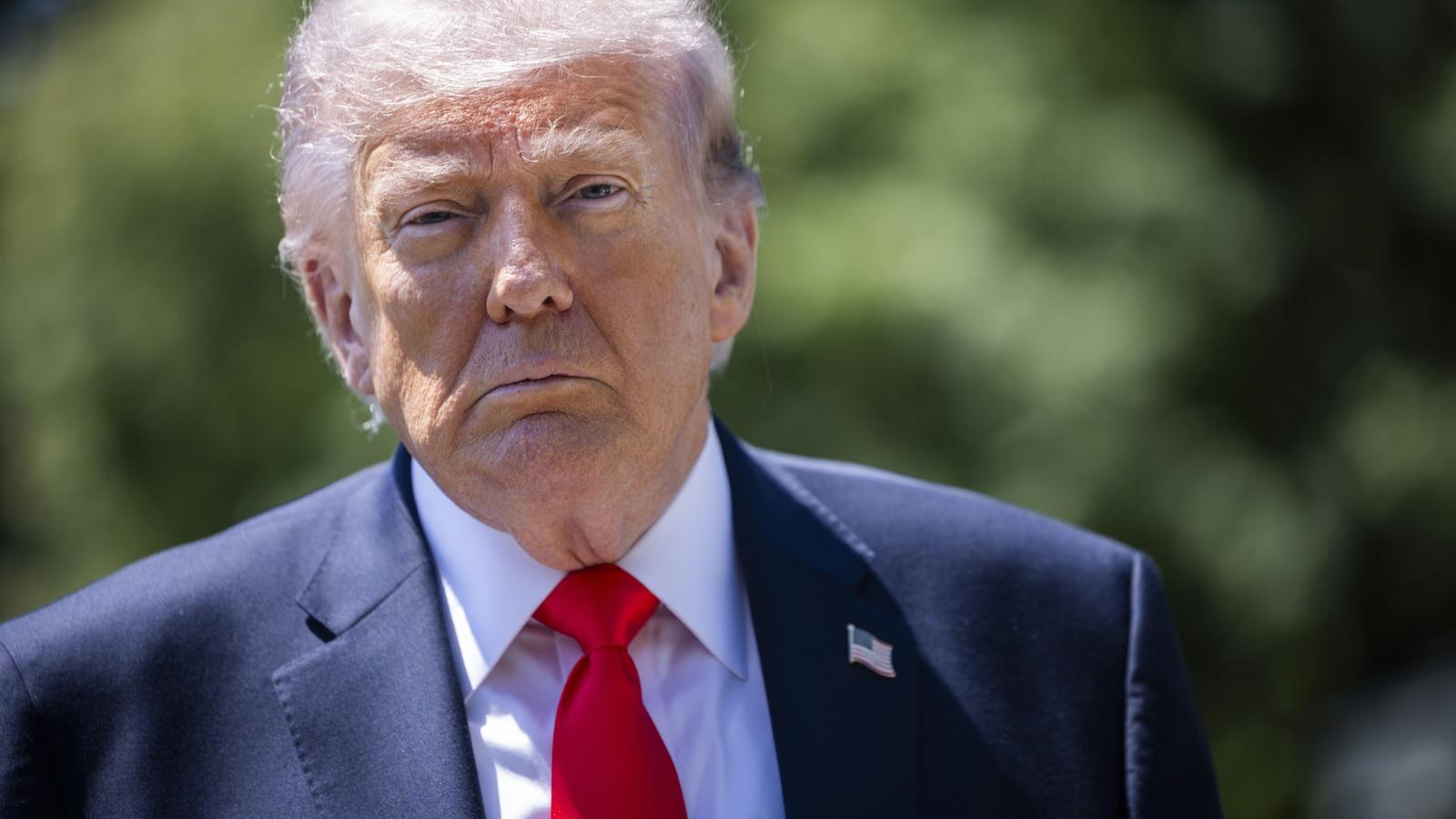

Donald Trump's latest stunt is the announcement of new 25% tariffs on European cars and trucks. He let it slip on Truth Social, and theoretically the measure aims to boost the United States' automotive industry, but it was made public two days after the president threatened a "possible reduction" of American troops deployed in Germany. The target of this measure, due to the weight of the automotive industry, is precisely Germany. The US president believes that Berlin has not helped him enough with the war he declared jointly with Benjamin Netanyahu against Iran.
Trump harbors the same resentment towards other European countries, such as Spain and Italy, from where he is also considering withdrawing troops, as he stated on Thursday. In fact, this Friday he added that Italy and Spain "believe it is okay for Iran to have a nuclear weapon." Given all this, it is not surprising that, ignoring the trade agreement that the European Parliament validated just over a month ago – and which still awaits the final approval of the member states – Trump is now once again demonstrating that he is unreliable. Not as an ally, but merely as a counterpart in a negotiation.
Trump now considers that the EU is not "complying" with the agreed trade agreement, but he has not specified in what way it would be violating it. The agreement, which was already considerably asymmetric, foresaw limiting US tariffs on European products to 15% and that the Union would purchase energy products worth around 700 billion euros from the Americans over three years. It should be recalled that the European Parliament requested that a suspension clause be added to the trade agreement that could be applied, for example, if the President of the United States threatened EU countries.
Trump's instability is already reconfiguring Europe. German Defense Minister Boris Pistorius presented in late April the first military strategy in the history of the Bundeswehr, the armed forces created in 1955, after the country's entry into NATO. His plan aims to make the German army the most powerful conventional military force in Europe and to have, in the next decade, 460,000 soldiers and reservists ready to fight. This initiative by Germany has two reasons for being: the threat of a possible Russian attack, which Berlin takes seriously, and the unreliability of US support.
Europe cannot trust someone like Trump and it is becoming increasingly evident that it must reduce its dependence on the United States as much as possible. It is a complicated objective, transatlantic ties have been strengthening and consolidating since World War II, but Trump himself is pushing the EU in this direction. And, while it suits him that Europe re-arms – he intends for it to do so by buying American technology – because he wants to cut military spending destined for Europe, EU countries cannot end up depending even more on American weaponry. European autonomy cannot depend on a country led by a leader who has shown that he is neither reliable nor stable.
