Artistic prodigies to celebrate 50 years of music at the Grec
Maria del Mar Bonet, Mayte Martín, Tarta Relena and Estrella Morente, among others, shine on a stuffy night at the Grec Theatre

-
CAT -
CAST
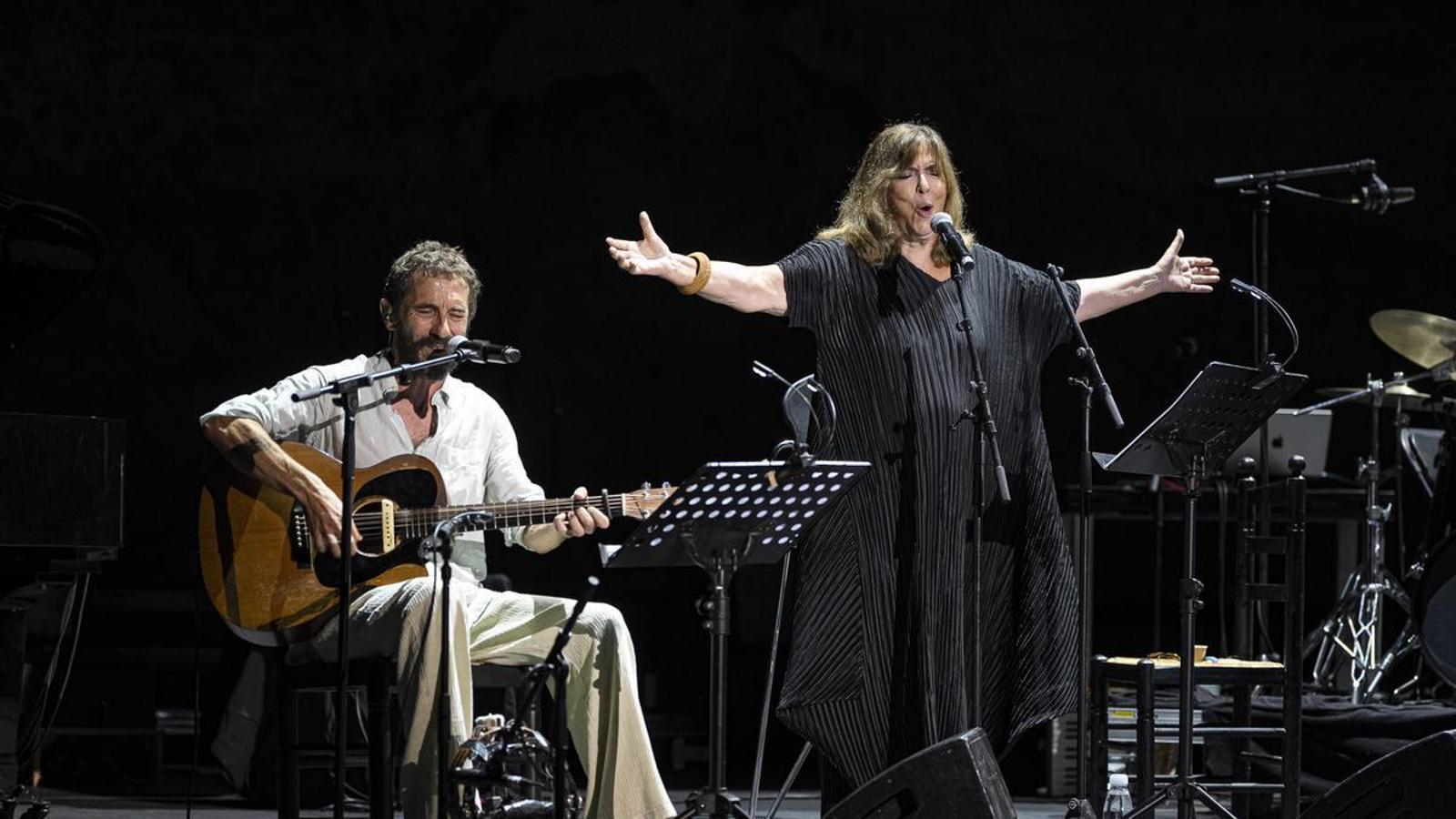
BarcelonaThe artistic choice foreshadowed a very interesting night to musically celebrate the 50th anniversary of the Grec Festival at the Grec Theatre in Barcelona. And the repertoire that appeared in the program showed special care in the selection of material, with a subtle thread of Greek references, bridges between the different shores of the Mediterranean and Latin America, pacifist determination, and poetic scope (from Zülfü Livaneli to Kavafis, from Aristophanes to Ramon Llull). More than a festive revelry and intoxication, Songs of the Grec. 50 years of music, bridges, and mestizaje was intuited as a serene night, and it was, but with a bunch of unforgettable moments.
The first of all, the initial appearance of Maria del Mar Bonet, diva of the Mediterranean and patron of the Grec by right and art since the memorable nights in Plaça del Rei in the nineties. In a trio, with guitarist Borja Penalba and percussionist Antonio Sánchez, she recited Livaneli's verses to the mestizo sea in Merhaba ("In memory of Ulysses who taught the land / the first passion of setting sail"), more relevant than ever also due to the coincidence with the premiere of Christopher Nolan's cinematic the coincidence with the premiere of theOdyssey by Christopher Nolan. She also sang about Llull's beloved friend, and between the two, she unleashed the rage of S'aigo no, the song dedicated to the victims of the Valencia flood of 2024 which has become one of the highlights of Maria del Mar Bonet's concerts this year, as the audience's reaction noted. What heart-rending sensitivity.
The second unforgettable moment was Mayte Martín's performance, combining the quartet and trio formations. Full of voice and dramatic intention, she began softly, rocked by the melody of El breve espacio en que no está by Pablo Milanés and looking at the sky as the assumption of the definitive verses arrived ("La prefiero compartida / antes que vaciar mi vida. / No es perfecta, mas se acerca / a lo que yo, simplemente, soñé"). Then she took on the despair of Ne me quitte pas by Jacques Brel, finished with an arrangement by pianist Nelsa Baró in the style of Nina Simone. Lia, by José María Cano, which Martín sings with the soul of a bolero and the skin of jazz, was fantastic as always, projecting desire and turning vulnerability into strength ("Cuánto amor nos cabe de una sola vez"). But the final marvel arrived with Porque vas a venir, by Carmen Guzmán and Amanda Velazco, which the Barcelona singer administers with the perfume of tango until she speeds up the verses and it really seems like she lives inside the song. Rigor in intonation and all her life put into the performance. Ovation and open mouths amidst an unbearable stuffiness that would have driven Odysseus himself to despair.
It can't be easy to go on stage after Maria del Mar Bonet and Mayte Martín. With good judgment, the show then became eminently choral. Produced by Abacus Idea, Tresc and Taller de Músics, and with artistic direction by Cristina López, the tribute to Grec brought together other soloists, but accompanied by a dozen instrumentalists and a vocal ensemble directed by Selma Bruna. Good predisposition and conceptual deployment do not always guarantee great results in this type of format, but this time it worked, both for the quality of the musicians and the generosity of the soloists and the restraint of arrangements that avoided gratuitous accumulation. Only the logistical pauses between performances made the rhythm suffer. Nothing serious, given the number of good moments that could be enjoyed.
For example, Rosa Zaragoza gave smiles and festive spirit in a Sephardic-rooted choral celebration. Meritxell Gené piloted Lluís Llach's Vaixell de Grècia playing with microphone dynamics while Borja Penalba made the accordion dialogue with Tomàs Pujol's bass. And Penalba himself invoked Víctor Jara with Raimon's adaptation to Catalan of Te recuerdo Amanda. Lucía Fumero represented a good part of the concert's purpose, linking different musical traditions (jazz, singer-songwriter, and Latin American popular music) and leaving space for Alba Careta's magnificent trumpet (another surname rooted in the country's music, like Fumero) in La muerte despierta, which also included a square tambourine, choir, viola, and cello.

The impressive Estrella Morente and the impressive Tarta Relena
And then came the impact: Estrella Morente, dressed in red and with the calm of the greatest (she seemed like Rocío Jurado), appeared to embody a flamenco and jazzy Lysistrata and to reclaim the Morente legacy, both artistic and humanist. The singer from Granada, who exclaimed her love for Barcelona and the Taller de Músics, moved naturally amidst the band's arrangements and applauded both Uixi Amargós's viola (more musical lineages) and Careta's trumpet. It was very gratifying to see an artistic personality like Estrella Morente so at ease with the musicians. The last unforgettable moment was starred by Tarta Relena, first both of them alone singing Kavafis via Carles Riba and then accompanied by the band, lifting Tarta Relena, first both of them alone singing Kavafis via Carles Riba and then accompanied by the band, lifting El suïcidi i el cant, one of the best songs by the Barcelona duo. Almost two hours after the concert began, all the musicians (except Maria del Mar Bonet and Mayte Martín) closed the show with a play of corrandes interspersed with popular songs like Jo no canto per la veu (in the style of Maria Arnal and Marcel Bagés) and La presó de Lleida, among others.
"We celebrate 50 years of the Grec Festival, an event that makes people love this city a little more," said Maria del Mar Bonet. "It's a very important festival for this country," added Mayte Martín. "It's a pleasure, a privilege, to be part of a magical night at the Grec," admitted Estrella Morente. "Here's to many more years of the Grec and long live live arts!" shouted Helena Rosa, from Tarta Relena, summarizing the spirit of it all.
