Rafael Argullol: "Beauty is a space not domesticated by either morality or ideologies"
Acantilado publishes the 168 articles on masterpieces of painting that Argullol published in ARA

-
CAT -
CAST
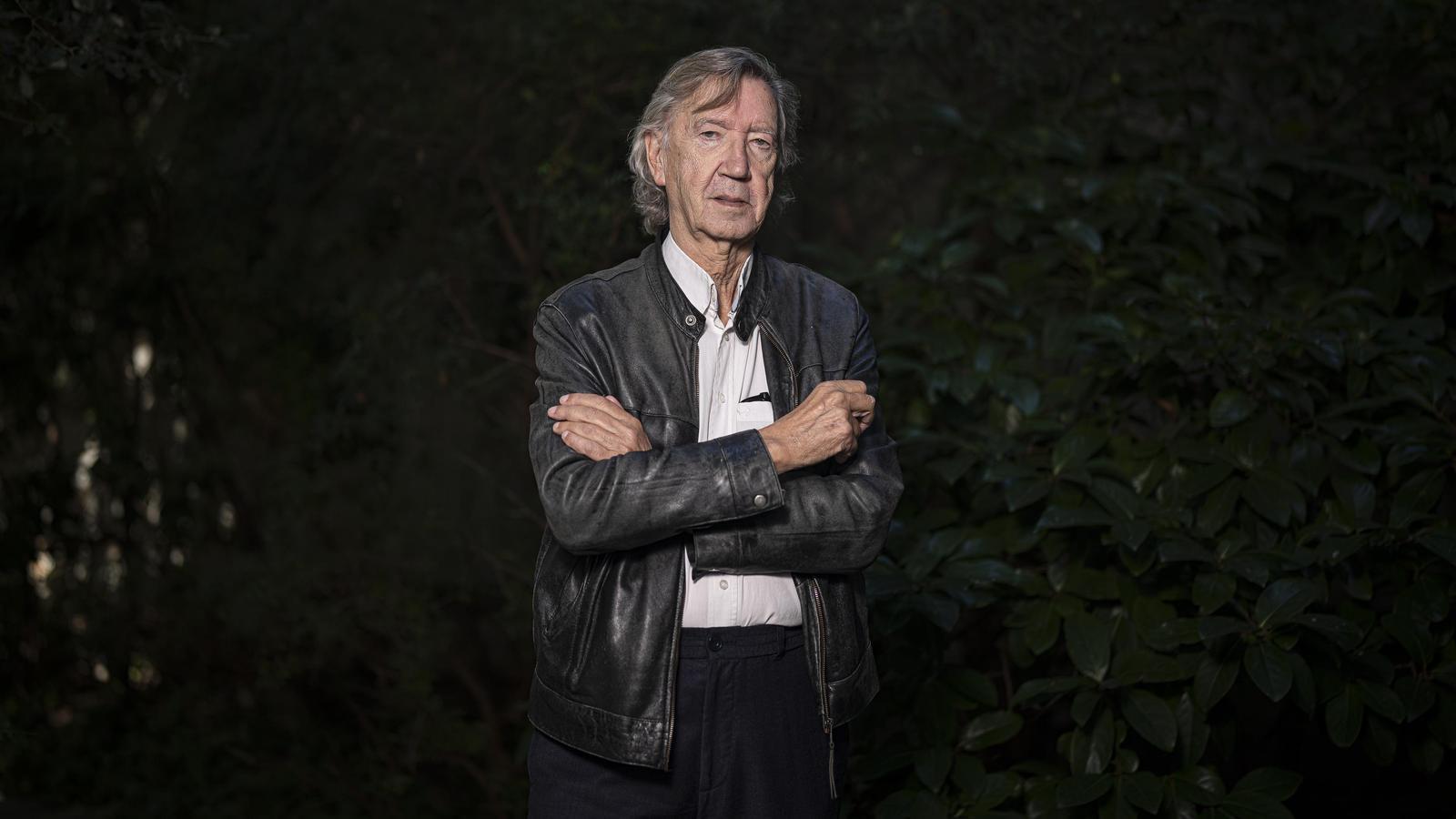
BarcelonaFor writer and professor Rafael Argullol (Barcelona, 1949), art "completes life," as he himself says on the occasion of the publication by the publisher Acantilado of the book Pinacoteca soñada, the collection of weekly articles he published in ARA between 2014 and 2017 translated into Spanish by Maite Madinabeitia. "Human life is always imperfect, incomplete, and, although we sometimes speak of the fullness of life, it is never full. The virtue that art had from the beginning is the quest to fill what is incomplete through imagination," says Argullol. "And, on the other hand, I am interested in art that is interrogative. Art does not give us answers, but rather raises questions for us. All art is current, regardless of its chronology, if it has this capacity to question. That is why the paintings of Altamira and those of Lascaux are as current as those of Rothko," adds the author.
Argullol received the proposal to collaborate with ARA from the founding director Carles Capdevila. The initial idea was for Argullol to publish opinion articles, but he ended up doing an art column. Regarding the selection of the 168 artists about whom he wrote, Argullol set the requirement that they be European and that they all be deceased. The oldest work is one of the Fayum portraits (in the Roman province of Egypt), from about two thousand years ago, and the most recent,Nigredo (1984), by Anselm Kiefer. The latter is the only living artist in the selection. Argullol included him by mistake, but since he likes Kiefer a lot, he kept him. And between one and the other, Argullol delves into the works of painters among whom are Giotto, Fra Angelico, Da Vinci, Dürer, Michelangelo, Caravaggio, Rembrandt, Velázquez, Goya, Van Gogh, Picasso, Magritte, Francis Bacon, and Lucian Freud.
"One of the charms of the articles is that I didn't have a prior selection of artists in mind. It was as if every week I were hanging a painting in this imaginary museum each week –recalls Argullol–. I have always been a great enthusiast of painting, I have a very large visual memory, but there was a filter that depended on my mood, on what was happening in the world, on many things. That is why I believe one of the charms of the book and the series was not to impose any chronological order, nor any stylistic order". Thus, the articles also have an autobiographical character. "I have always written a very personal essay; that is to say, an essay where there are no footnotes, where in some way my life experience has been reflected –he explains–. In the case of the paintings, although it may seem a bit shocking, I have seen them as a mirror. In a certain way, painting is looking. It is not solely an exterior object, but rather it is a looking that reflects you back onto yourself", the author concludes.
Géricault's hope
The articles collected in the book are the fruit of the tension between holding a reproduction of the painting in one hand and, in the other, a blank sheet of paper and a pen. And often, the writing has transformed the perception Argullol had of a certain painting. Thus, he discovered the "hopeful" aspect of the background of The Raft of the Medusa, by Géricault, and the "exceptional silence" he felt with The Scream, by Edvard Munch. "I always write in the afternoons, and I remember the afternoon that the Agnus Dei, by Zurbarán, of which I had a rudimentary idea, ended up obsessing me. I also encountered two masterpieces of tenderness: a painting by Renoir of a girl reading, the portrait of an old man with a nose deformed by illness with a child in his arms, by Ghirlandaio," he explains. Another of the selected works is, Nighthawks, by Edward Hopper: "We, in our time, have not overcome the perplexity of the ancients. Like them, we do not know if it is good or bad to have hopes, we do not know if it is worth waiting. But, despite everything, we wait. We wait in the waiting rooms of hospitals, train stations, or airports. We wait at the long bar of a bar, like the twilight oil by Edward Hopper, because we always believe, or want to believe, that a ray of light will penetrate the darkness," says Argullol in the article.
On the other hand, what is beauty for Argullol? "Beauty is that convulsion that you experience individually, but which can be in the face of things agreed upon with other individuals. But you always experience it in an individual and transferable way. And it seems that the space of beauty is not domesticated by morality, nor by norms, nor by ideologies; it is a space that occurs with a great degree of spontaneity and that leads you to question yourself and the world."
The dangers of urban speculation and AI
Argullol vindicates the act of seeing, rather than looking, as an act against the grain. Regarding museums, the ones he likes best are the Thyssen Museum in Madrid and the Tretyakov Gallery in Moscow. "If there were an enlightened Barcelona City Council, which is not the case, before getting involved with the Carmen Thyssen Museum in Barcelona, I would make sure what works will be on display so that it is not some kind of secondary thing and serves to carry out a great speculative operation," he warns.
On the other hand, Argullol is working on the impact of AI. He assures that he will have his say very soon, but he advances one of his reflections. "Those who are killing memory, the capacity for concentration, and desire first, and who can kill imagination, are us, not artificial intelligence," he warns. "We have ceded to artificial intelligence things that we believe are essential, what was traditionally called spirit. Then the problem is not AI or new technologies, the problem is a kind of spiritual suicide." And the consequence of this is that "ultimately we will be expendable".
