Marta Sans: "No matter how much theory you have, you don't save yourself from a destructive relationship because desire drags you along"
The writer from Alcanar describes in 'Tots els punts i a part' a story in which sex is a battlefield
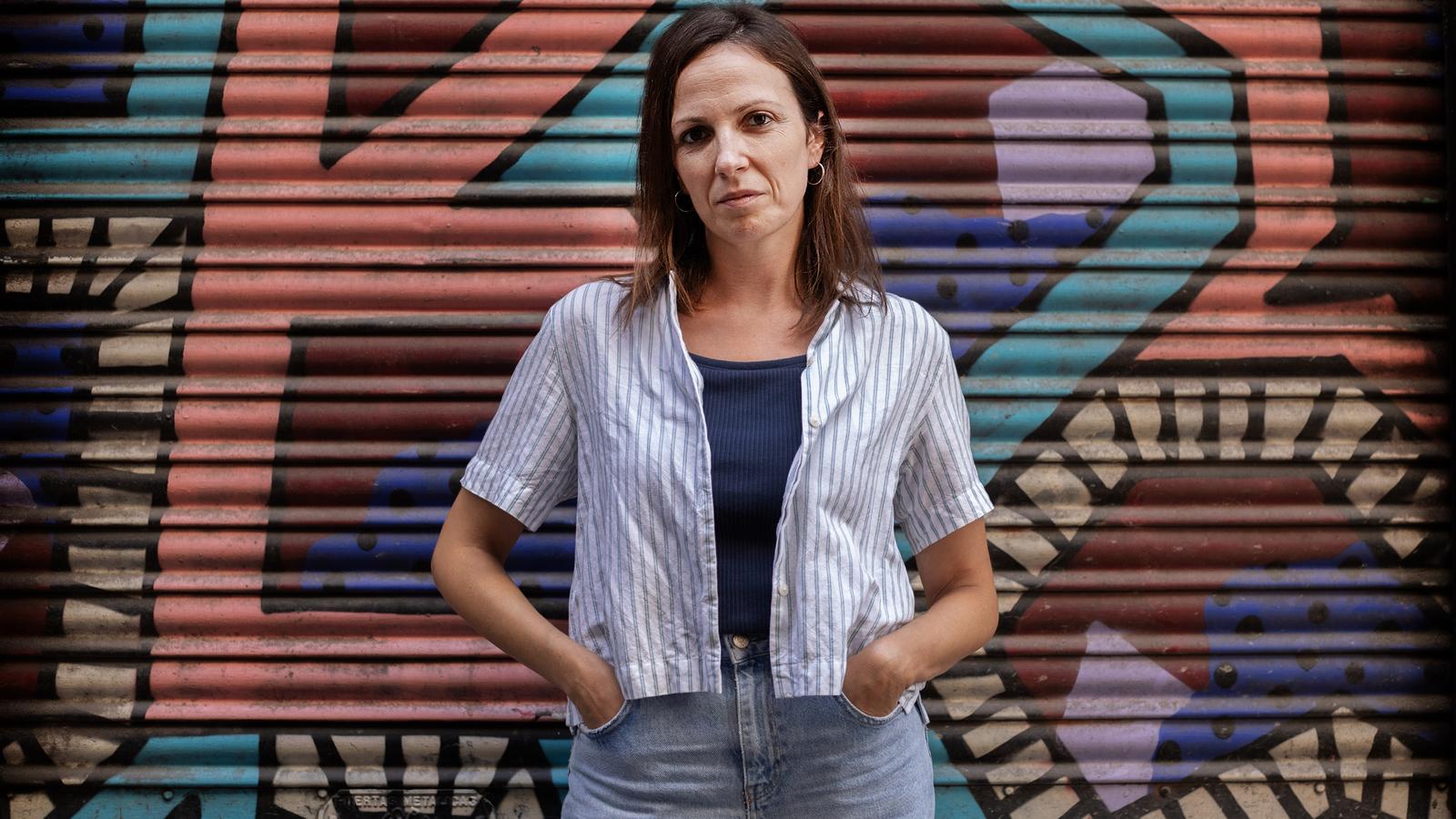
Barcelona"You are an ungrateful bitch. I don't want to know anything about you, no messages, and let's not meet again." This is the blunt message that reaches Rita eight years after meeting Ramon at a town festival in the Ebro Lands. They have an intermittent relationship that lasts for years and destroys them. They are fully aware of it, but they go back to it time and time again. This is the core of All the points and aside (Empúries), the latest novel by Marta Sans (Alcanar, 1988).
"She sees all the signs from the beginning. The moment she tells him 'Look, Ramon, we won't see each other again' and he calls her, there is an invasion of privacy. Rita sees it and feels anxious, but the book's intention is to dissect how one manages to destroy a relationship so much," explains Sans. The writer narrates everything through Rita, who even addresses the reader using very oral language, as if she were blurting it all out bluntly. Sex is not described as a tender act, but as a battlefield where power dynamics are fought. "Sex is dirty, it is power, it is desire, a battle between bodies. It is the only language they find to be connected," explains Sans. "My intention is for the reader to put themselves in her shoes and empathize; that's why it's direct, raw language... I didn't want to falsify emotions: if I want to say 'I feel like fucking someone,' I say it," she adds.
There is a chilling point in seeing how this destroys her but she is unable to leave it because there is a very intense desire to feel unique. "When the other person uses phrases of extreme psychological violence like 'No one will ever love you like I do,' a deeply rooted identity mechanism is activated, one found in the fictions, movies, and songs we have grown up with," states Sans.
One of the points the work explores is the weight of the guilt that falls upon women when they find themselves in these types of dynamics. Friends, according to Sans, can become a harsh judge: if you have the theoretical tools, why don't you get out? "Before judging, I believe one must accompany, provide support," states Sans. Rita is a feminist, is empowered, and has a scientific career that takes her to work abroad, but she cannot—or will not—disconnect from Ramon. "Now there are many discourses and we have many resources regarding affective responsibility, but no matter how much theory you have, sometimes you do not save yourself from a destructive relationship because desire drags you along," says the writer. Rita is also a complex person: "I wanted to explore her darkness, I did not want to approach her as someone who does everything right and is only a victim. Rita chooses intensity and desire because on the other side she only sees emptiness," assures Sans.
On the other hand, the protagonist's constant movement between the city and the town shows how small spaces are not always an idyllic refuge. When Rita returns to the town, she cannot rest. "She cannot detach herself from Ramon because everyone talks to her about him and tells her what she is doing; it is suffocating," explains the writer. "In the town, a breakup is not a private affair, but a public act about which everyone gives their opinion. If you are in a moment of vulnerability, the town does not accompany you, it acts as a judge. And, furthermore, there is the social disbelief when the aggressor is a boy known to everyone, 'one of our own'," she concludes.
