A "new home" of 73 million euros to save the heritage that does not fit in museums
The Department of Culture will buy a warehouse in Sant Fruitós de Bages to store collections from 122 museums
-
CAT -
CAST
BarcelonaHuman remains that can offer a lot of data about our past, sediments with a lot of information about what was eaten centuries ago, textile machines, computers, amphorae, tombstones, sculptures, paintings, murals, capitals, clothes, fossils, stones, seeds, bullets, pitchers... If we were to add up the heritage guarded by Catalan museums, the figure would reach eight million pieces. It is an unreachable and heterogeneous collection of which the public only sees a very small part in the exhibition halls; the rest, the vast majority, remains invisible in warehouses and depots.
This heritage has been dragging a serious problem of saturation for decades. The 122 registered museums in Catalonia add up to 171 different storage spaces, of which 46 are external premises. To put an end to this structural asphyxia, the Department of Culture has given the long-awaited go-ahead to the National Reserve of Catalonia, a large shared services infrastructure in Sant Fruitós de Bages that will involve an investment of 73.12 million euros and which is expected to start operating between the third quarter of 2029 and 2030.
80% of museums, without space
According to the Department of Culture, the measure was a completely necessary step that was already included in the 2030 Museums Plan. "It is a country project that has been talked about for a long time and that addresses a request from museums from many years ago. We have a serious problem: 80% of museums told us that they have insufficient space and 60% do not have the conditions they should. Furthermore, we do not stop receiving new entries and donations of elements, church furniture, private collections or works from the Parc de la Ciutadella for the Museum of Natural Sciences," explains the secretary general of the Department of Culture, Josep Maria Carreté.
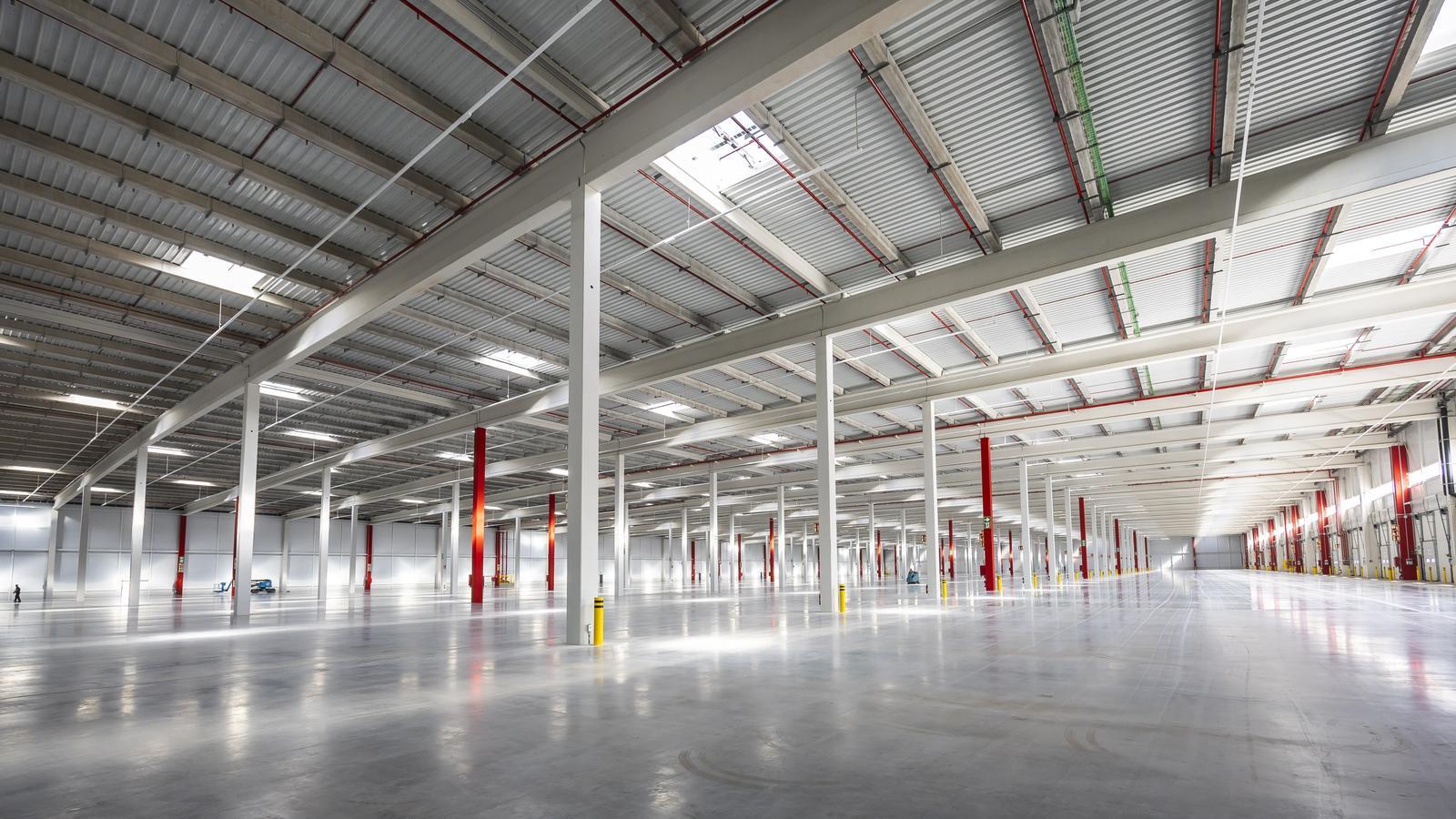
Finding a space that was equidistant, central and adaptable to accommodate different climate chambers with a diversity of temperatures and humidity or restoration laboratories has not been a simple task. The choice is a large warehouse that was meant to be the logistics center of a supermarket that was never built. The property, owned by the company P3 Logistics Parks, is located on an independent plot of 65,800 m² and has 33,488 m² built. Its free height of 11 meters will allow for a double-height floor to be raised to double its useful capacity to 64,000 m², thus guaranteeing the capacity to absorb the growth of collections over the next 20 or 25 years.
The total cost of the operation is 73.12 million euros. For the first three years, a rent of 8.36 million will be paid, then the definitive purchase will be made for 41.26 million euros and, finally, there will be an investment of 23.5 million to adapt the space. Carreté clarifies the reason for this financial operation: "It is a fiscal issue. The company asked us to do it this way. Our intention was to buy it immediately," he assures.
Guided tours
The Department of Culture insists that one should not imagine a simple warehouse full of shelves with boxes. "These are centers specialized in the conservation, management, and study of collections. On a European scale, we have not found examples of a country that provides a joint service to 122 museums; it is a very big leap," says the Director General of Cultural Heritage, Quim Borràs.
Among the unique functions of the facility, the reservation of a specific area for emergencies and natural disasters stands out. "We are increasingly exposed to floods or disasters. If we have this reserve, we will be able to immediately transfer the affected objects there to carry out the first rescue operations, as happened recently with the furniture of Enric Miralles at the Palafolls Library," recalls Borràs. The facility will also house police seizures and judicial deposits. "This equipment must be very secure; it is one of the main requirements. We are already working directly with the Mossos d'Esquadra to design the entire system so that security is maximum, taking into account everything that has happened recently in the field of museum security," says Borràs. In addition, there are plans to open it occasionally to the public and offer guided tours.
78% of Catalan museums have requested to participate, which translates into an initial volume of about 140,000 pieces. However, Culture makes it clear that the space will not be a bottomless pit. "This will have a limit and very clear criteria will have to be established. It is not about bringing everything. The pieces sent there must be very well documented and meet the conditions that we are currently setting in the plan we are working on," explains the head of the Museums Service, Sònia Blasco, who also specifies that a unique and open catalog of all museums is being developed with a new program. "At the moment, a computer program is shared in which each museum enters the pieces and documents them, but it is obsolete," says Blasco.
Inside the warehouse, the distribution of the pieces will not be based on the ownership of the museum of origin. There will be a specific section for archaeology and the rest will be organized according to the nature of the material to optimize climate control and space. Each museum will maintain ownership of its works and will retain its own spaces. That is to say, the National Reserve will function as a complement and not as a substitute for the museums' own reserves. Whether it will be a free service or if a symbolic fee will have to be paid is something that is still being studied.
The deployment of the Sant Fruitós de Bages warehouse will also allow for the reorganization of other saturated spaces. This is the case with the Cervera reserves, which currently have 50% of their capacity occupied by the National Museum of Science and Technology of Catalonia (MNACTEC) and the other 50% by archaeology collections. With the new planning, the entire archaeology collection from Cervera will be moved to Sant Fruitós de Bages, so that the Cervera facilities will be dedicated entirely and exclusively to the MNACTEC.
