Clara Peya: "I know I am doing myself a major boycott, but I can't do it any other way"
Music. Releases the album 'Nuca'
-
CAT -
CAST
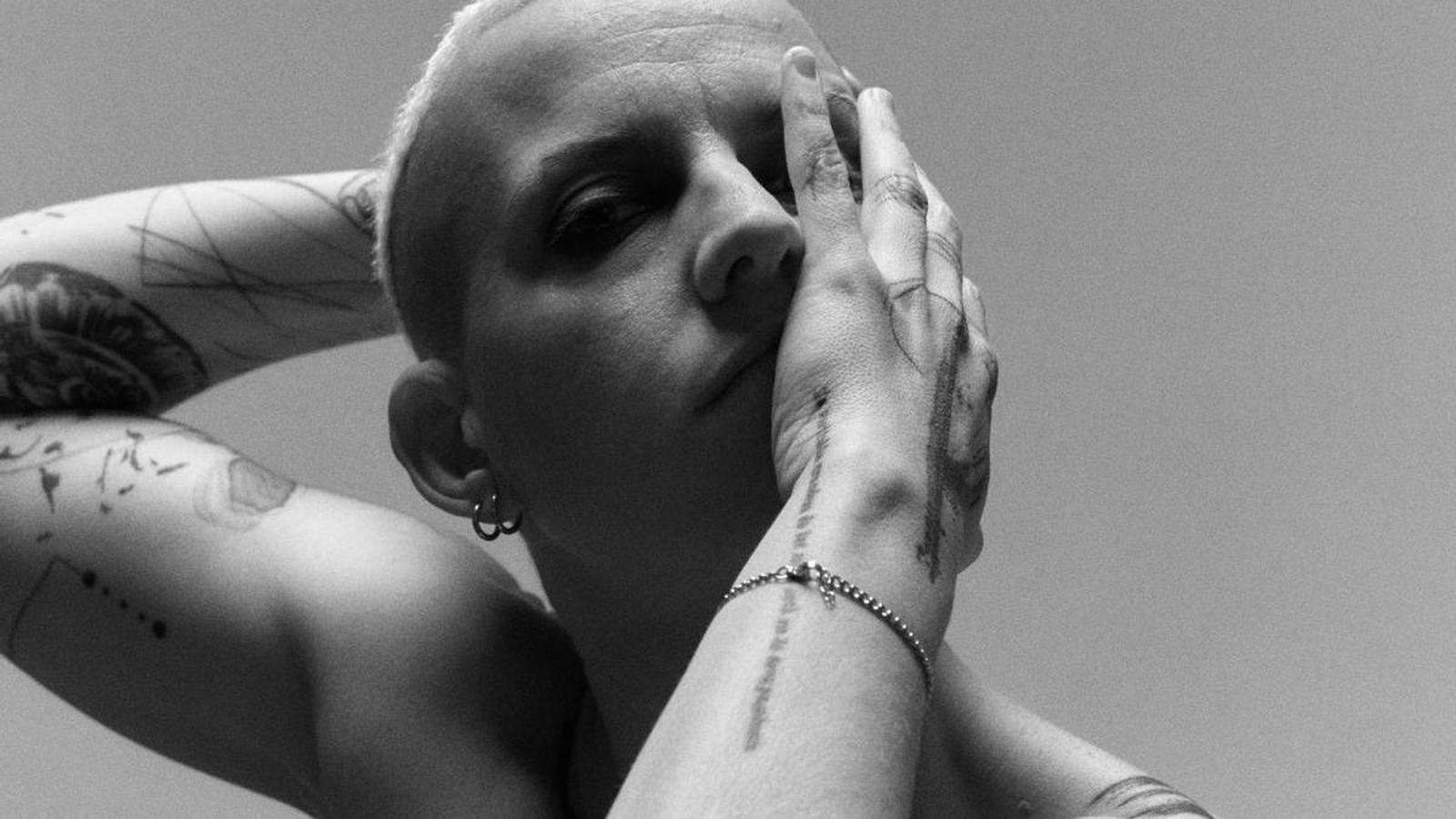
Barcelona"It doesn't seem so, but it's a risky album, due to its rawness and simplicity," says Clara Peya (Palafrugell, 1986) about the album Nuca (Hidden Tracks, 2026). Above all, it's a very emotional album, with an admirable poetic tone in both Catalan and Spanish that stems from the awareness of loneliness, and is musically very rich and full of interesting things, whose presentation tour begins at the Accents Festival in Reus on April 24th. Like Corsé (2024), the pianist from Empordà shares each song with a different singer, among whom are now Mar Pujol, Anna Andreu, Xarim Aresté, Ahmed Eid, Henrio, and Judit Neddermann. Committed to music to the fullest, she has decided not to publish her music on Spotify.
You are very generous with everyone who collaborates on this album, you have come very close to the stylistic characteristics of each collaborator.
— Deep down, me not singing is an act of generosity that has made my life. I want the person who comes to sing to do so from their deepest place, and I try to get closer to their world so that it shines. Because it's not about me imposing my criteria above all else, but about doing it together and understanding that for it to reach people, it has to be done with the most authentic part of each one. Therefore, I don't know if it's an act of generosity or an act of self-interest.
There are cases like that of the Argentine singer Juan Quintero, who is perfectly recognized in 100 lives, but it happens with everyone. Anna Andreu is especially exciting in The stone and the path, Mar Pujol in There is a moment when we are immense...
— Anna Andreu sings from a very beautiful place. Regarding 100 lives, when I made it I thought only Juan could sing it, because you have to be of a certain age to sing these words and because he is very emotional.
Are all the lyrics yours or have you worked with any singers?
— All of them are mine, except for Ahmed's Arabic part in Porvenir, because I don't speak Arabic. The only person who changed two verses for me was Anna Andreu, and I let her do it because I love her lyrics. In general, what ends up happening is that there are people I really like how they sing and people I really like how they write, and I call each person for something different. For example, when I did the collaboration with Ferran Palau on the previous album: Ferran is not the best singer in Barcelona, but he has the ability to fill every lyric with meaning, he has an art of saying, and for me that can be much more powerful than someone who sings very, very well. And Las voces, which Alan da Silva sings in the end, I did thinking of Robe, but when I told him he was already very sick.
Nuca is an album made by someone who no longer has any need to make a
tear, neither musically nor lyrically.
— It's just that I'm at a point in life where dissecting things is starting to do me no good. My songs, in general, ask for very little, and I've tried not to give them anything more than what the song needs. Now music is all so programmed, so plastic, so full of things, everyone goes to a concert and it sounds absolutely the same as the record because the singer is singing over their own voice that they've recorded four times... There's an effect that multiplies them, a costume that hides them, a choreography that... All of it has to do with the moment we're living in, but it doesn't help the moment we're living in either. Social media is doing terrible harm, because it's turning deep life into flat life. It turns everything that happens into anxiety. And I believe that right now, real music is very necessary.
Could this be noticeable in your way of playing now? The album has more melodic lines than other albums. I don't know if it's also an influence from your work on soundtracks.
— I think everything goes hand in hand. The small and careful is more important than the big and careless. I come from an internal disorder that can surely also be seen in my playing style, and I don't see it as a bad thing because it also allowed me to have moments of very genuine creativity, but at the same time it wasn't very perfect. And now there's a moment when I know very well the place the piano holds in my songs. I know it's structural and foundational because of the type of sound, but not because of the quantity. Often the piano will stand out more if it plays a melody than if it's playing strong chords.
It's quite French, what you're saying. Satie, Ravel, Debussy are good references.
— Yes, totally. But also Bach with the choice of voices and minimalism. I think Nuca is a simple album, but it is not a simplistic album.
It feels like the album is like a prayer that is not desperate, but does ask for urgent solutions. I think of verses like "Tell me, how do you manage to breathe underwater?", in La piedra y el camino.
— It's an unconscious thing because I always think it will be darker than it turns out to be. Always, always. Now that we're putting on the live show, the same thing happens to me. I think: will people come to cut their veins? It's true that there are some really sad verses, but accompanied by other things. That's why it's important to listen to the whole albums, to be able to contextualize and understand what the will of the people who made it is.
That's why you make the last song The nape, which is the symbolic image of the album and where you also say: "When you looked at me I felt the feat", which is a very beautiful feeling.
— Yes. Look, I wasn't going to put bonus tracks, but finish the album with 100 vidas, which is a look at immensity, but I thought that putting a song sung by me, recorded on my phone at home, which changed the sound, made it understandable where everything that had just been heard was born from, because all the songs are born from me. The first thing that happens, the very first thing, is that I record the song on my phone, sung by me. And I think it's also nice to see the seed. I also have to tell you that the lyrics of "La nuca" also say: "Between the gun and the shot, you are dead by my side". This also says it, that I see you very optimistic.
Perhaps I am indeed optimistic, you are right.
— It is true that there are parts and parts, because Mar Pujol's song, which is the first one, begins by saying: "In life there is a moment when we are immense, when beliefs run out and from pain a flower is born". That is to say, transforming everything that harms us into something positive, into something beautiful. Yes, the will to change, to transform, is present at every moment.
Has your writing style changed in recent years? Have there been readings that have led you towards a more refined style?
— I think so. I read a lot of poetry, a lot. And then, wow, you get older and gain depth. The world seems to be for people from 20 to 35 years old, and a moment comes when you have to understand that life is something else, that it goes much further. You have to change priorities, and this makes you, as a receiver, understand things in a different way. For example, a poem by Alejandra Pizarnik: read ten years ago I perhaps understood five layers, and now eight; and I trust that in ten years I will understand fifteen. Art is a vehicle to go to the depth of life, and a verse can say more than an entire book.
Why the image of the nape of the neck and the symbolism of "the musculature of empathy"?
— The idea was to be able to understand that this album stems from loneliness, but that loneliness becomes something very profound, and even more so in this society we live in. I think there are very many of us who feel alone, and in this context there is an empathetic gesture: to turn our heads, to look at the other and understand that we are two people together who feel alone. We can organize ourselves and accompany each other from this loneliness, understand each other from this loneliness.
All of this you explain also has to do with a couple of quite powerful gestures you have made in recent months: one was the involvement with the Gaza Flotilla and the concert for Palestine at the Palau Sant Jordi.
— Going with the Flotilla was an absolutely unconscious gesture, that if I had thought about it a lot I would not have done it, a desperate gesture. I have always taken refuge in art and music, and a point has been reached where I see that this does not change the world, it cannot stop a war. There are things that are so strong that music cannot stop them. And it was like a gesture to see if it could be of any use. Which I didn't know, and I still don't know. Surely yes, and surely no.
Another gesture you've made has been to remove your music from Spotify.
— I know I'm boycotting myself significantly, but I can't do it any other way. Why have I felt this need? I've realized that I believe in people and that sooner or later many people will feel uncomfortable having music on Spotify and will decide to take it out and put it somewhere else; that Spotify will no longer be the only place where I can listen to music, but that it will diversify, as happens with series and movie streaming platforms, even that we will return to the romantic idea of listening to entire albums, to the romantic idea of buying music. Because music being free for everyone is very strong. I, who am dedicated to music, think that what costs us a lot of money and many hours, people listen to it for free. It's no longer just the whole fascist structure, which is terrible (support for the arms industry and Trump, running ads forICE), but the exploitation that Spotify does of music and small artists. Everyone knows it, and I think it will happen sooner or later. And since I believe in people, I think: well, you do the first gesture, which is the most difficult, and then little by little people will do it.
In recent years you have made soundtracks for films such as Wolfgang.
— I like making soundtracks. I really like soundtracks that are small.
Like that ofAnother man, David Moragas' film?
— This is all piano solo, and I loved it because it depends solely and only and exclusively on yourself. I got along very well with David, because he was very clear about what he wanted, and at the same time he was very much in tune with what I do. Then there are those that are bigger and require more instruments and where there has been more trial and error. Each soundtrack is a world.
