Playing and discovering leave a mark on children's brains
Early life experiences permanently shape brain biology
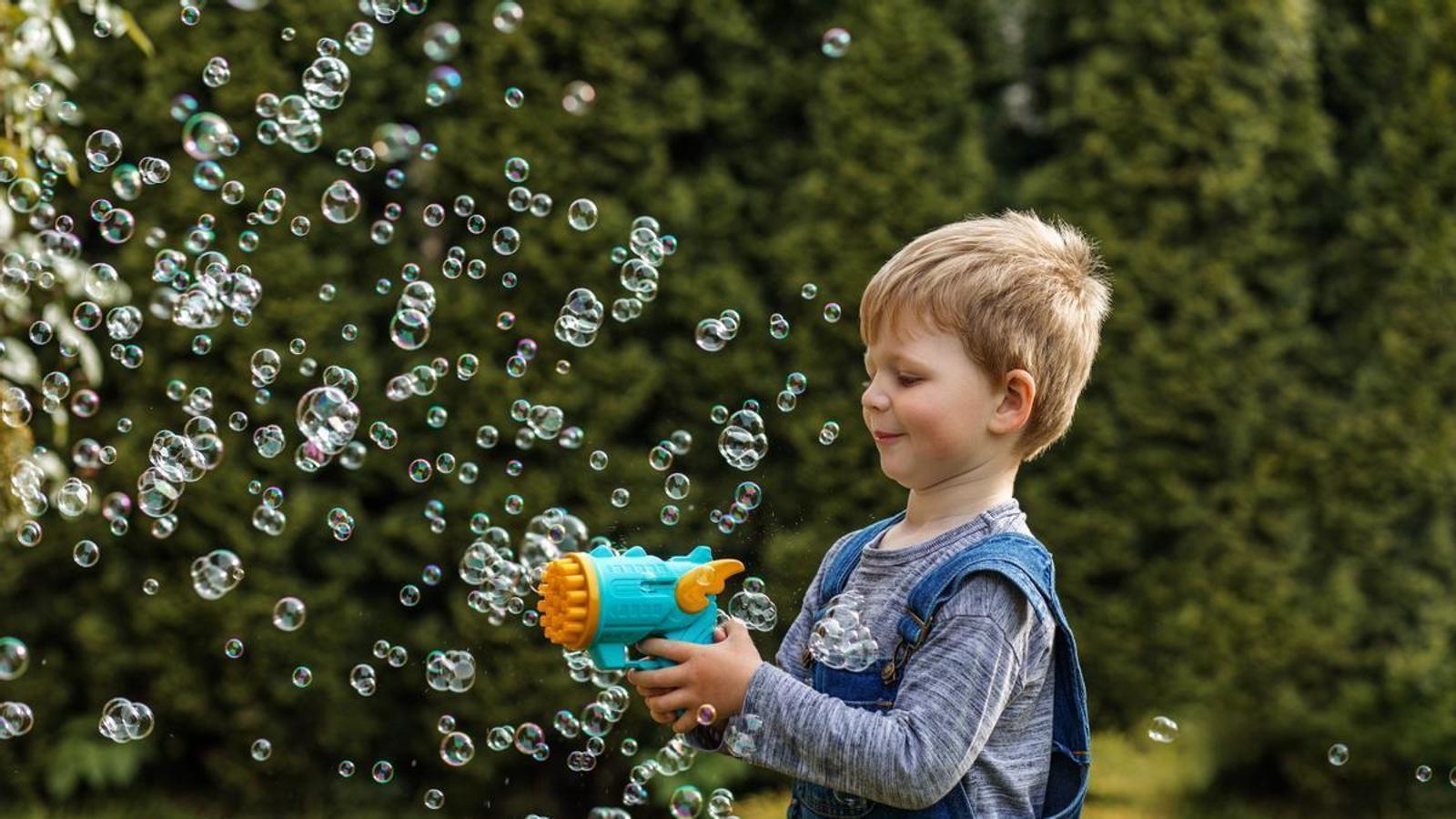

Some people think that childhood is just a stage of games and laughter, with no further significance. Or, conversely, there are also those who believe that early childhood should be used to transmit as much knowledge as possible to children, introducing them, for example, to literacy as soon as possible, preferably at three years old rather than four. A team of scientists led by researcher Ángel Barco, an expert in brain epigenetics and director of the Institute of Neurosciences at Miguel Hernández University of Alicante, has published a paper in Nature Communications showing for the first time how early experiences durably shape brain biology, through precise molecular mechanisms. has published a paper in Nature Communications in which it is shown for the first time how early experiences durably shape brain biology, through precise molecular mechanisms.This discovery not only confirms a long-held intuition, but also opens new doors for understanding learning and, potentially, future therapies. As the authors of the study say, "this stage is much more than fun: it is a critical window in which the environment acts as an invisible sculptor of our brain, programming neural circuits that will become crucial for memory and learning."
To explore this phenomenon, scientists used mice, given the great genetic similarity they have with the human species, of 95%. They raised these rodents in three different types of environment during the early stages of life, which would correspond to early human childhood, between birth and 3 or 4 years of age: in an enriched environment, full of objects they previously did not know, games, wheels for exercise, and with many possibilities for social interaction; a standard environment, similar to what most laboratory animals receive, without various objects, games, or exercise wheels, and where social interactions are very limited to their mother and siblings; and an impoverished environment, with social isolation and absence of any kind of interactive stimulus. Regarding behavior and the development of their cognitive abilities, the results were as clear as they were inspiring. Mice raised in enriched environments showed a higher capacity in memory and learning tests, while those raised in impoverished environments performed clearly worse. Translated to humans, this result corroborates what, in fact, was already known: experience, curiosity, and social interaction are not childhood "luxuries," but rather biological foundations indispensable for the development of the human brain.

Perpetual effect
However, what happens inside the brain for these differences to be maintained throughout life? Barco and his collaborators have shown that a protein called AP-1, which acts as a transcription factor, holds the key to these differences. A transcription factor is a protein that binds to DNA and regulates the expression of other genes. This molecule functions as a switch that regulates hundreds of genes involved in neuronal plasticity, that is, in the ability of neurons to connect with each other in response to external stimuli.
When mice live in a stimulating environment, AP-1 is activated and launches genetic programs that strengthen neuronal connection and, consequently, facilitate learning. On the other hand, when the environment is poor, this switch remains inactive, and the brain does not prepare as efficiently to acquire and consolidate memories in the future. Furthermore, it has also been observed that not all neurons respond equally to the presence of AP-1, depending on whether they are involved in the formation of spatial memories or serve to distinguish patterns and contexts, which indicates that the environment does not affect the entire brain in the same way, but rather generates specific response patterns according to the function of each neuronal type. In other words, in the words of the researchers, "the brain not only transforms itself through stimuli, but also distributes the impact according to the needs and potential of each neural circuit".Although this study was conducted in mice, the molecular mechanisms discovered are also present in humans, which allows for a better understanding of neurodevelopmental disorders, such as autism or learning disabilities, developing therapies that mimic the effects of an enriched environment, especially useful when this environment cannot be provided naturally, and in an absolutely general and cross-cutting way, rethinking how we approach education and child brain health, and further valuing the richness of sensory and social experiences.
Spontaneous play and childhood curiosity are not playful or decorative aspects, but structural to the human condition. It is a message as scientific as it is human: letting children feel stimulated, explore their surroundings, and interact with the world and other people driven by their internal curiosity not only makes them feel better, a sensation that tends to last a lifetime, but also makes them more intelligent, with a more resilient and capable brain to grow.
