SOS Venice!
-
CAT -
CAST
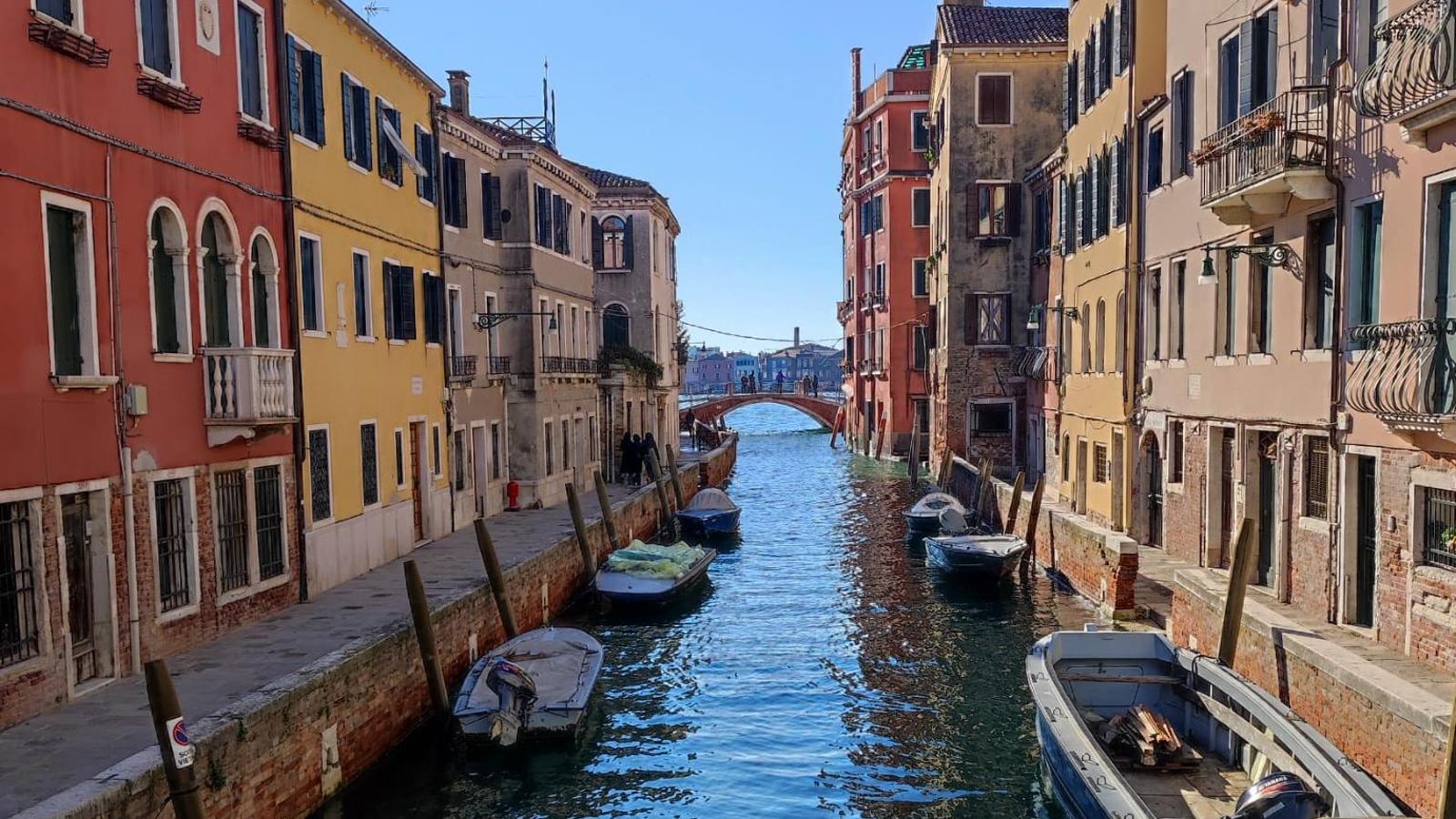
"I am a maniac for islands", confesses Enric Bou, a Venetian by adoption, to Venice. City of Losses (Editorial UB). The lagoon city is made up of one hundred and nineteen islands. The first inhabitants, emerging from the spoils of the Roman Empire, took refuge from the Hun and Germanic invaders in the lagoon, on islands such as Torcello, where the oldest church stands, and on Rialto (Rivoalto, high bank), where the famous bridge now stands (there are more than 500 bridges in the entire city).
The descendants of those first refugees ended up dominating the Mediterranean and becoming a melting pot of capitalism: long-distance trade, finance, and nascent industrial production (the Arsenal), a pragmatic, calculating, and worldly mentality. And art?, they will ask: beauty in the service of the propaganda of the unique Serenissima Republic, which invented income tax, statistics, public debt investments, the lottery... and also book censorship and the ghetto.
Venice is an artificial archipelago built on millions of wooden piles. A human marvel. A labyrinthine madness. A secular mystery where time has a different rhythm and density, where past and future shake hands. Against the evidence of the bland and herd-like non-places described by Marc Augé, it is the place par excellence: there is nothing like it. That is why, for five hundred years, it has been a tourist city, a mirror of wonders and miseries. Of course: glass mirrors were first made in Venice.
It has long since become a product of itself (postmodern capitalism). It was already a must-see destination for aristocratic travelers on the Grand Tour of the 16th to 18th centuries, not only thanks to its aquatic uniqueness and architectural and artistic heritage (during the Renaissance, oil painting became the norm), but also for its ability to transmit knowledge (although it did not formally have a university until 1868), for its cultural dynamism (dance, music, theater... and almost 200 printing presses by the early 1500s; Venetians created copyright), and for its attractive system of government (the powerful, sophisticated, and civic Serenissima Republic).
The Great Paradox
Santa Margarita. The dampness chilled you to the bone. I had read Enric Bou recalls that it hasn't snowed or frozen for years. I was there in 1991 and enjoyed it, snowy and captivating. I was hosted by Mariona, who lived with some Italian friends, students like her, in a piano terra of the campo Santa Margherita. The dampness chilled you to the bone. I had read the Quadern venecià by Àlex Susanna. Happiness was discovering the secret Venice of the Venetians, listening to their dialect, going to the sestieri (districts) where clothes were still hung out in the calli, glimpsing the hidden corti (courtyards) and gardens, having their cicchetti (tapas) or tramezzini (sandwiches) or, even better, some moèche (crabs caught on the beaches of Pallestrina when they shed their shells) with an ombra (a small glass of wine), if possible from the nearby hills of Prosecco.
Despite the loss of inhabitants (from 175,000 in 1950 to less than 50,000 today in the lagoon's core), there is still life beyond tourism. Friends Nicola and Silvia let us experience it in small doses. They show us how in Venice a medieval structure is superimposed on a modern city. No other city of its size and importance functions without cars. All thanks to the water, which has protected it for centuries and is also its greatest threat. The city dedicated twenty years to building a barrier against the acqua alta
, the Mose (modulo sperimentale elettomecanico) or Mosè, Moses in Italian, which separated the waters of the Red Sea. It has seventy-eight gates and worked for the first time on October 3, 2020. It is not clear that it is the saving solution.
"The eye, our only organ resembling a fish, here it truly swims [...], acquiring an autonomy similar to that of a tear," said Joseph Brodsky, who spent many winters in Venice, the city that, seen from the air, has the shape of a fish in the middle of the water. In 1500, Jacopo de Barbari already depicted it like this, from a bird's-eye view, a masterpiece of urban cartography unthinkable with the means of the time. Brodsky, a poet, gives us another image of water: "The slow progress of the boat during the night was like the passage of a coherent thought through the subconscious." Venice, a dream city... for more than twenty-three million visitors a year. What urban planning ethics will save it from itself?
