Ferran Utzet wants to do justice to Nobel laureate Jon Fosse with 'The Son'
The director brings a work by the Norwegian writer to Espai Lliure with Mercè Pons and Guillem Balart in the cast

-
CAT -
CAST
BarcelonaThe Norwegian writer and playwright Jon Fosse (Haugesund, 1959), winner of the 2023 Nobel Prize in Literature, is the most performed living European playwright in the world. "He occupies an important place in the theatrical canon, he is not at all a minority figure," emphasizes director Ferran Utzet. Despite Fosse's impact on contemporary theatre, his works are rarely present on the Catalan stage. In recent years, there have been very few productions, including "Soc el vent" directed by Marc Chornet at L'Akadèmia in 2021 and "Vindrà algú" in 2002, directed by Antonio Simón at Sala Beckett. Now Utzet wants to do him justice with "El fill", which will be performed from May 8 to June 7 at L'Espai Lliure de Montjuïc. "I have a strong sense of challenge and responsibility," says the director.
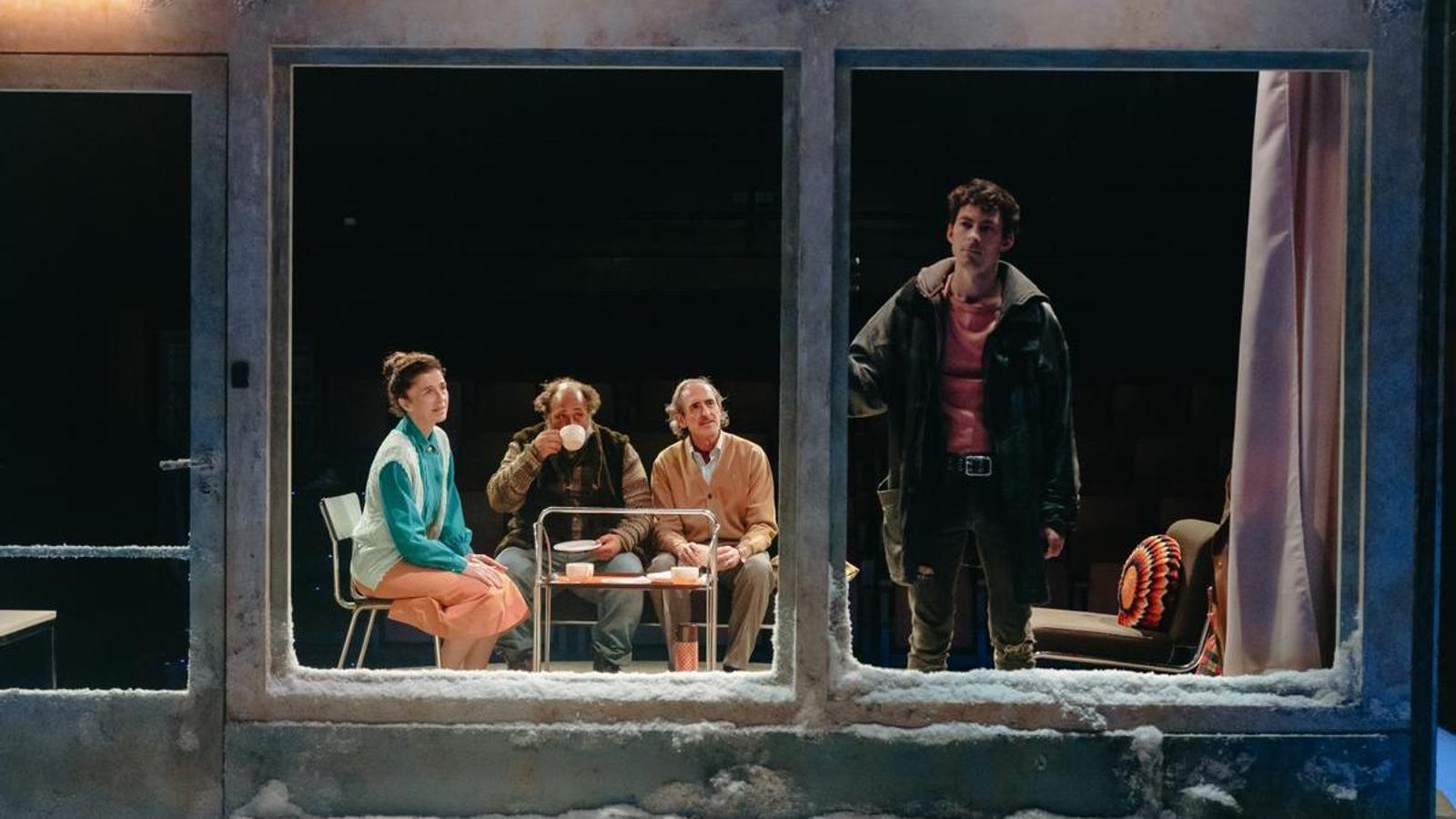
El fill is conceived as "an Edward Hopper painting in motion" and features four characters: a father (played by Sebastià Mogordoy), a mother (Mercè Pons), a son (Guillem Balart), and a neighbor (Jordi Figueras). The couple "spends a dark day looking out the window, waiting for their son, whom they haven't seen for months, to arrive," explains Utzet. From the seven o'clock in the evening bus, the son and a neighbor suddenly get off and summon a meeting that shakes the family's placidity. "It's a real-time play, which takes place in less than an hour," says the director. The trigger for the conflict comes from the neighbor, a strange and solitary man who suggests that the son has been to prison. "The play contains no message, it simply shows the tragic consequences that lack of communication can have for a family. They are characters who love each other, but don't know how to express it," says Utzet.
A text without commas
The main particularity of Fosse's works lies in the form of the text, which often approaches poetry rather than conventional dramaturgy. In "El fill no hi ha comes, some verses are broken and the author incorporates very few stage directions to help the actors ground the characters. "Faced with this complexity, we have worked seeking the organic part of the pattern. It is a text that captivates in many ways, it has been a challenge and a pleasure," highlights Mercè Pons. For Jordi Figueras, the play "leads to priceless unknown territories, to very deep states, interpretatively speaking, and of extreme beauty".
For the performance, Utzet has used Laura Segarra's translation of the play, published by Comanegra in the collection "Llum de guàrdia". The director defines the play as "a poem in four voices", but emphasizes that it is accessible and that they have worked on it from realism. "I don't like theatre that I don't understand, because I find it very difficult to be moved. There is no strangeness here. We represent a situation that we can understand, but we do it with a complicated poetics," assures Utzet. For the staging, he has opted to place the spectators on four sides and has incorporated a revolving platform. "We have respected Fosse's essence to the maximum, but we have made a play of actors, a desolate piece that invites us to embrace our children and our mothers and tell them that we love them," concludes Utzet.
