Dies at 91 years old Pere Lluís Font, the most beloved philosopher
Catalan Letters Honorary Award, leaves an immense legacy through the study of authors such as Montaigne, Descartes and Pascal

-
CAT -
CAST
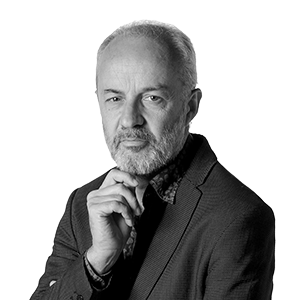
BarcelonaAbout to turn 92 – he would have turned 92 on May 1st –, the historian of philosophy Pere Lluís Font, a benchmark for a couple of generations of Catalan thinkers, passed away this Thursday. Honorary Prize for Catalan Literature in 2025, throughout his prolific career he carried out an immense academic and cultural work, always with wise and erudite discretion, and only achieved a certain popular and media recognition upon reaching ninety. Despite the ailments of age, he was able to enjoy the tributes and awards of this final stage of his life peacefully, accompanied by an enviable agility and intellectual vitality.
Pere Lluís Font leaves an enviable legacy for Catalan culture thanks to having spent his life reading and writing, thinking and teaching how to think, educating the intellectual sensibility of thousands of students and readers, primarily through the French trio formed by the thinkers Montaigne, Descartes, and Pascal, but also Kant, Leibniz, Kierkegaard, Bergson, Ramon Llull, and Saint Augustine, the Greco-Latin classics, and a long etcetera of authors. His solidity as a scholar was built on rigor and seriousness, at the opposite extreme of any kind of stardom. What he truly enjoyed was drawing from his favorite authors, transmitting the passion he felt for them, and thinking alongside them, dispelling dogmatisms. Therefore, Pere Lluís Font, who held great esteem for philosophy, has surely been one of the most beloved and respected philosophers among the profession.
Inseparably linked to his philosophical inclination was his appreciation for the Catalan language – he, who mastered so many languages, living and dead: French, Italian, English, German, Latin, and Greek, in addition, of course, to Catalan and Spanish. The country owes him, in this regard, the collection of almost a hundred titles of classics of philosophical thought in Catalan, which he took charge of for years and which he had initiated in the 70s along with Pep Calsamiglia and Josep Ramoneda. A work that served to bring the native language into conversation with universal heritage in the field of essay writing.
A key figure at the Universitat Autònoma de Barcelona (UAB) from its beginnings and for decades, he always sought dialogue between Christianity – he was a believer – and modernity, hence his interest in Blaise Pascal. Once retired, he dedicated years to translating the Pensées by this major French author, a monumental work that in 2022 earned him the National Translation Award and the Catalan PEN Club award. Last year, before receiving the Premi d'Honor, he still published the Catalan translation of the Poemes essencials (Fragmenta) by Saint John of the Cross, of which he highlighted both its mystical and erotic readings.
he declared: "I have always thought that the best way to teach philosophy is by doing history of philosophy, which is like the philosopher's laboratory. Stubborn in fighting philosophy's inferiority complex in relation to science, he was also very critical of philosophical postmodernity, which he considered "a deception". Regarding this, he said: "To define the characteristics of current culture, things like globalization, the digital revolution, feminism, the sexual revolution, and ecological awareness are much more decisive than postmodernity". It pained him that Hobbes's "homo lupus homini" had more currency today than Kant's "perpetual peace", and he longed for the ideals of the Enlightenment.
During the dynamic 70s, between the end of Francoism and the beginning of the Transition, he was a philosophical advisor for the Enciclopèdia Catalana, an active participant in the Congress of Catalan Culture, and president of the Institut Eiximenis (1975-1980), among other positions and initiatives. In 1980, he participated in the refoundation of the Societat Catalana de Filosofia and was a member of the Col·legi de Filosofia de Barcelona. His cultural activity in many other institutions, from the Fundació Joan Maragall to the Bernat Metge, and through the Corporació Catalana de Ràdio i Televisió, denotes both his civic commitment and his drive. And all this he did, over the years, in parallel to his teaching work and an extensive body of work, with a hundred publications on modern philosophy.
Modesto, already nonagenarian, in an interview to this newspaper declared: "I have always thought that the best way to teach philosophy is by doing the history of philosophy, which is like the philosopher's laboratory. Philo-sophy means lover of wisdom. In this sense, I cannot deny it, I am a philosopher. But to say of a person that they are a philosopher seems too solemn to me". With solemnity we can say today, however, that without Pere Lluís Font, Catalan culture is left orphaned of an exemplary scholar, historian, professor, and wise man. Rest in peace.
