Basque also fills the Palau Sant Jordi with the group ETS
The Alavesa formation presents a special show that will be "a Basque cultural festival".

-
CAT -
CAST
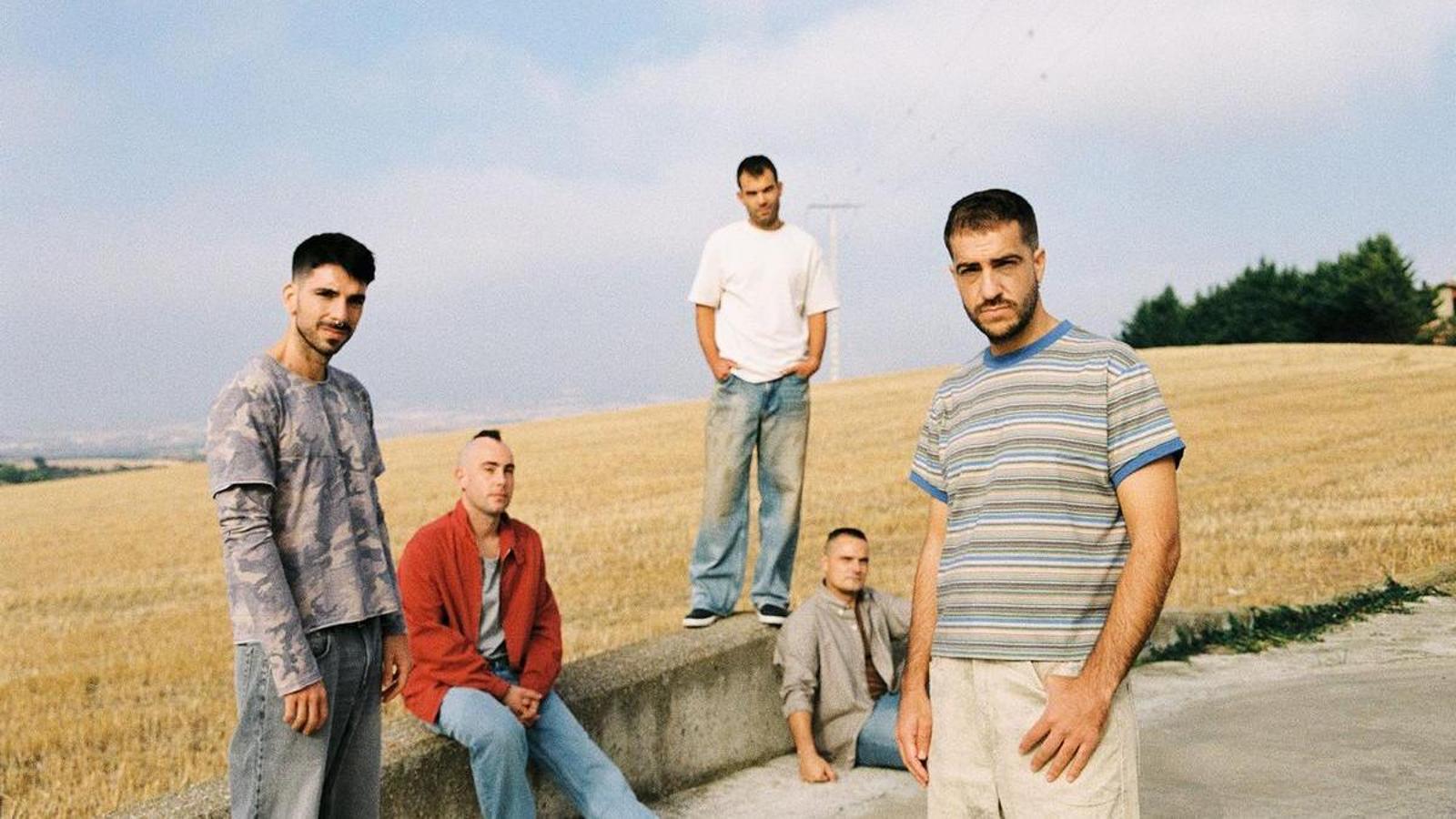
BarcelonaThe same night that he filled the Palau Sant Jordi, Joan Dausà set himself the challenge of filling a similar venue in Madrid or San Sebastián singing in Catalan. It finally happened in Madrid. The Basque group ETS (En Tol Sarmiento) took note of the challenge that Dausà set for himself. "That's where the move came from," admits the Alavese singer Iñigo Etxezarreta. The idea was to fill the Palau Sant Jordi and the Madrid Movistar Arena singing in Basque. They perform in Barcelona this Saturday, April 11, and in Madrid on May 25. "Some people believe that language can be a barrier, but what we do shows that it isn't. I think singing in Basque brings its own sensibility, and it's also a cultural differentiation in such a globalized world," says Etxezarreta. Last year it was Fermin Muguruza who mobilized thousands of people to listen to music in Basque at the Palau Sant Jordi, and now it's the turn of ETS, a band born under the umbrella of Basque punk-rock that gradually incorporated other musical sensibilities, some more pop, others more Latin, like bachata. "The concert will be a Basque cultural festival around the Basque language, tradition, and oral transmission, but also a show with space for encounters with other cultures," explains the Basque musician.
The challenge of the group from Ikora, in La Rioja Alavesa, coincides with the release of the album Konkista (Baga-Biga Musika Ideak, 2026), —structured around the concept of "conquering hearts”—, and comes a year after gathering 45,000 people in three concerts in Barakaldo with which ETS celebrated twenty years of career and also added traditional elements, both musical and dance, and generally of Basque popular culture. "Those concerts represented a very important step in the group's history. They also brought a lot of pressure and responsibility. We grew up in the festive environment of major festivals, and suddenly we were planning a show with great scenic and technical ambition," recalls Etxezarreta.
They had already experienced another "historic moment" when the song Zurekin batera became a kind of healing anthem during the coronavirus pandemic. Buhos covered that song in Catalan (T'he trobat a faltar), and ETS adapted Volcans from the Calafell group into Basque (Sumendiak). "It was Buhos who proposed the song exchange, which are stories of two bands from different territories but who share, more or less, an artistic line. And we both grew up in major festivals," he explains. And even before that, they had achieved another milestone with Musikaren doinua, the song that in 2012, "after seven years of work" playing in bars in their area, made the group start to be heard on the radio. "Logically, this song has to be part of the repertoire for the concert at the Palau Sant Jordi, like other songs that have brought us this far," he says.
The concert, by the way, will be very special, and different from those of the twentieth anniversary. "People who saw us in those performances will also come to Barcelona. Therefore, we want to offer them something different," he assures. Without revealing names, because they want it to be a "surprise", he does advance that at the Sant Jordi there will be "collaborations (some Catalan), choir, brass bands, orchestra, modern and traditional dance". And a repertoire that will also include songs from the new album, among which there is one, Eutsi eskutik (Take my hand), which Iñigo Etxezarreta dedicates to the memory of his brother, and another, Aska gaitezen (Let's free ourselves), about the need to free ourselves from "the prisons that waste a relationship". "Konkista is a very personal album, which talks about painful emotions that help you grow that were not in previous albums. I needed to make an album like this," assures Etxezarreta .
