Narcís, the name of the patron saint of Girona that is about to disappear
The floral name of mythological reminiscences that prevails in the Girona lands
-
CAT -
CAST
BarcelonaThe name Narcís intoxicates like the namesake family of bulbous plants with beautiful and fragrant flowers (Narcissus); even so, it is one of those names in danger of extinction in our country. Among male names, Narcís currently occupies the 239th position in Catalonia, very far from the 125th position it holds among those born before 1940.
But let's go back to its origins. Narcís comes from the ancient Greek Narcissus (Narkissos), derived from narke, and means stupor, lethargy, numbness, or narcosis, and refers to the narcotizing property of the flower.
According to Greek mythology, Narcissus, son of Cephissus and the nymph Liriope, was a young man of great physical beauty that made him vain and insensitive to the affection shown to him by the maidens and nymphs madly in love with him. As revenge, one of the nymphs, Echo, made him fall into a trap. One day, while the young man was walking through the forest, a voice from a pond called him; Narcissus, upon seeing his own face reflected in the water, fell in love with it. Such was the attraction that he fell into the pond and drowned. And there, narcissi were born.
This myth gave its name to narcissistic personality disorder; therefore, as Francesc Calafell, principal investigator at the IBE (CSIC - Pompeu Fabra University) and professor and researcher at the UPF, explains well, "perhaps this negative connotation makes future fathers or mothers not end up choosing Narcís for their baby." However, he points out that "by being related to a flower, it can be a good solution for those seeking to break with gender stereotypes."
The patron saint of the city of Girona
The highest concentration of Narcisos per thousand inhabitants is found in the Girona regions, which is not at all strange if we take the Calendar of Saints into account. Notable are Pla de l’Estany (2.48 per thousand), Gironès (2.10 per thousand), and Baix Empordà (1.36 per thousand). On the other hand, their almost total absence in the northwest regions is surprising: neither Cerdanya, nor Alta Ribagorça, nor Aran, nor Alt Urgell, nor the two Pallars reach the minimum number of cases necessary for Idescat to publish data.
For this reason, the Girona festivals are celebrated around October 29th, Saint Narcissus, a saint venerated in the Catholic Church, as he was its bishop. The city of Girona has considered him its patron saint since the year 1387 for his role in the liberation of the city from the siege it suffered by the French troops of Philip the Bold. The legend explains that during the assault of the year 1285, the French army desecrated the tomb of Saint Narcissus. Upon breaking it, a whole swarm of flies came out from inside, which stung the French soldiers, but did nothing to the people of Girona. The episode ended with 4,000 horses and 20,000 soldiers dead due to some disease transmitted to them by the flies. It seems that the famous miracle of the flies was repeated in other sieges of the French army on the city, in 1653 and 1808.
The name lived its moment of greatest success in the sixties: there are 335 Narcissuses born between 1960 and 1969. Since then, this floral name with mythological reminiscences has followed a clearly downward trend. Of those born in the last 25 years, there are only 225, and last year only six babies received this name in Catalonia. The Spanish version, Narciso, is carried by 998 people in the Principality. This data also gives us the clue that surely before 1975, during the Franco regime, behind the boys baptized as Narciso there was a Narcís. "Many surely recovered their name when they had the opportunity," comments Calafell.
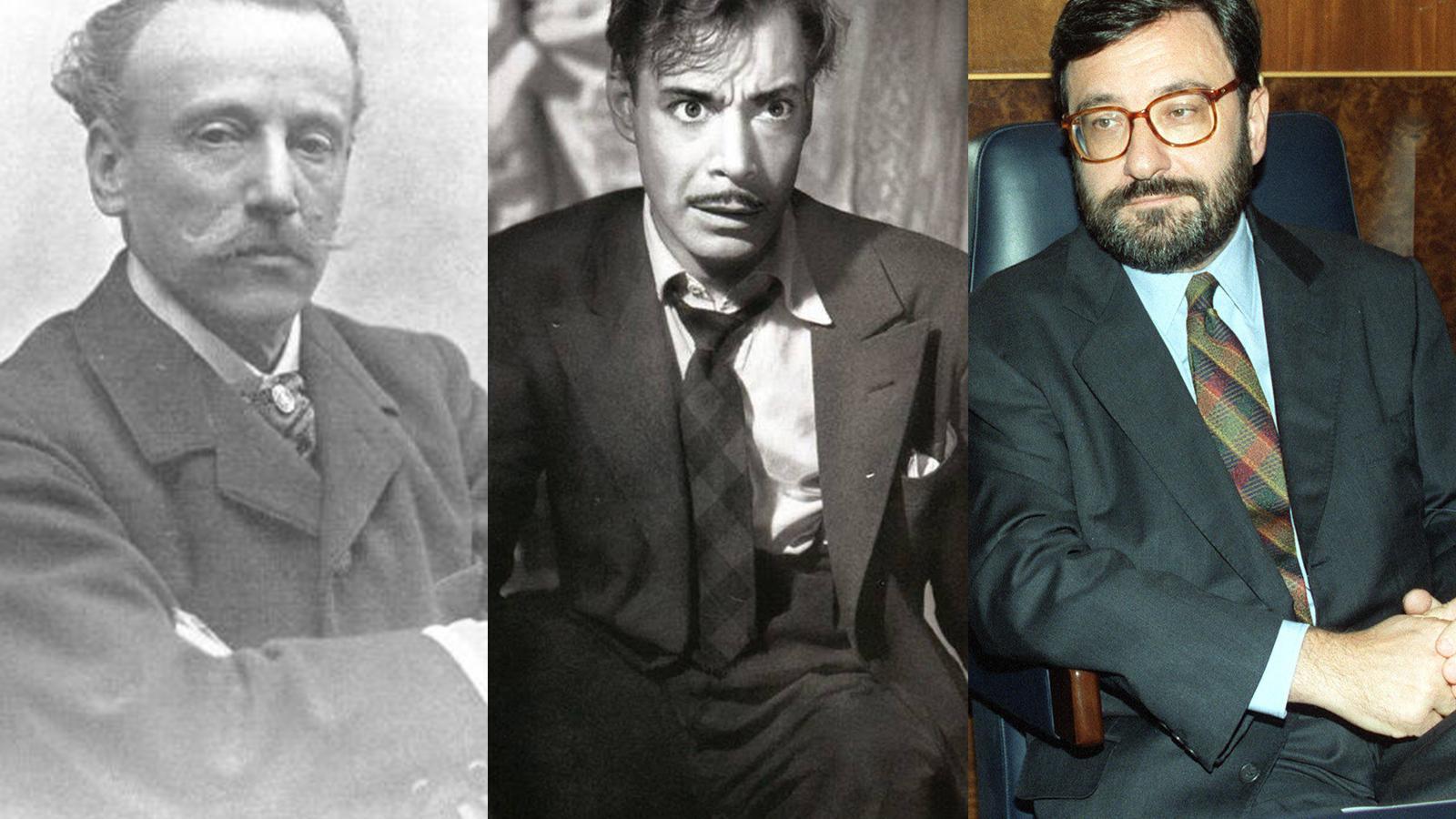
Everything indicates that Narcís is a name that has remained in the last century, and the average age of the men and boys who are named this confirms it: 53.2 years. In the State, the typical Narcís is more than a decade older, with an average of 64.5 years. Throughout the history of Catalonia, we find great names such as Narcís Oller in Catalan literature, Narcís Monturiol in engineering, or Narcís Serra in politics. But in its Spanish version, we find other more contemporary references such as the actor and screenwriter Narciso Ibáñez Menta in the world of cinema or the Cuban-born designer Narciso Rodríguez in the world of fashion.
As a curious fact, Francesc Calafell has discovered that there are Romanian citizens living in Catalonia who are named Narcís, since in Romanian it is spelled the same as in Catalan. In fact, Narciso is more common in former colonies of Spain or Portugal such as Peru, the Philippines, or Angola than in European metropolises. The same goes for the French version Narcisse, which is found more in French-speaking Africa than in the large cities of France. "Like many other religious names, these proliferated in the former colonies thanks to the Christianizing work of the missionaries," says the researcher.

