Ebro will reach a new milestone with the start-up of a new production line
The Zona Franca plant expands its occupied surface with the objective of increasing annual vehicle production and avoiding tariffs on Chinese cars
-
CAT -
CAST
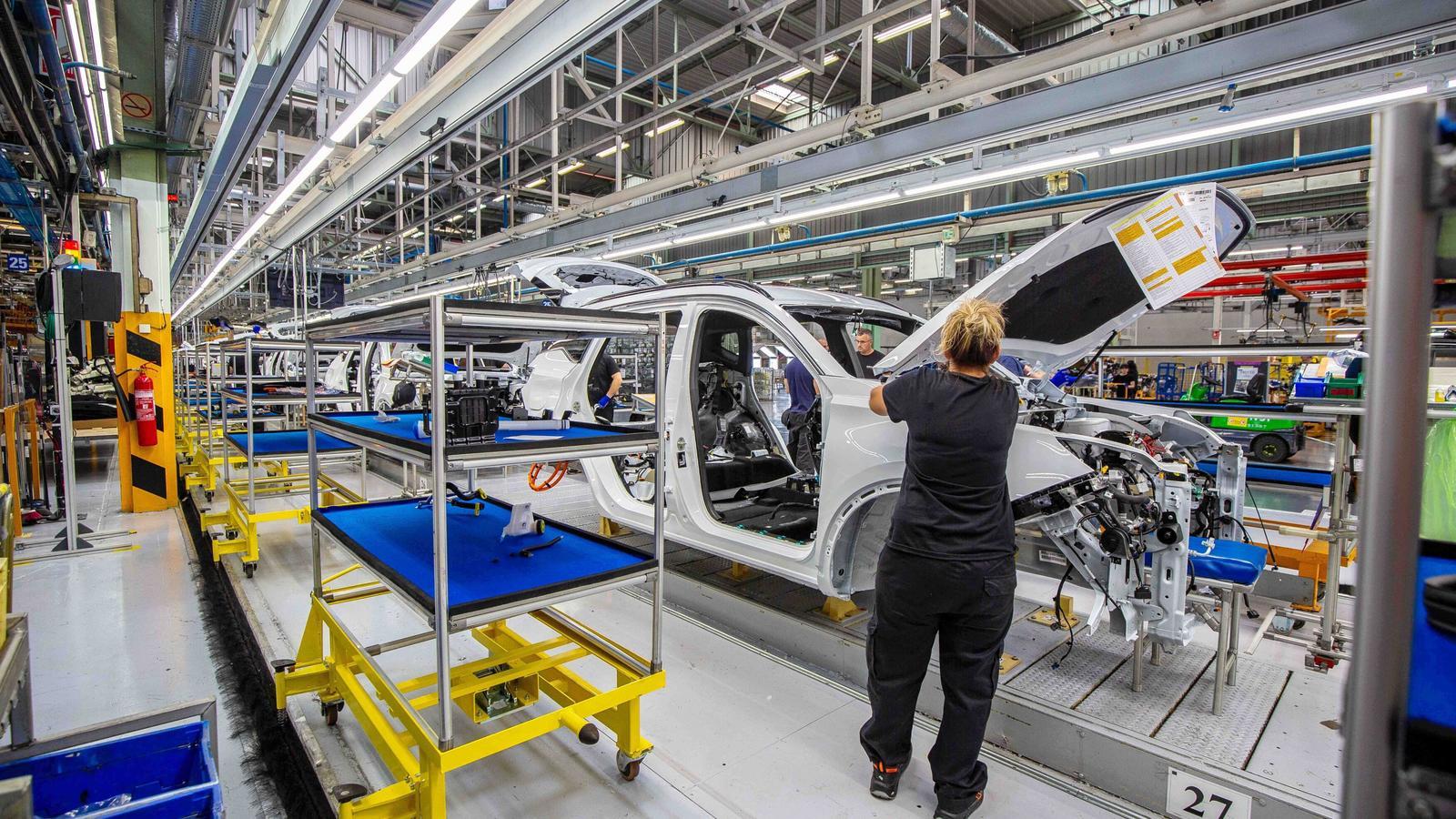
Ebro's factory in the Zona Franca continues to move forward and this autumn a new production line will come into operation that will allow vehicle production to be increased to 250 units per day. The qualitative leap of the Zona Franca factory will be accompanied by new painting and welding workshops that will allow the brand to develop more production processes in Barcelona, going beyond the current assembly process of parts coming from China.Ebro will invest 150 million euros in the implementation process of this new production line, named M1. This work line, which was already operational when the plant was owned by Nissan, has a length of 700 meters and 97 workstations, where male and female workers will be accompanied by more than 200 robots participating in the different industrial processes. The opening of this new production line should facilitate the assembly of the S400, S700, S800, and S900, in addition to Ebro's future electric car, which is set to enter production in 2027.The new production line must enable Ebro to manufacture more than 50,000 units annually, at a rate of one hour and a quarter for the assembly of a finished vehicle. The final production figure for the Ebro plant will also depend on the workloads that the Chery group assigns to the Zona Franca in the form of Omoda and Jaecoo models.A strategy designed to avoid tariffs
Chery's roadmap with its different brands involves increasing the local production part, with a greater weight of local suppliers and production processes, such as the possibilities offered by the commissioning of the welding and painting workshops. Until now, Ebro vehicles arrived disassembled in various containers from China and the industrial process in the Zona Franca was limited to assembling the different pre-manufactured parts.The entry into force of this new production line will allow Ebro (also Omoda and Jaecoo) to implement more parts of the production process in Barcelona, taking advantage of the network of local suppliers that already works for Seat and Cupra, among others. Having a higher percentage of the production process located in Europe should allow Chery to avoid the significant tariffs that significantly increase the final product's cost when it reaches the market. Chery's strategy is not very different from that of BYD (with a factory in Hungary), Leapmotor (which will use the Opel plant in Figueruelas, Zaragoza) or MG, with a project to create a new factory in Ferrol, Galicia.
