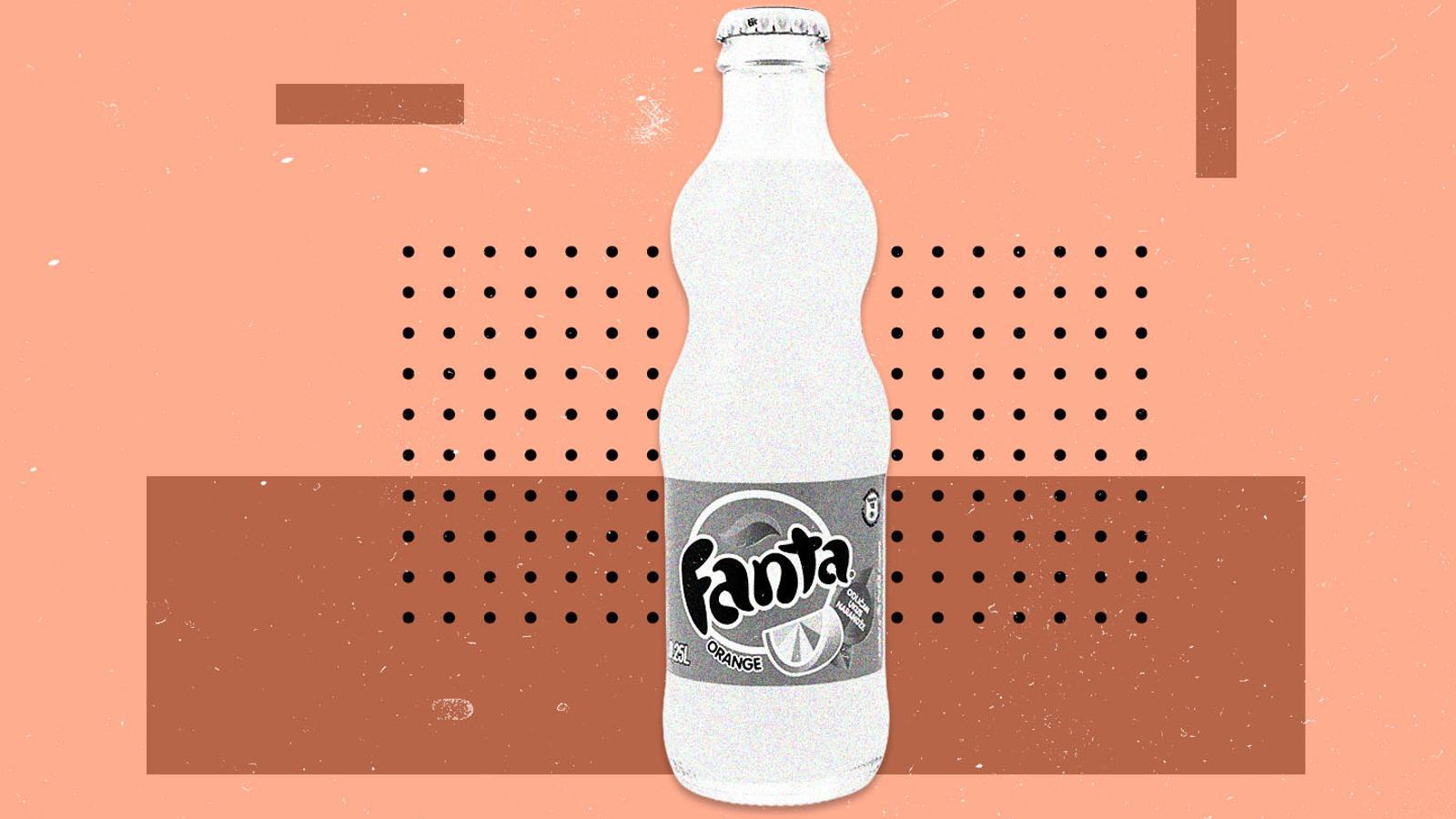
This was the original Fanta: milk serum, apple leftovers, and beet sugar
The soft drink brand has become universal without losing the local flavor
-
CAT -
CAST
In one of the industrial estates of Essen, in northern Germany, there is a street named Max Keith. It is the way the city has found to remember the man who, in the midst of World War II, had to solve an unexpected problem: German Coca-Cola factories could no longer make Coca-Cola. The trade blockade had cut off the arrival of the concentrate that the company sent from the United States and without that secret syrup, the plants could not operate. Keith, who managed the multinational's German subsidiary, had to find a way to get by.
The solution was to create a new drink with the ingredients that could still be found in a war economy. With whey, apple residue from the cider industry, beet sugar, and other raw materials, Keith devised a carbonated drink that he named Fanta. That early version, however, did not resemble the current drink much: it was not orange, it had a stable formula, and the taste could vary depending on the products they managed to get into the factory. But it worked.
Today, more than eight decades later, Fanta is one of the great brands in Coca-Cola's catalog: in Spain, it leads the citrus soft drink segment, with a 48.3% market share by volume at the close of 2025, and is present in 52% of households, according to the consulting firm Nielsen. But how did that improvised soft drink, born of scarcity and war, manage to become a global icon?
A multinational trapped
To understand the origin of Fanta, we must go back to Germany in the 1930s. Coca-Cola had begun to internationalize during the previous decade and the German market had become one of its major European bets. Sales were growing, bottling plants were opening, and the soft drink was beginning to find its place in a country where, it is true, beer continued to dominate a large part of consumption habits.
However, that growth was cut short by the political and military context. With the outbreak of World War II, and especially with the entry of the United States into the conflict, Coca-Cola's German subsidiary became increasingly isolated from the Atlanta parent company. The trade embargo cut off communications and the supply of the concentrate needed to make Coca-Cola. And Keith created Fanta. The idea worked. In the midst of scarcity, the new soft drink found a niche in the German market, and by 1943, about three million cases were being sold. Fanta was not only consumed as a drink: in some homes it was also used to sweeten soups and stews, at a time when sugar was heavily rationed.
With the end of the war, Fanta's story took another turn. The German subsidiary was reintegrated into Coca-Cola's orbit, and the American company regained control of the plants, the brand, and the formula that had been created during the conflict. But that soft drink born of scarcity did not immediately become the global phenomenon it is today. In fact, for some years, its production was halted.
The second life of Fanta
The modern Fanta arrived later. In 1955, in Naples, Coca-Cola relaunched the brand with a very different formula, made with local oranges. That one was beginning to resemble the drink that today fills refrigerators, bars, and supermarkets: a fruit soft drink, with a bright color and citrus taste, much easier to associate with summer, youth, and fun than with the hardships of a war economy. From here, Fanta left behind its first German life and became an international brand. The name, short and easy to pronounce in many languages, helped.
Within Coca-Cola, Fanta became a particularly flexible brand, capable of adapting to the tastes of each market. Orange consolidated as its great global flavor, but the brand also grew with versions of lemon, pineapple, grape, strawberry, guarana, or elderflower, depending on the country. This adaptability allowed it to be both an international brand and a product with local accents: the same name, but with different recipes and flavors depending on the market. In Spain, Fanta arrived in 1961 and ended up finding a space among consumers, especially with the orange and lemon versions.
