The lipstick that inspired the first glue stick in the world
Henkel produces more than 120 million Pritt sticks every year and sells them in more than 120 countries
-
CAT -
CAST
It is the year 1967. Aboard a plane, engineer Wolfgang Dierichs notices a woman sitting a few seats away. He sees her take a lipstick out of her bag. The researcher, who works in the adhesives division of the German multinational Henkel, observes as the passenger uncaps it, turns the base, and pushes the colored stick up until it is ready to be applied. He thinks the mechanism is very clean, fast, and precise, and, before landing, he is already turning over an idea: what if, instead of a lipstick, the tube contained glue?
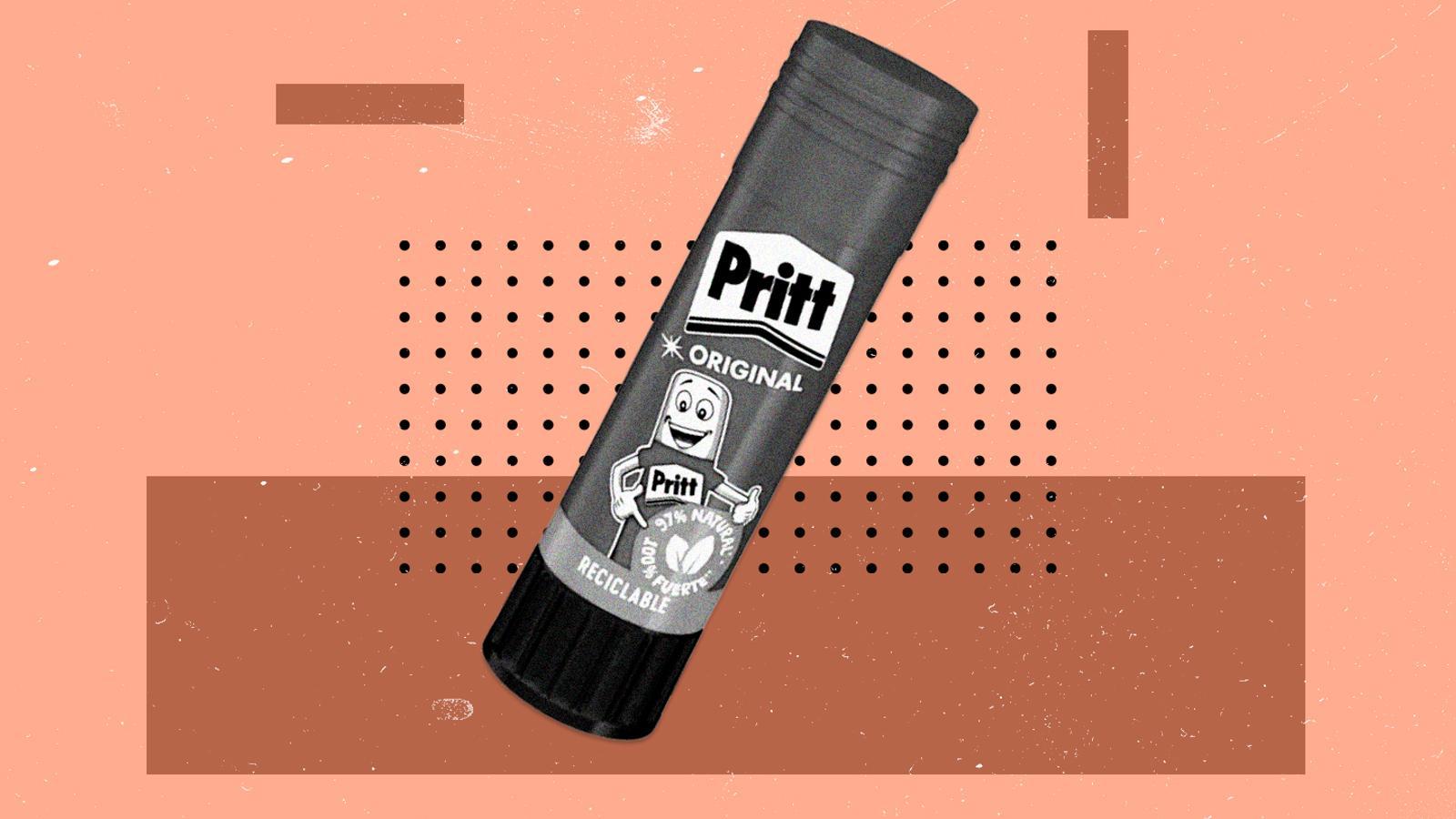
Until then, gluing paper usually involved pots, brushes, or liquid glues that could spill and make a mess of everything. Following this scene, Dierichs imagined a solid stick that could be raised and lowered by turning the base, exactly like a lipstick. Henkel needed two years to turn that idea into a commercial product. That is how, in 1969, Pritt was born, the world's first glue stick.
Today, more than 100 million sticks are manufactured each year and they are sold in more than 120 countries. Since its launch, Henkel claims to have sold more than 1 billion. But how did it go from that idea born on a plane to becoming a product present in pencil cases and offices everywhere?
From the idea to global expansion
Henkel bet heavily on the invention from the very beginning. In 1969, the same year it was launched, they patented the Pritt stick in 19 countries. The market response was swift: just two years later, in 1971, it was already being sold in 38 countries. The format solved some of the drawbacks of traditional glues in a very simple way: no brush was needed, it was easy to control how much glue was applied, and the tube could be kept in a pencil case or a drawer without fear of it spilling. In a very short time, an idea born on an airplane had become an international product.
During the following years, Henkel continued to expand the Pritt family. In 1972, they added a universal glue, and in the eighties, the brand began to go beyond the original stick. In 1985, Henkel took an important step with its stock market launch, in the midst of the group's international expansion phase. At the same time, Pritt expanded its universe: in 1987, Mr. Pritt appeared, a character in the shape of a glue stick that starred in the brand's campaigns, and in 1988 the Design Stick was launched, an evolution designed to make its use even easier.
Beyond the red tube
The next leap forward came in the nineties, when Henkel began to grow Pritt through acquisitions as well. In 1995, it bought the rollers business from the German company Pelikan and incorporated it into the brand. From this came the adhesive rollers, a kind of correction tape but with glue instead of correction fluid.
Four years later, Pritt entered the correction tape market and, in 2000, introduced one so narrow that it allowed for individual letter correction. That same year, Henkel also made an important change to the original product: it launched the first generation of solvent-free Pritt. And the following year, it carried out one of the most unusual campaigns in its history. Several Pritt products traveled to the International Space Station, where they were tested in extreme zero-gravity conditions.
Meanwhile, production had become so industrialized that Henkel's lines can fill more than 200,000 sticks a day, in three main formats of 11, 22, and 43 grams. Over the years, Pritt also changed its formula. Henkel replaced part of the petroleum-derived ingredients with renewable raw materials and incorporated components such as potato starch and sugar. Currently, the stick contains 97% natural ingredients, including water, and the tube incorporates recycled plastic.
More than half a century after that plane trip, Pritt continues to be part of Henkel's giant adhesive business. The multinational does not break down how much it invoices individually, but assures that today it produces more than 120 million Pritt sticks every year and sells them in more than 120 countries. The Adhesive Technologies division, which encompasses the group's adhesive business, invoiced 10.667 billion euros in 2025, more than half of Henkel's total sales.
