The German who took advantage of the telegraph (and pigeons) to spread information
Julius Reuter created what is currently one of the most important news agencies in the world
-
CAT -
CAST
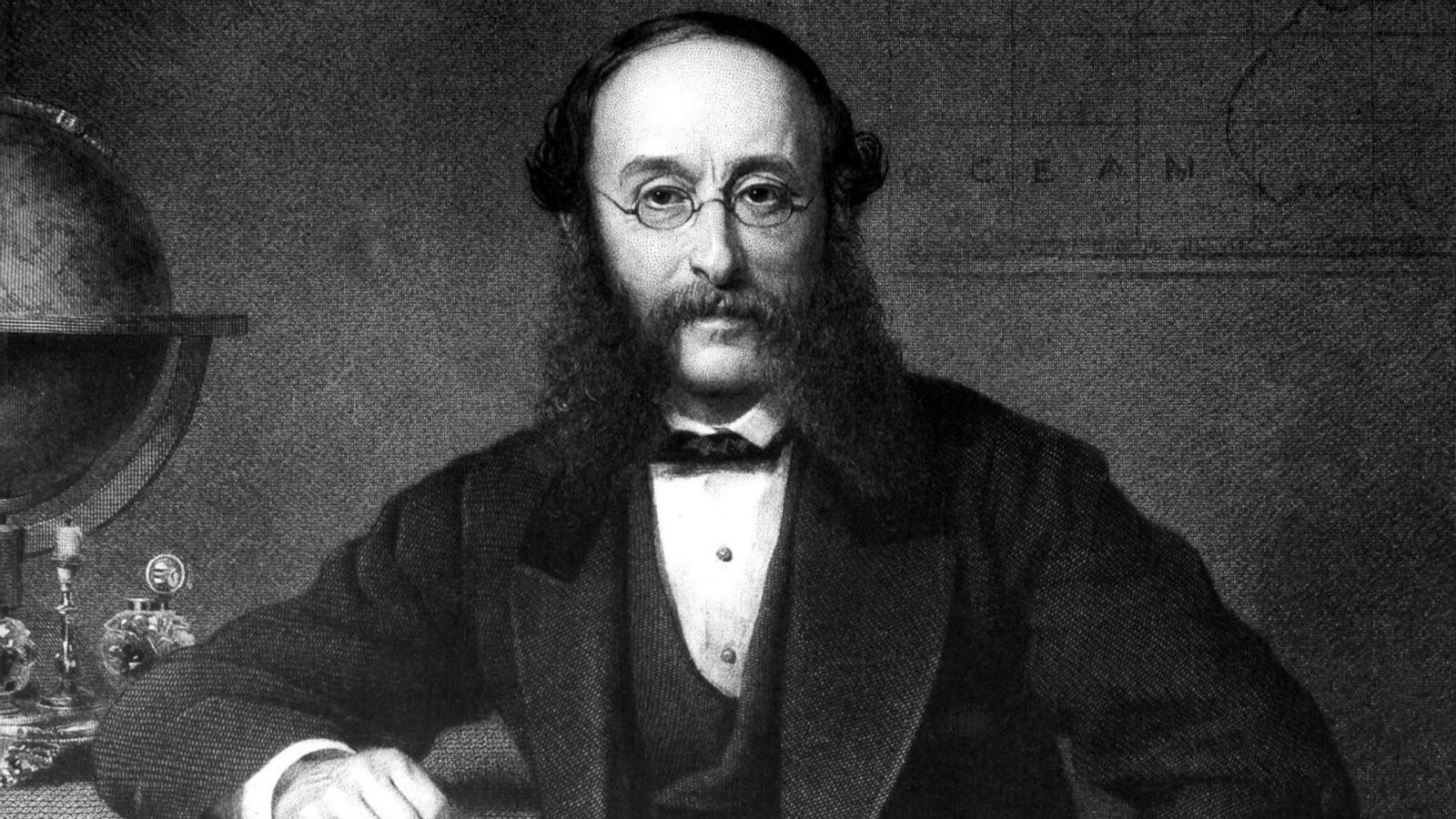
If we speak of Israel Beer Josaphat, it is likely that this name will not mean anything to us, but if we refer to Paul Julius Reuter – his other identity – the surname will resonate with us. Indeed, the German Jew Reuter was the founder of the news agency that bears his name and which today is one of the most important in the world. The son of a local rabbi from Kassel, before he was thirty he converted to Christianity and married the daughter of a Berlin banker. Prior to all this, he had already had his first banking experience when the family sent him to Göttingen to work in a financial institution owned by his uncle. The bank job did not satisfy him much, but, at least, his presence in Lower Saxony would serve him to meet a fascinating character like Carl Friedrich Gauss, known as the Prince of Mathematics, but also a physicist and experimenter in the transmission of electrical impulses. For the moment, this last field was only a curiosity, but the seed had been sown.
- 1816-1899
In 1847, already settled in Berlin, having converted to Christianity and married, he partnered with Joseph Stargardt to take over the ownership of a bookstore that included a small publishing house. In this venture, he had the financial support of his banker father-in-law. Shortly after, during the German March Revolution (1848-1849), the publishing house published some texts with democratic leanings that did not please the authorities much, events that led to legal persecution and his flight to Paris. In the French capital, Reuter found work at the news agency – the first in the world – which had been set up in 1835 by the writer and translator Charles-Louis Havas. This early agency would later evolve into the media conglomerate Havas and also into the prestigious agency France Presse.
After working for a year at Havas, Reuter felt he had learned enough and, upon learning that a first telegraph line had been inaugurated in Prussia between Berlin and Aachen – one of the continent's pioneers – he lost no time in returning to his country to organize his own news agency. The memory of what he had learned from Gauss about electrical impulses allowed him to understand that telegraphy would be the future in the world of information. Shortly after, in 1850, a line was inaugurated in France between Paris and Brussels, and Reuter thought it would be very useful for expanding his client base – at that time, most were located in Aachen, where his headquarters were.
The problem in making his plan effective was that there was no telegraphic communication between his city and Brussels, so he had to devise a way to cover this gap. The solution came from traditional methods, so he established a communication bridge between the two cities using a team of forty-five carrier pigeons. The pigeons were so efficient that the information they carried arrived before that of the mail train, and this was a critical advantage when it came to Paris Stock Exchange quotations. In the following years, Europe became increasingly filled with cables and Reuter's possibilities multiplied; one of those links was key, as it connected the continent with the British Isles.
One of the main companies manufacturing telegraph lines was Telegraphenbauansalt von Siemens & Halske, a firm that had been set up by Werner von Siemens (whom we spoke about just over four years ago), and which would later transform into the multinational known by everyone. It was precisely Siemens who recommended Reuter to establish the nerve center of his communications business in London. As a result of this advice, our protagonist created the firm Telegraphic Office, which would later be renamed Reuter's Telegram Company (1865). If initially it was dedicated to commercial telegrams, it soon expanded its services to the distribution of news that reached the European continent.
The volume the agency acquired allowed it, in 1869, to lay its own transoceanic cable, so as not to depend on third-party infrastructure. This initiative was fundamental to conquering the American market. Until the moment of his death, he did not stop reigning in the world of communications. Today, the agency founded by Reuter is part of the Thomson-Reuters conglomerate, has its headquarters in New York and London, and the entire group has an annual revenue of approximately 7.5 billion dollars.
