The banker who put order to the Vatican finances
Bernardino Nogara planted the seed of the Vatican Bank
-
CAT -
CAST
In 1982, the scandal of Banco Ambrosiano, a nearly century-old Italian financial institution that collapsed like a house of cards after maintaining a very close relationship with the Institute for the Works of Religion, an entity popularly known as the Vatican Bank, hit all the headlines in the international press. In the plot of the bank's downfall, besides the Vatican, other major actors appeared, such as the rogue Masonic lodge Propaganda Due (P-2) or the Sicilian financier Michele Sindona. Just after the bankruptcy, Roberto Calvi, who was the president of Banco Ambrosiano, was found hanging from Blackfriars Bridge on the London Thames, while Paul Marcinkus, the head of Vatican finances, was removed from his post and sent to his hometown in Illinois. For his part, Licio Gelli, the Grand Master of the P-2, was sentenced to prison.
- 1870-1958
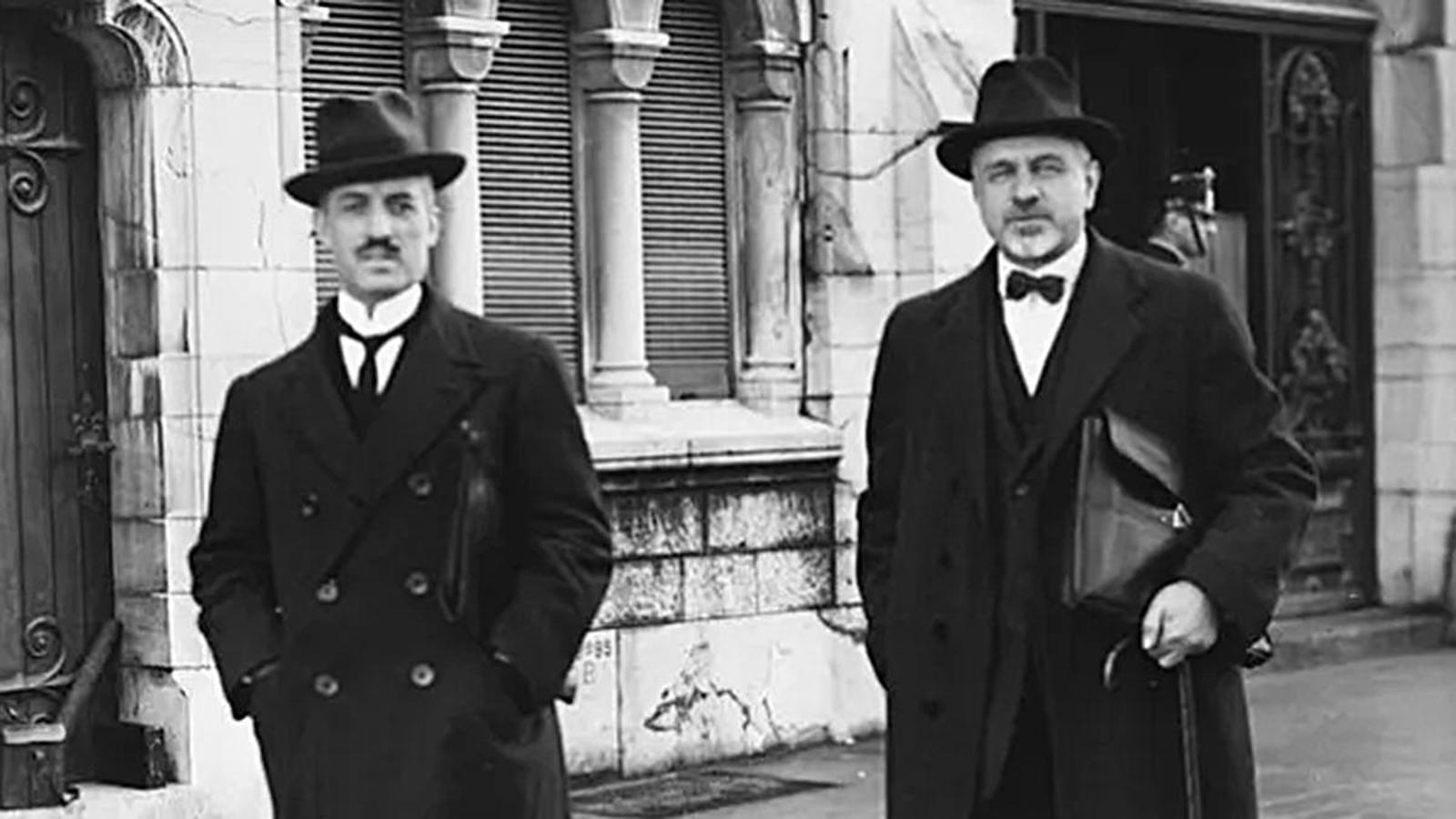
Before this scandal, Vatican finances had attempted to maintain a low profile and good organization, all attributable to a man who managed these affairs between 1929 and 1954, the Lombard Bernardino Nogara. With engineering studies, Nogara traveled the world before being hired by Pius XI to manage the Vatican's money. The United Kingdom, Bulgaria, or Turkey (then the Ottoman Empire) were some of his professional destinations and also the places where he began to make a name for himself as a financier. The Banca Commerciale Italiana appointed him delegate in Istanbul (later he would become a board member and vice president) and he was also a member of the international committee that oversaw the public debt of the Ottoman Empire. When he held this position, he began to have a financial relationship with the Vatican, because he recommended to the Pope of the time, Benedict XV, that he invest in Turkish bonds, a proposal that offered very positive results. In 1919, he was part of the Italian delegation at the Versailles peace conference.
In 1929, the Vatican created the Amministrazione Speciale per le Opere di Religione (ASOR), as a direct consequence of the Lateran Pacts between the Holy See and the Kingdom of Italy. This agreement meant very significant economic income for the Church, which immediately thought of Nogara to organize and manage its accounts. The financier asked to have free rein to select the investments to be made, and for these to be made based on technical criteria rather than religious ones. What he found were very precarious accounting systems and extremely fragmented budgets, so one of his main tasks was to update all the accounting information. Regarding the management of the money – thanks to the Lateran Pacts, a lot had come in at once – Nogara's strategy was to invest in the capital of a large number of important companies in the Italian economy (especially railways and public services), in which he usually sat as a member of the board of directors. He also invested in gold, foreign currency, and foreign public debt.
During the depression of the thirties, the global economic situation dealt a very strong blow to Nogara's plans, which was also affected by the bankruptcy of the businesses of the match tycoon, Ivar Kreuger, who apparently ended up committing suicide in Paris in March 1932. That same year, Nogara created the firm British Grolux, with which he secretly acquired many real estate properties in the most expensive districts of London. Later, he discovered the great utility of tax havens. In 1939, Pius XII renewed him in his position, and three years later the ASOR evolved into the Institute for the Works of Religion (IOR), which we have spoken about from the very beginning. By the way, it is not entirely clear whether the purchase of a significant stake in the Istituto Nazionale Medico Farmacologico Serono was Nogara's idea or that of his successors, because it was carried out in the mid-fifties, coinciding with the time when the financier left the position. This investment was not just another one, because in the future it brought certain problems to the Vatican when the RTL network claimed that the laboratories had produced, at the end of the sixties, the contraceptive pill.
Retirement came to him in 1956, when he was already eighty-five years old. Regarding his death, two years later, the Bishop of New York Francis Spellman asserted that Nogara was, “after Jesus Christ, the most important thing that has happened to the Church”.
