Ofèlia Drags: "Doing it in Catalan is an opportunity. If we are fewer, we get a bigger slice of the pie"
The artist explains his relationship with money and work
-
CAT -
CAST
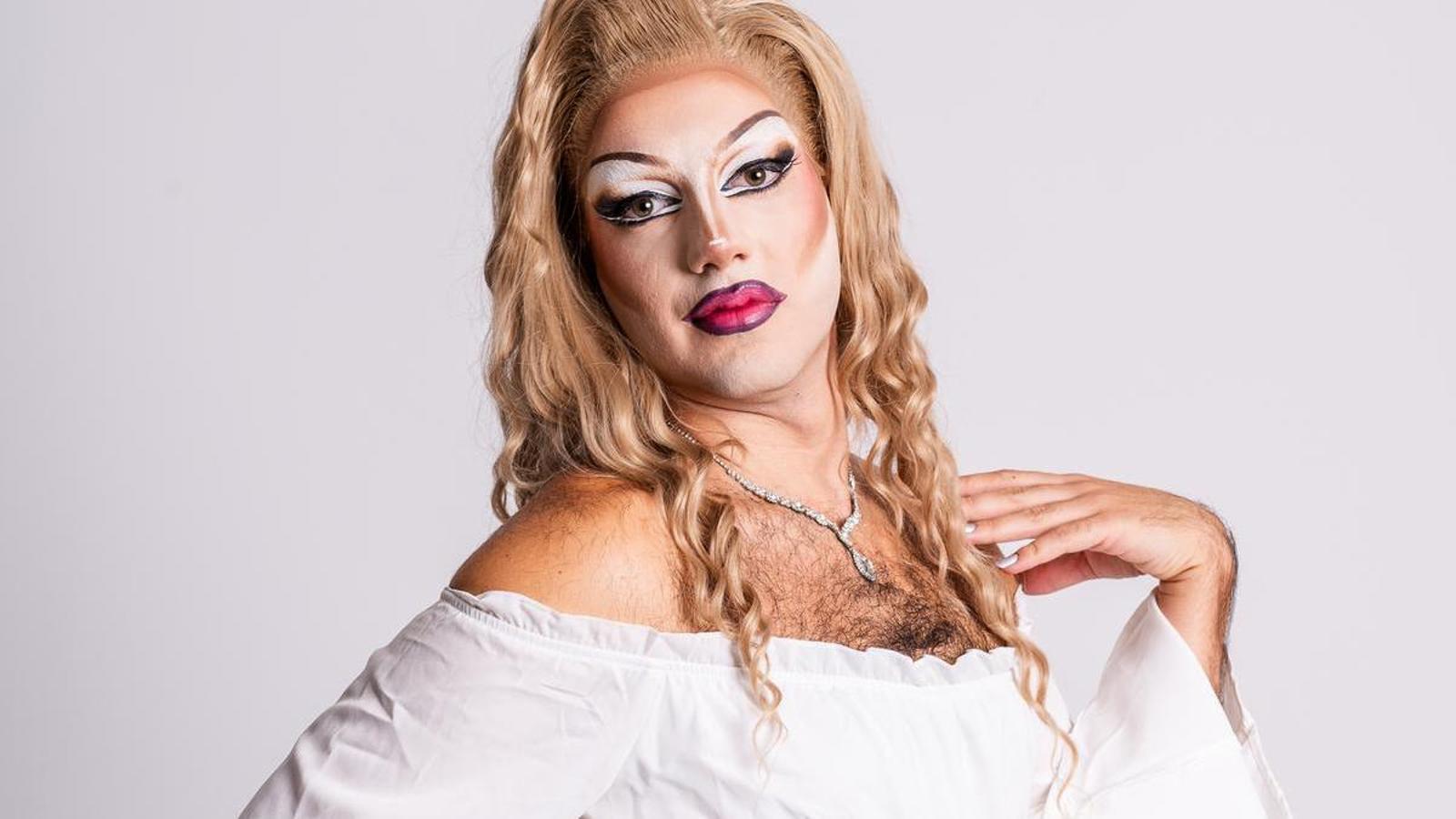
When she was little, Ofèlia Drags, whose name is Pau Martí (la Seu d’Urgell, 2002) was not sure what her professional future would be: “There was a time when I wanted to be a fashion designer, what I certainly wouldn’t have imagined is that I would end up being a drag queen,” she explains in statements to Empreses”. She entered the world of work by working during summers in a publishing house in her hometown, a job she still maintains by managing its social media now. She studied literary studies and Catalan philology.
Ofèlia Drags discovered the world of drag queens during the pandemic by watching a United States program about the competition of these artists who exaggerate female roles, Drag Race, which inspired her to create her character: “With friends from university we organized a show night and I prepared the show a little.” That performance marked the beginning of a project that combines music, makeup, costume design, and scenography that she is now passionate about: “Everything comes together in a single project and being able to monetize these hours is also great.”
From the beginning, she was clear that her work had to be paid. Her drag mother, Jèssica Pulla, gave her a piece of advice that she still applies: “Don’t let them fool you with this visibility thing. Always get paid.” Because in this sector it is common to do favors, she points out. In fact, from the first show she started generating income.
However, she does not live exclusively from drag: “I have never considered it as something I could live on exclusively. In fact, it’s very complicated.” Currently, she combines performances with a part-time job as a Catalan teacher and managing the publishing house’s social media. “The gigs are simply a supplement,” she says. The main difficulty is the irregularity of income: “In June I had seven performances, which is great, but even so, I would struggle to live on that alone; because, for example, in January I had none.”
In a predominantly Spanish-speaking sector, she has opted for Catalan out of conviction, but she believes it has ended up being a good strategy: “I see it as an opportunity. If there are fewer of us, we get a bigger slice of the pie.” Although she has given up part of the national market, she assures that this differentiation has allowed her to perform in cultural centers, associations, local festivals and participate in media such as TV3 or Catalunya Ràdio.
Financial management is another key piece of the project. He has an spreadsheet where he records income and expenses: “At first I did it to control that I wasn't losing money. Now for a while I've seen that the balance is positive.” Social networks are also part of his profession: “They don't generate direct money for me, but I take it as a time investment.” In addition to content about drag, he publishes videos of popular culture and giants, which bring him visibility and new contracts.
Outside the most commercial circuits
On the other hand, he is very aware of his loudspeaker and the responsibility he has: “I am aware that I will not perform in more commercial circuits, like Barcelona's Pride, because they don't interest me. I understand the drag as a political tool and I prefer to act in spaces more coherent with this approach”, he points out. And he adds: “Whenever I can, I position myself politically because I believe that activism is an essential part of the work of a drag queen".
However, assume that in the contracted spaces "money is what it is". Compensate less remunerated performances with better ones: "I have performances that maybe pay me little and they ask me for something I have to do specifically for that day, but at the same time I have ones that pay me more". The point is to find the balance. And if he has to cut, he does it from somewhere else: "I am more of the philosophy of "Little sisters, if I can do something myself, I won't ask anyone else to do it for me.” In this sense, she has always been very thrifty, she never wastes money: “I won’t spend 300 euros on a dress or 150 on a wig. I make them myself with materials that cost me a euro and a half from the market, even if I spend many hours on it”.
