Living history of tiling
Ceràmiques Coral was founded by Josep Coral Guasch in 1890

-
CAT -
CAST
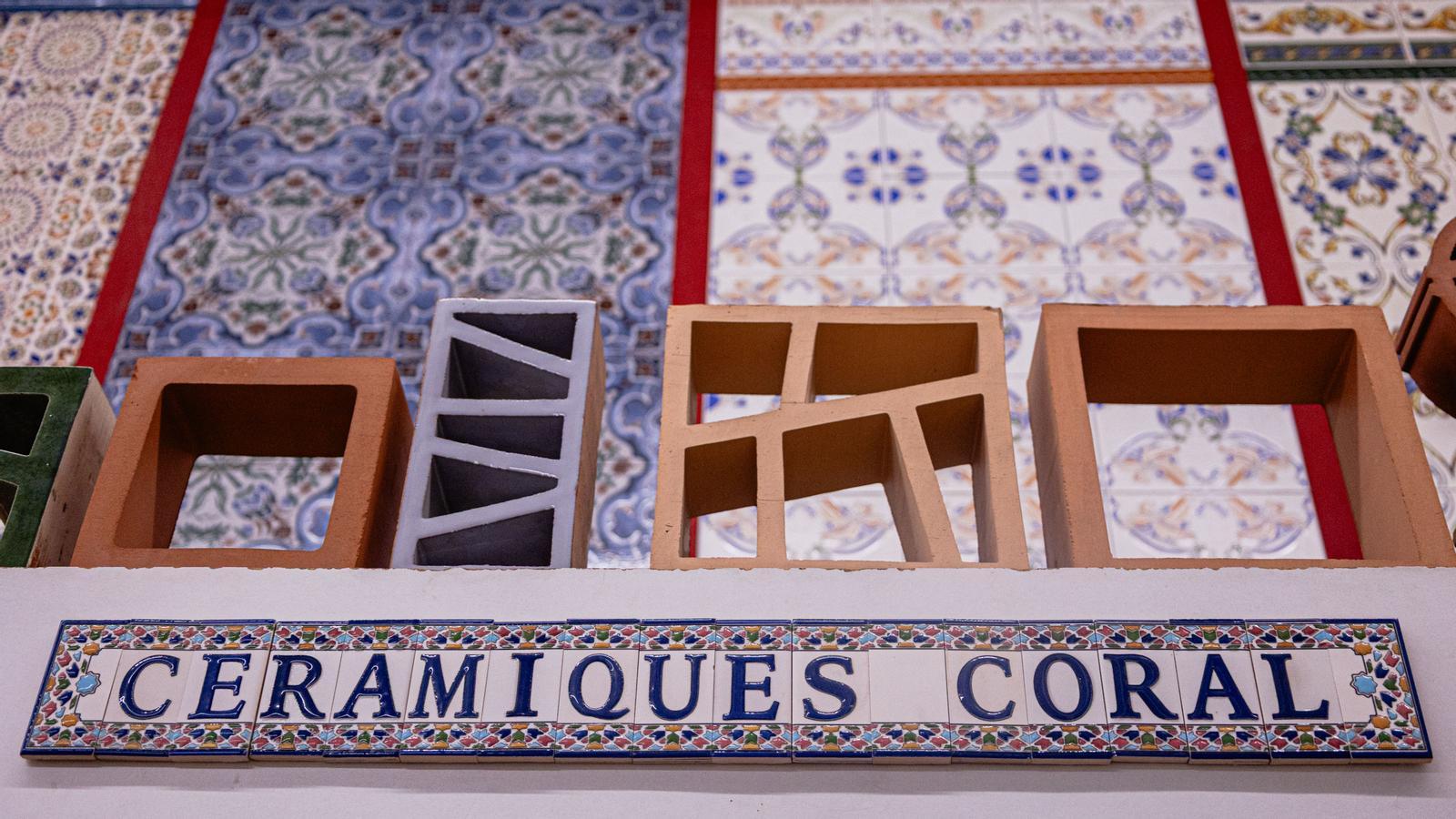
Barcelona“These are arrimaderos,” explain Montserrat Coral and Òscar Vidal, mother and son, third and fourth generation of Ceràmiques Coral. Arrimaderos, yes, ceramic compositions that reach up to halfway up the wall and are very typical decorations of the modernist era. But what are they called in Catalan? Arrambadors doesn’t sound particularly good, it seems like a Hispanism, but, yes, that’s what they are called. At Ceràmiques Coral, they have a few arrambadors on display and they have restored a lot of them, replacing original pieces with very well-made modern replicas. They are also experts in hydraulic mosaic, that element so identified with the floors of houses and apartments from the early twentieth century. They show me a couple of old tiles that are ready to be sent to the workshop: the client needs to reproduce one square meter of tiling, which is equivalent to about twenty-five tiles. One tile will be used to analyze the colors they need and the other will serve as a model for the composition and the border. A costly commission, not so common. The most common commission they receive is tiling floors or walls with modern tiles. Renovations at home? Complete renovation for a new residence? Well, you will very likely need the services of a company like Coral.
Founded in 1890 on Aribau street by Josep Coral Guasch, an entrepreneur with a vision for the future who clearly saw that it was worth investing in construction and foundations. They soon moved to Ronda de Sant Antoni and, in 1932, moved to their current location, at Gran Via, 549. From the outset, the specialization went down the path of ceramics. Both functional – floors and walls – and decorative – plates, pots, mosaics, panels – and advertising, those tile compositions for the mythical and today highly prized advertisements for Michelin, Anís del Mono, Cinzano, Pirelli... Josep Coral i Casant continued with the family business, and Montserrat, his daughter, did the same from 1975. Today, it is her son Òscar who commands the business, always loyal to something non-negotiable, the quality of the materials, an essential issue given the competition – as in so many other commercial sectors. They have large retailers like Leroy Merlin and Bauhaus, for example, which deal with many other things besides tiling.

Commissions from individuals are, of course, the most common. Installations and renovations with the widest range of proposals they offer. They also focus heavily on replacing old pieces in emblematic buildings. Such as, for example, the hexagonal tiles on the roof of La Pedrera. Ceramic elements from Pau Casals' house in El Vendrell. And also in architectural jewels as relevant as Cau Ferrat and Palau Maricel in Sitges. It's impressive to think about it. But institutional commissions have not always been successful. It doesn't go into detail, but sometimes, with the budget already delivered, the local council has opted for industrial production elements. Countless advertising and audiovisual productions have also relied on Coral's services. Examples? The REC saga, Zipi y Zape, Nit i dia, Estació d’enllaç and even a Hollywood blockbuster like Wall Street. Today, there is not much work done with manual production. Costs are very high, and not everyone can afford to opt for such artisanal work with so much added value. What dominates in ceramics is digital printing, capable of imitating ancient aesthetics with great accuracy and quality. "The market and consumption have changed a lot," emphasizes Òscar. Before, furniture was almost for a lifetime, and appliances, if they broke, you had them repaired. "Today we go to Ikea every five years, and if something breaks, it's cheaper to buy it new than to get it repaired."
Montserrat and Òscar let us take a stroll through their warehouse. A tour of thousands of tiles, some relics, and a great deal of history. You surely remember a family home where, at the entrance or perhaps in the kitchen, there was a tile with a wine jug, a still life, or a common saying from popular culture. It is very likely that it came from Ceràmiques Coral.
