Gessamí Caramés: "I am a cook, not a businesswoman"
The chef and presenter of 'Cuines' explains her relationship with money
-
CAT -
CAST
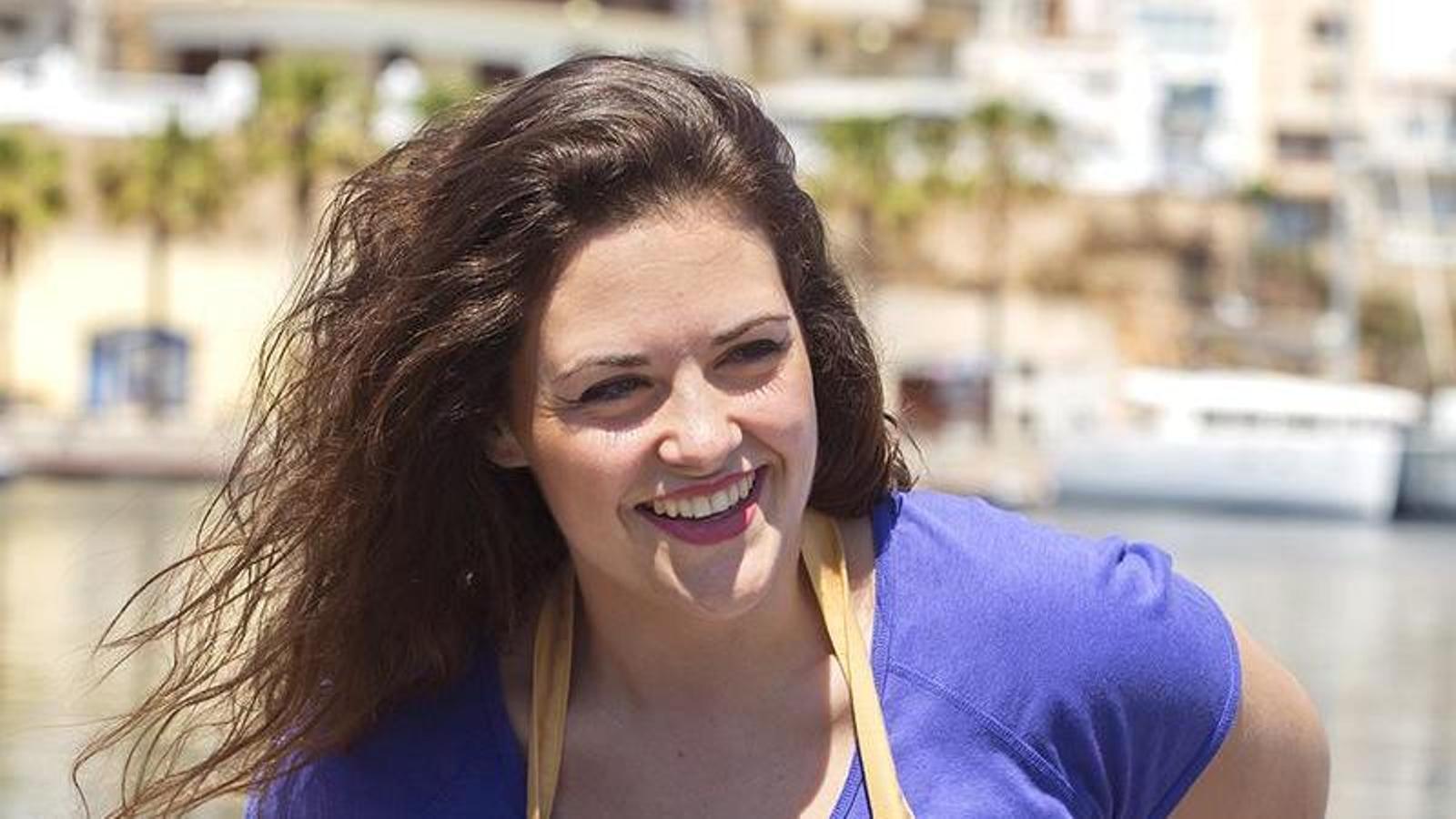
Chef Gessamí Caramés (l’Ametlla de Mar, 1992) finished her degree in audiovisual communication and realized it wasn't her path. She saw her classmates dedicated with a passion she didn't share. Without realizing it, cooking was becoming the center of her life. She dedicated her free time to cooking, watching gastronomic programs and recipe books, and investing her savings in kitchenware.
The turning point came thanks to her father. Despite coming from a family involved in real estate and construction, it was he who suggested she study cooking in Cambrils: "It was the happiest day of my life." Until then, she thought that if she studied something related to food, it would have to be a university degree: "It was a vocational course: after having done a degree, all the clichés I had fell away." "From then on, my life changed one hundred percent," she assures.
She started in the gastronomic sector when a teacher from the course offered her a position in a restaurant: "It was everyday cooking. I spent a whole summer frying squid, cleaning peppers, and serving 300 people. A type of cooking that nobody ever wants to do, but we should all go through it to understand the restaurant business."
Her career took a turn when she entered several gastronomic competitions. The recognition led her to the casting for "Cuines", where she had been recommended because the program was looking to expand the team: "I wasn't nervous at all, because I wasn't aware of everything that would come with it." Nine years later, she remains linked to the television show, a job she has combined for five years with her own restaurant, Meleta de Romer.
Caramés considers that both television and the restaurant are well compensated financially, but she admits that the business demands a much greater mental toll. "There are two ways to open a business: either you are romantic or you are a businesswoman. I am the romantic one, and I'm lucky that my sister is the businesswoman." As a chef, she defends quality cooking: "The easiest thing in the restaurant business is to buy something that costs three and sell it for nine. Open a package, heat it up, put it on a plate, and serve it. That ensures you some money so you don't have losses. I have dishes where I have more margin and dishes where I have very little, out of whims, for example, wanting to use certain products."

Despite this, the project is economically sustainable: "It's going great for us, it's viable." Even so, she doesn't define herself as an ambitious person. "I'm a cook, not a businesswoman," she insists. That's why, when asked if she will open more restaurants, she first thinks about the physical and emotional cost it has taken to build and maintain Meleta de Romer and about preserving her personal life. Despite this, she always has ideas for new projects to do.
As for money, she admits she's not a big saver. She likes to spend on gastronomy, travel, and skincare products: "Nowadays, you spend 50 or 60 euros on dinner. And if I go once or twice, I've already spent 120 or 140 euros." "On the other hand, I've never had major financial responsibilities, I've always been very careful before making a transaction, so as not to get too much into debt," she points out. And, when she has taken out a loan, she has tried to pay it back as soon as possible: "To open the business I took out a loan, we bought the premises. But we looked into it a lot, if for some reason the business doesn't work out, we could pay off the mortgage with just the rent."
Marked by the crisis
A prudent relationship with money is marked by the 2008 crisis: "I was young and I saw how my family sank a little economically. In my home, we all suffered it". He lived the difference "from the prosperity of the real estate boomto the crisis". Despite everything, he highlights that he has always had the support of home: "If I lacked anything, my parents have given it to me". When, for example, he did internships away from home. "But even if it was a year later, I have given it back to my mother".
Looking to the future, he does not consider abandoning cooking: "Either I will dedicate myself to this or I will dedicate myself to nothing". However, slowing down the pace: "My idea is to retire early, I don't want to reach retirement doing this job, I know that physically I won't make it. I also know that on a family level, if I want to have children, it is not viable".
