The modernization of the old slaughterhouse

-
CAT -
CAST
A while ago, a person remarked to me that Gaudí's buildings—at least some of them—were designed to be lived in and not just to be admired. And, certainly, that person was absolutely right. This is also the case with our protagonists: slaughterhouses.
Until now, the ones we have encountered have ended up having uses quite far removed from their original function. But in the Camp de Tarragona region, we still find buildings conceived specifically for the slaughter of animals, projected with sanitary and hygienic criteria that might surprise us today, and designed and planned more than a hundred years ago.
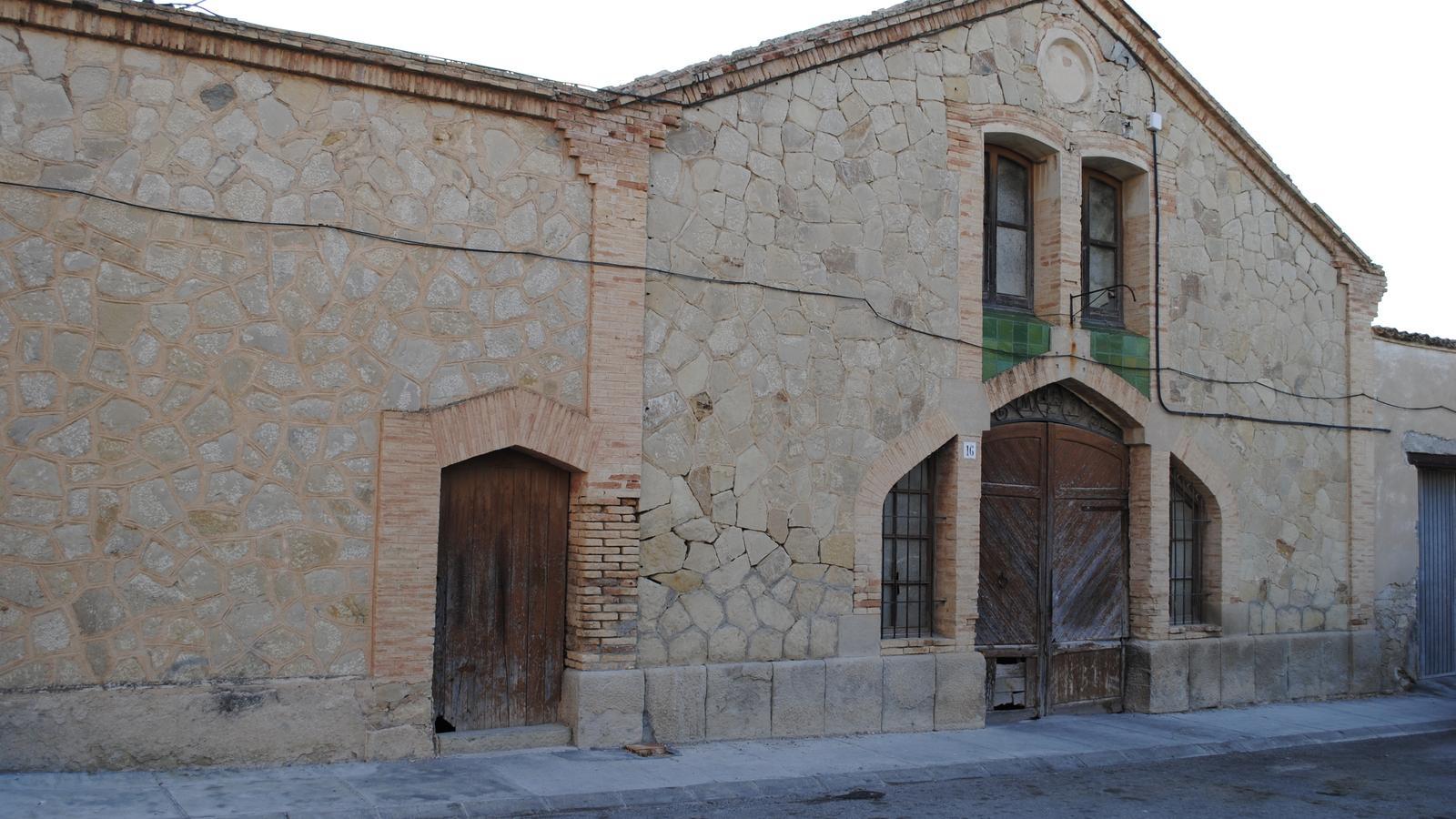
In Santa Coloma de Queralt, on Carrer de la Indústria, we find one of these examples. The old municipal slaughterhouse is a construction from the beginning of the 20th century that, despite its eminently practical function, does not renounce a certain aesthetic intent. The façade combines local stone with exposed brick, which frames the openings and delineates some of the building's ornamental elements. The composition of the main door, crowned by a twin window, is one of its most unique features. The building is attributed to the architect Isidre Gili Moncunill.
Its history takes us back to 1912, when the City Council promoted the construction of a new municipal slaughterhouse. The works were awarded in March to the local contractor Magí Claramunt for 19,750 pesetas, and the building was inaugurated in 1913. This was no ordinary infrastructure: these facilities were essential to guarantee the veterinary control of animals, the inspection of meat, and adequate hygienic conditions for the population's consumption. The modernization of towns also required having a good slaughterhouse.
More than a century later, the building finds itself at the threshold of a new stage. The City Council has promoted a rehabilitation project to convert it into the future municipal archive. An especially symbolic transformation: the space that for decades formed part of the productive life of Santa Coloma could end up safeguarding the municipal documentary memory.
And there is yet another peculiarity. Santa Coloma maintains a low-capacity municipal slaughterhouse, which was also the object of a modernization project in 2026. Thus, while the historic building prepares to take on a new function, the activity that gave it meaning remains present in the municipality.
Perhaps this is one of the great lessons these buildings leave us. Architecture does not end when we stop using the constructions for what they were intended. Sometimes, precisely then, a new life begins.
A BCIL that maintains its function and projects it into the future, life in Santa Coloma de Queralt.
