The recipe and ingredients of the world champion selector
The last five coaches who have won the World Cup share patterns in trajectory, playing style and squads, and combine solid cores with generational changes
-
CAT -
CAST
BarcelonaEvery World Cup leaves a recurring image: a coach on the pitch, surrounded by his players, who seems to have reached the end of a journey taken over years. Meanwhile, out of focus, the rest of the football world tries to find the explanations, the keys, or the recipe that allows a team to lift the World Cup. What are the ingredients to win the top football competition? This question fuels a good part of the debates in these weeks. Will a younger, innovative coach, like Julian Nagelsmann (38 years old, Germany), prevail? Or will it be a more veteran coach? The most veteran of all, Dick Advocaat, 78, can no longer, because Curaçao has been eliminated.
There is no secret formula; sport is full of stories that defy predictions. However, patterns can be identified in the last two decades. From Lippi's Italy to Scaloni's Argentina, there have been trajectories, styles, and team structures that have aligned to make them champions.
Balances between youth and experience
The five champion teams shared one characteristic: they were undergoing a generational transition, and maintained the right dose of experience thanks to a solid core of seasoned players.
Marcello Lippi is the first example. In 2006, the Italian team arrived at the World Cup with a squad where only eight players were repeated. He opted for a deep renovation, with a young squad supported by figures like Buffon, Totti, Del Piero or Cannavaro. The same pattern was followed by Vicente del Bosque's Spain in 2010. He inherited the list from Euro 2008, with eleven players under 25 years old. It presented a young block where Casillas, Puyol, Villa, Iniesta or Torres acted as benchmarks and provided experience.
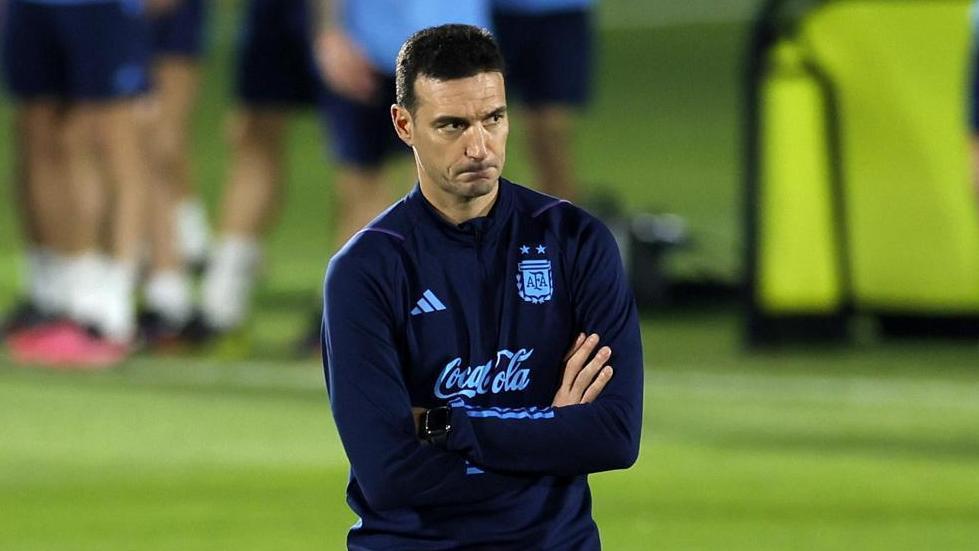
Germany's case in 2014 was the culmination of a transformation initiated in 2006. Joachim Löw arrived in Brazil with a young squad captained by Schweinsteiger, Müller, Podolski, Klose and Lahm. A similar transformation was experienced by France with Didier Deschamps. They presented themselves at the 2018 World Cup with young promises like Mbappé, alongside established footballers like Lloris, Giroud, Pogba or Matuidi. The latest example is Scaloni's Argentina, who in 2022 won with an emerging generation and the leadership of Messi, Di María and Otamendi.

Game schemes with a predominance of 4-3-3
Four of the five champion managers between 2006 and 2022 had the 4-3-3 as their reference system. The only exception was Lippi, who alternated between the 4-4-1-1 and the 4-3-1-2. The rest opted for the 4-3-3 with their own nuances. Del Bosque used it to boost Villa in attack, resorting to the 4-4-2 if he wanted two offensive references with Torres. Joachim Löw faced 2014 with a flexible 4-3-3 that turned into a 4-1-4-1 around Schweinsteiger or evolved into a 4-2-3-1 depending on the match.
Deschamps also based his success on the 4-3-3, with Griezmann acting as a hybrid between attacking midfield and forward, and alternated with the 4-4-2 and the 4-2-3-1. Scaloni's Argentina mainly opted for the 4-3-3 in 2022, although they sometimes converted it into a 4-4-2, especially when Di María was not on the pitch.
The priority of keeping a clean sheet
In the last five World Cups, the average goals per game has ranged between 2.27 and 2.69. Four of the five selections maintained an average of less than one goal conceded per game; the only exception was Scaloni's Argentina, with an average of 1.14 goals conceded.
The moderate offensive production of the champions also stands out. Only Löw's Germany (2014) registered an average of goals in favor (2.57) close to that of the tournament. The rest did not exceed two goals per game, and the most significant case is that of Spain in 2010, which won the trophy with an average of 1.14 goals scored per game.
The trajectories of the selectors also converge
With the exception of Scaloni, the coaches were 50 years or older when they were crowned champions. All had been internationals with their respective teams at some point in their careers, whether in the senior category or youth levels. None had a different nationality than the team they were managing, a fact that is generating debate following the arrival of Carlo Ancelotti in Brazil. Their stability also stands out: all had been in charge for at least two years, with an average of 4.8 years.
Can Luis de la Fuente win the 2026 World Cup?
The Spanish coach has been working within the Federation's structure for thirteen years, where he has managed youth categories. He is 65 years old, was a U-21 and Olympic international player, uses the 4-3-3 as his main system and combines it with the 4-2-3-1 depending on the context. Furthermore, he has a young squad with an average age of 26.1 years, practically identical to that of 2010. He also counts on veterans who are over thirty and act as benchmarks, such as David Raya, Marcos Llorente, Fabián Ruiz, or Aymeric Laporte.
The stars seem aligned. Now it remains to be seen whether the patterns that have defined the last world champions will weigh more than the unpredictability and epic that always accompany a World Cup.
