Madridism or aesthetics? The keys to the fever for the white shirt of the Spanish national team
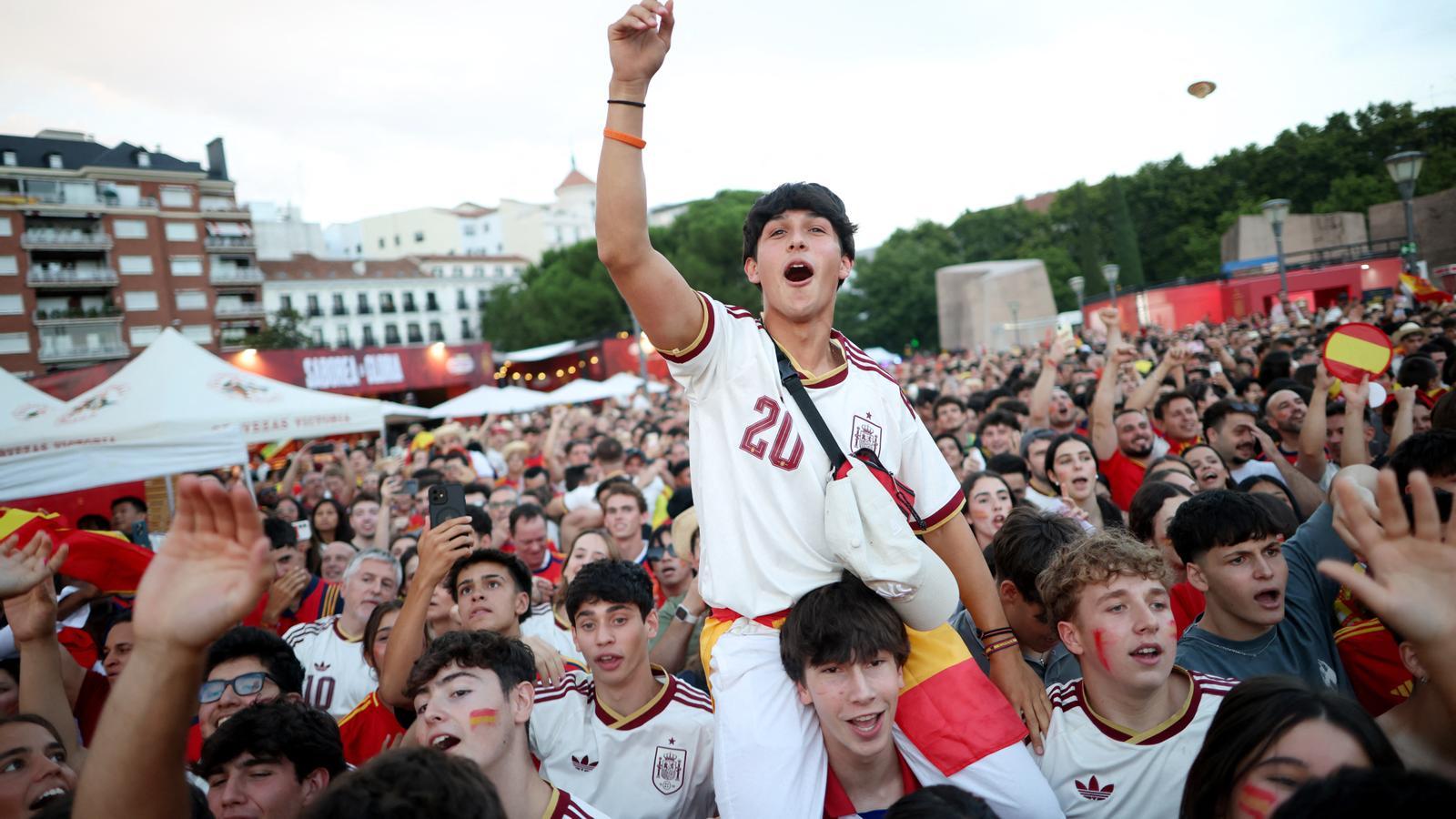
Sporting success, design aesthetics, and social media have turned the second kit into a phenomenon that goes beyond football
-
CAT -
CAST
Barcelona"It's the most coveted jersey of the World Cup, without a doubt," states Karolina, an employee at the Adidas Store on Passeig de Gràcia. As we discuss the phenomenon behind this World Cup's most viral jersey, five people approach the shelf where the last few sizes of the Spanish national team's second kit are hanging, almost at the same time. Only a few large and extra-large sizes remain. "At first, only tourists were buying it, but as the tournament has progressed, many national buyers have also come. People associate it with a winning team," she explains. She adds that almost everyone is looking for the same jersey numbers: "Lamine Yamal, Pedri, and Cucurella."

Fernando Morato, from Futbolmanía, one of the reference stores for football lovers, summarizes it with a clear idea: "It goes beyond football; it's fashion". As he explains, this second kit, off-white with some red detail and a vintage background, breaks with traditional design and seeks to "get out of the football niche to reach the general public and become another everyday clothing item".
On the other side of Plaça de Catalunya, six street vendors display a wide variety of shirts, among which the famous Spanish white kit stands out. Tourists, locals, and collectors approach them to ask about the latest available sizes, alongside the new Barça shirt or the Canarinha's, a classic of both the World Cups and the outfits that fill the streets of Barcelona.
More than a football shirt
Pol, from Vilafranca del Penedès, acknowledges that this is the first time he has bought a Spanish national team shirt. "It's not for fashion," he assures, making it clear that his decision is mainly due to the team's play after having watched "all the matches." "It's a team that is playing spectacularly," he says. He is looking for Lamine Yamal's shirt for both himself and his partner, but this time he hasn't had any luck.
"There are no sizes, neither here nor in the official store. It's crazy," also explains Pol, a resident of Barcelona. As we chat, various bills change hands and shirts disappear into backpacks. In just one minute, six sales are closed: one every ten seconds.
The official version already costs 100 euros, but the price seems to have stopped being the main deciding factor. This year's design has captivated many fans, even some who had never considered buying a national team shirt. This is the case of this Barcelonian, a declared Culer, who is also debuting with a Spain kit. "It looks much better to wear than the first one, the red one, which is very ugly," he says, laughing. Used to incorporating Barça shirts into his looks in his daily life, he believes this one will also become part of his rotation after the boom it has had on social media.
For Jaume Gil Lafuente, an expert in sports marketing and professor at the Faculty of Economics of the University of Barcelona, this success is not accidental. "The idea was that it wouldn't just be for football fans, but a shirt that people could wear on the street," he explains. According to him, Adidas has managed to "capture two types of customers": the more veteran fans, thanks to an aesthetic "vintage which awakens nostalgia, and Generation Z, turning the t-shirt into a more urban fashion item.
On social networks, some fans have linked the white color of the kit with the Real Madrid imaginary. On the street, however, this interpretation practically does not appear. Buyers agree in pointing out other reasons: the team's good sporting moment, a design that "catches the eye" and the fact that, due to its color, it is easier to incorporate into looks of everyday life that the traditional red t-shirt does not convey. Gil Lafuente adds another factor: broken white is a "much more neutral" color than red, which makes it easier for the t-shirt to stop being perceived as an exclusively sporty garment.
Beyond the sports results, the phenomenon also reflects an increasingly visible trend: football jerseys have ceased to be a garment reserved for stadiums to become a regular element of urban fashion. Morato assures that the jersey generates a calling effect because it "appeals to the eyes". "It spreads by word of mouth and ends up exploding once the group stage is over," he explains.
Gil Lafuente, however, believes that scarcity is also part of the commercial strategy. "They have reduced stock so that the customer wants it even more," he states. The expert compares this tactic to the "Ferrari effect": making the product an exclusive good so that the desire to obtain it increases even more.
Imitation also runs out
In the same vein, Nadir from Barcelona expresses himself. Although he has bought imitation national team shirts for years, he admits that this second kit generates special excitement. "It's a universal design, it goes with everything," he says. He is looking for Cubarsí's shirt and, when asked about the prediction for Sunday's final, he is emphatic: "A clear victory, 2-0." Xènia shares the same result, although in her case, her search is driven more by enthusiasm for the national team than by fashion. "I truly believe they will win the World Cup," she states. It's also the first time she's buying a Spain shirt.
Except for Pol, everyone agrees on the same reasons for resorting to imitations: price and, above all, availability. "They are very expensive," laments Xènia, who wants to arrive equipped for Sunday's big event. She doesn't care about the number, as long as it's the white shirt. The demand is also noticeable in specialized stores. "We've detected a very significant increase in customers who, in addition to buying it, want it personalized with a name and number," explains Morato. Meanwhile, at the Adidas Store on Passeig de Gràcia, the last sizes continue to disappear from the shelves. With the final just around the corner, finding the white World Cup shirt has become almost a race against time.
