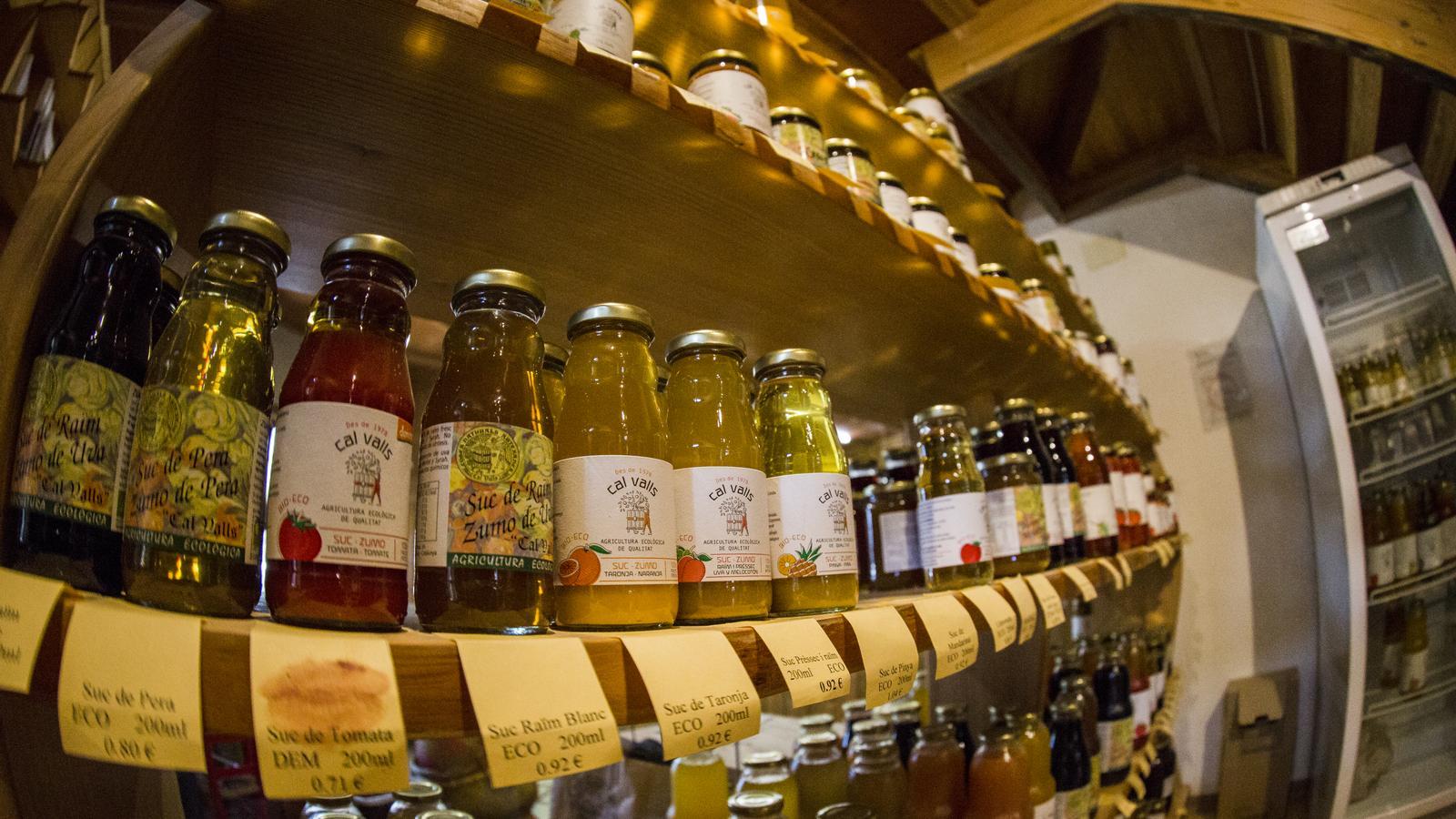
What is behind an organic food? Surely much more than we imagine. Choosing between an organic apple and a conventional one: that is the question. The dilemma has a Shakespearean touch and, although it is far from the depth of Hamlet's reflections, the decision is not as trivial as it seems. Behind it is a way of producing food that has implications for our health and for the environment.
Organic foods hold a public secret: they are high-quality, healthy, and nutritious. Furthermore, their production system is respectful of the environment and animal welfare. For this reason, the Government of Catalonia has just launched a new campaign under the creative concept "Behind an organic food, there is much more than you think" to bring back to the table something so essential for the well-being of everyone and the territory.
The initiative is promoted by the Department of Agriculture, Livestock, Fisheries and Food to increase its consumption among citizens and strengthen knowledge about this production model. The data show that the growth of production in our country is not equivalent to the increase in consumption, which means that a significant part is destined for foreign markets. The campaign aims to consolidate and strengthen organic agriculture and food in Catalonia.
Choosing organic food is much more than a consumer choice: it is a commitment to health, the environment, our surroundings, biodiversity, and our planet's ecosystems. By choosing them, we contribute to strengthening food sovereignty and agriculture that respects the environment. Filling your shopping basket with organic food is also a guarantee of prosperity. Organic production plays a social role that favors the conservation and improvement of the wealth of our agrarian and landscape heritage. And it also promotes quality of life in rural areas.
Controls and guarantees
Choosing this type of food is also synonymous with trust. Organic production is controlled and certified by certification bodies that ensure compliance with organic standards, which provides security to consumers. In Catalonia, the certification body is the Catalan Council of Organic Production (CCPAE).
Organic agricultural production also helps to care for the environment, protecting biodiversity and contributing to reducing the effects of climate change. Opting for this type of agricultural production means improving and increasing soil fertility. Natural methods are used to prevent pests, such as crop rotation or the use of beneficial species, and chemical synthetic fertilizers and phytosanitary products, herbicides, and genetically modified organisms are discarded. Therefore, the use of artificial additives in food processing is limited. This favors agriculture that is more respectful of nature and more sustainable.
Organic livestock farming is another pillar of this model, which places animal welfare at the center of production. Farms follow strict criteria that guarantee adequate spaces, access to the outdoors and pastures, and a diet based on organic feed and forage. Breeding respects the animals' needs, their behavior, and their natural growth rhythms.
All of this outlines a production model that combines respect for the environment, animal welfare, and consumer trust, and that opts for a more sustainable way of producing food. Catalonia has 5,180 operators, 287,266 certified hectares, and 1,131 organic livestock farms, data that mark the consolidation of the sector.
According to the data from the 7th Barometer of Perception and Consumption of Organic Food, 88% of the Catalan population is aware of organic food and 47% claim to buy it. Regarding the frequency of consumption, 6.2% of the population consumes it every day and 27% does so at least once a week. Furthermore, health is the main purchasing criterion for consumers, ahead of quality, and fruit, vegetables, legumes, and eggs are currently the most consumed organic products.
With a budget of 417,000 euros, the new campaign aims to stimulate internal consumption and strengthen the bond between producers and consumers, bringing organic food closer to the public and encouraging its incorporation into shopping and eating habits. The goal is for choosing organic to stop being a dilemma and become an increasingly common option.
Euro-leaf: the European guarantee
The European organic certification system
According to the consumer studies analyzed by the Department, there is still significant lack of knowledge regarding the European system of organic certification and the guarantees offered by this production model. For this reason, one of the main lines of the campaign is to give visibility to the European logo for organic production, known as the Euro-leaf, and to strengthen consumer confidence in the existing control and certification mechanisms.
The initiative has been defined with the active participation of the various agents of the Catalan organic sector, including producers, processors, marketers, and representative entities, with the aim of building a campaign that is accessible, rigorous, and aligned with the real needs of the sector.