The Minister of Health denies a health collapse in Ceuta and the president of the city asks her to listen to the health workers
Mónica García limits herself to saying that there are "strained" areas on her first visit to the autonomous city
-
CAT -
CAST
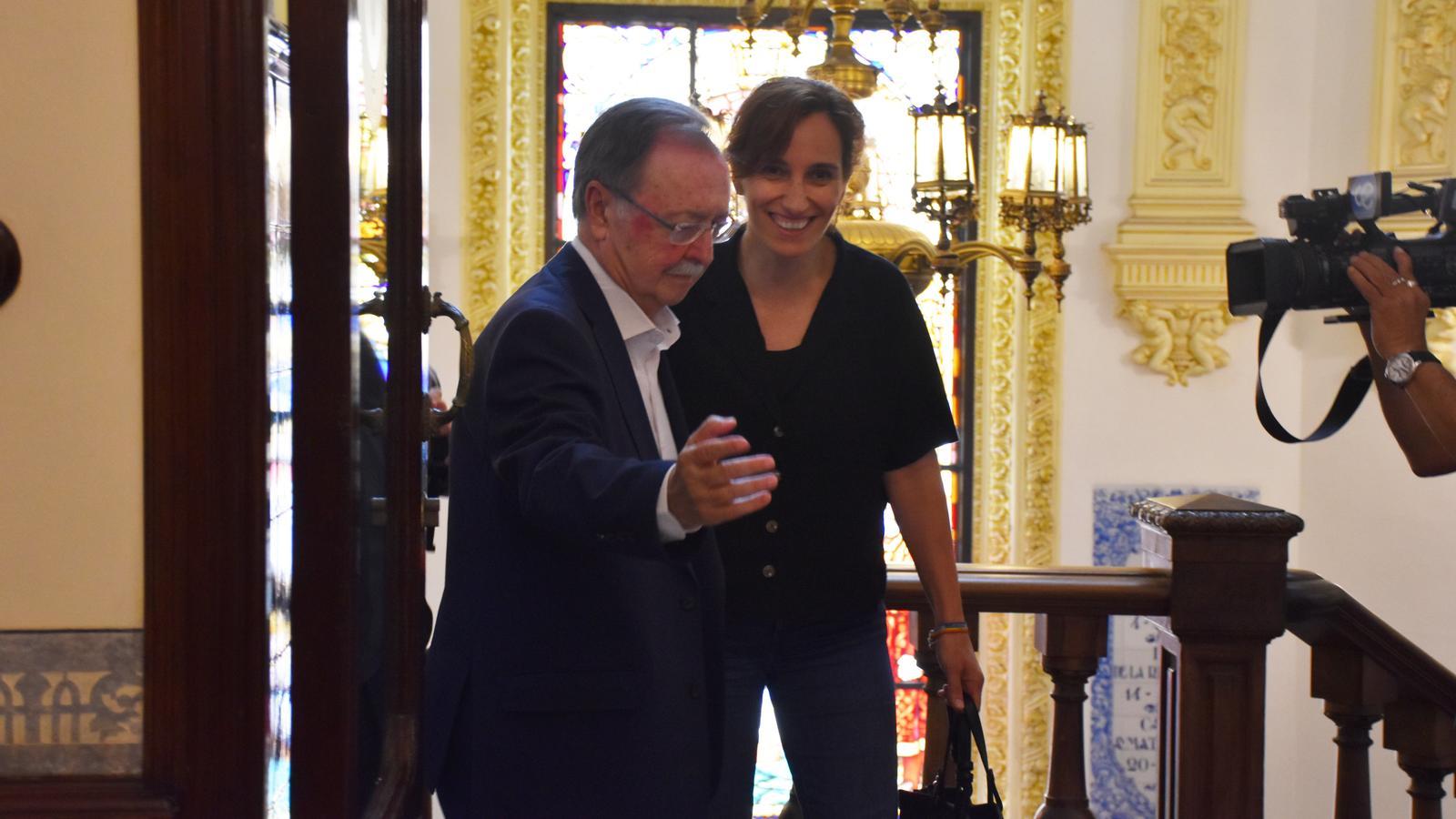
BarcelonaSince the massive entry into Ceuta, thousands of migrants are living in precarious conditions in industrial estates and natural areas of the city. Some have injuries and illnesses, and health workers and NGO members attend to them in the street. However, according to the Spanish Minister of Health, Mónica García, it is not true that the city's health services are collapsed, as denounced by local authorities and health workers themselves. García, who visited Ceuta this Sunday for the first time since the beginning of the migratory and humanitarian crisis, limited herself to saying that some services, such as primary care, are "strained." Words that have outraged the regional government and the national PP, which has once again called for her resignation.
"There is no health collapse in Ceuta," stated the minister, who emphasized that no professional had to cancel holidays and that the local hospital has 50% of its beds available. Ceuta, unlike the peninsular autonomous communities, does not have health competencies, so they are exercised directly from Madrid. García rejected messages warning that some migrants are carriers of diseases such as tuberculosis, asked the population to remain calm, said there are no reasons for fear, and insisted that "migrants do not carry diseases."
García shifted responsibility by saying that the Spanish government has the health resources to meet the demands of immigrants, "but we need spaces where to attend to them," implying that it is the regional administration, in the hands of the PP, that should be responsible for providing spaces to accommodate migrants with health problems. According to the minister, the main health risk is derived from migrants living "crowded together." Therefore, she has asked the city to cede spaces to assess the health of the thousands of people who have nowhere to sleep.
Fear of being detained
Regional officials do not share the minister's version, as they assure that the reason why health centers are not even more strained is because most sick or needy migrants do not dare to go to hospitals or primary care centers for fear of being arrested and deported to Morocco. For this reason, they prefer to be treated by volunteers on the street, in the mountains, or on the beach, where makeshift camps have begun to be set up.
The president of Ceuta, the popular Juan Jesús Vivas, who met with the minister, asked her to address the professionals' demands and insisted that normality in the autonomous city has been "radically altered." Vivas told García that healthcare is one of the "pillars of the State" and asked her to take into account when making decisions that the situation is "extremely critical, with a population living in fear." "Ceuta is in danger," he said.
On the other hand, the national leadership of the PP has demanded the minister's resignation for, in their opinion, being the "culprit" of the "health collapse." In the words of the popular deputy secretary for regional coordination, Elías Bendodo, the ministers who have visited Ceuta have gone there to "take photos" but have brought "zero solutions" to the city's situation, while the Spanish president "continues lounging around on the sofa and on the beach," referring to the fact that he is on vacation. He also commented that the city's emergency services attend to "500 people a day, five times more than usual." In the same vein, the popular leader, Alberto Núñez Feijóo, has railed against "the indolence in the face of this chaos" by the Spanish government, asserting that "women have the right to go out on the street without fear" and all citizens of Ceuta, to live "peacefully".
In parallel, the leader of Vox, Santiago Abascal, has again accused the Spanish president, Pedro Sánchez, of wanting to "hand over" the autonomous city of Ceuta to Morocco by "demoralizing" the Spaniards who live there so that they "throw in the towel" and this facilitates the handover of the enclave to the monarchical regime of Mohamed VI. In this way, the leader of the Spanish far-right has stressed that "Sánchez should end up in prison for many things, but especially for this," referring to the migration crisis, for which he blames the head of the state government.
