The INE warned Catalonia seven times to correct the error in the PISA tests
Niubó dismisses his number two, Teresa Sambola, at the head of the general secretariat
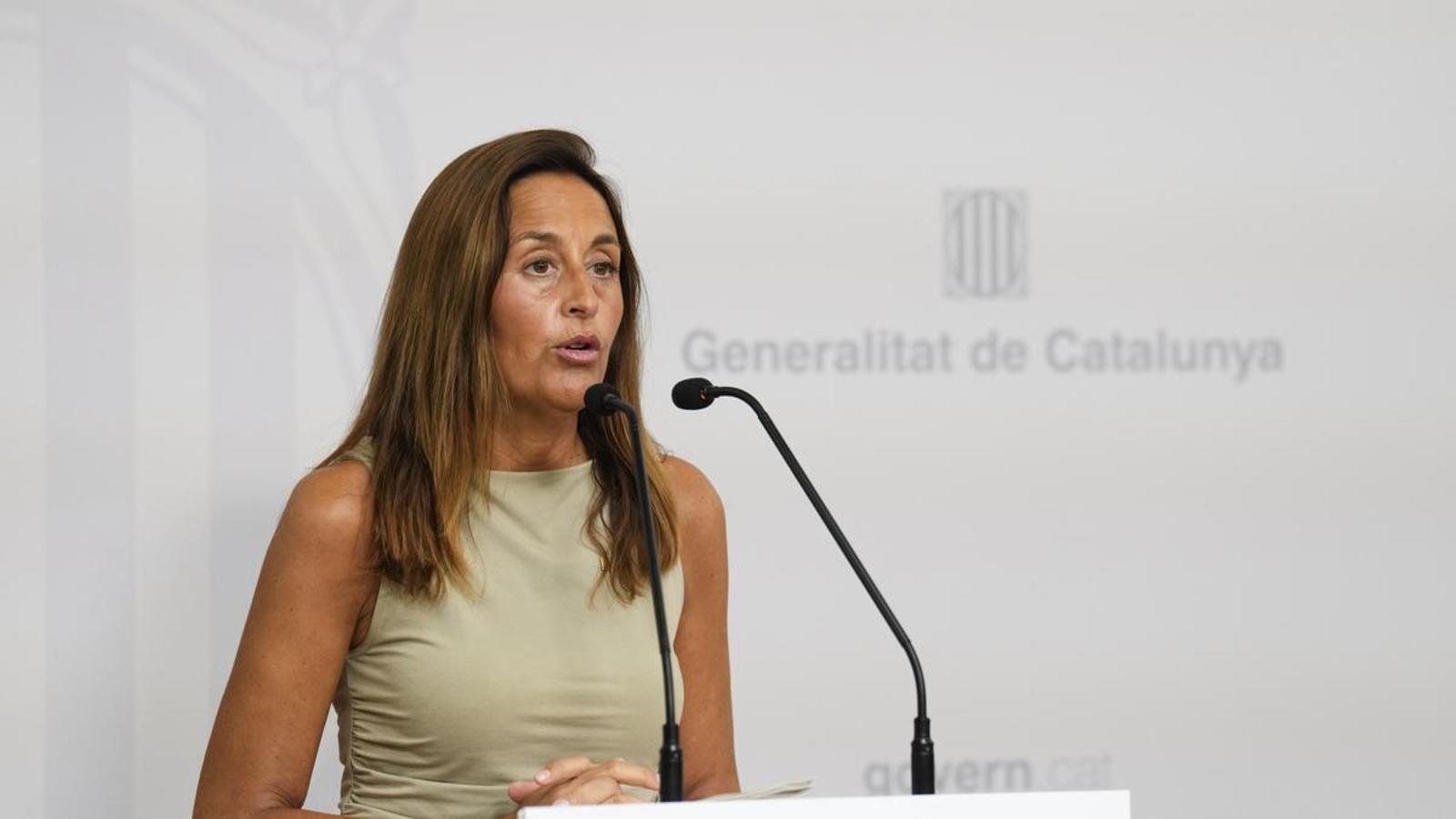

BarcelonaThe Minister of Education Esther Niubó presented this Monday the conclusions of the preliminary proceedings opened following the PISA fiasco. At the end of July, the Department of Education announced that Catalonia's results in the PISA tests would not be valid for comparison with those of other years or with other territories. The reason is that when deciding how many students did not take the tests due to learning problems, Catalonia exceeded the limit: it discarded 23% of the students in the sample, while the OECD sets the maximum number of exempt students at no more than 5%.
Now, Education has made public the results of the investigation it opened a few months ago to clarify the reasons behind this setback. Among the conclusions of these proceedings is that the National Institute for Educational Evaluation (INEE) warned Catalonia up to seven times that there were errors in the student sample. According to Niubó's defense, these warnings were sent to the Higher Council for Evaluation of Catalonia—the body responsible at the time for coordinating the tests— in April 2025, when Catalonia could still have corrected the situation to avoid exclusion. A priori, the Council reported that it was forwarding this information to the schools to rectify the situation, but the preliminary investigation found no evidence that this was actually done.
The proceedings also propose initiating three disciplinary proceedings: two against officials of the now defunct Higher Council for Evaluation of Catalonia and one against a senior official of the Department of Education. Furthermore, after the fiasco, which Niubó described as "very serious," the minister announced that there would be a change in the general secretariat. Teresa Sambola, who has been the Secretary General of Education, that is, Niubó's second-in-command, since the beginning of the legislature, is dismissed.
Meetings with unions before the strike
Regarding the start-of-term strike, Niubó admitted that it will not be the start they would have "wanted": "There is a strike call on the first day, despite the agreements reached last year," lamented the counselor, who has once again asked for responsibility from teachers so that students are not "the ones who pay the price." Niubó said, however, that this week they will meet with all the unions on the sectoral table, as well as "separately" with the two unions that are calling the strike: USTEC — the majority — and CGT (la Intersindical also calls it, but is not part of the table). All this to "try" to reach an agreement so that the strike on September 8 is called off. In parallel, the head of Education will also meet this week with center directors and families.
Beyond PISA and the strike, the counselor also referred to other start-of-term novelties that the Government has been revealing in recent weeks, such as 500 new support classrooms, a pilot test of a manager to help with school management, or a guide with orientation on how students should use AI.
