Ten years of the "La Manada" case, the rape that turned the Penal Code upside down
The brutal aggression propelled the fourth wave of feminism and has changed the way sexual violence is understood

-
CAT -
CAST
BarcelonaThere is a before and after the early morning of July 7, 2016. The group rape of an 18-year-old girl by five men in Pamplona, during the Sanfermines, overturned the social perception of sexual violence and transformed the legal system and the way of explaining and understanding machista violence. The aggressors themselves, a group of friends who called themselves "La Manada" (The Pack), recorded the rape images and shared them in a WhatsApp group as if it were the trophy of that night, in a gesture of toxic male complicity.
As a result of the investigation, the video was leaked (with messages like "Fucking one between five, hahaha", "Everything that counts is not enough" and "Fucking great trip. There is video"), an unusual popular indignation erupted that for Violeta García, a psychologist at AADAS (Association for Assistance to Sexually Assaulted Women), was "a turning point", because it brought "invisibilized violence" to the surface. Furthermore, the survivor of La Manada took the step of not remaining silent and reporting.
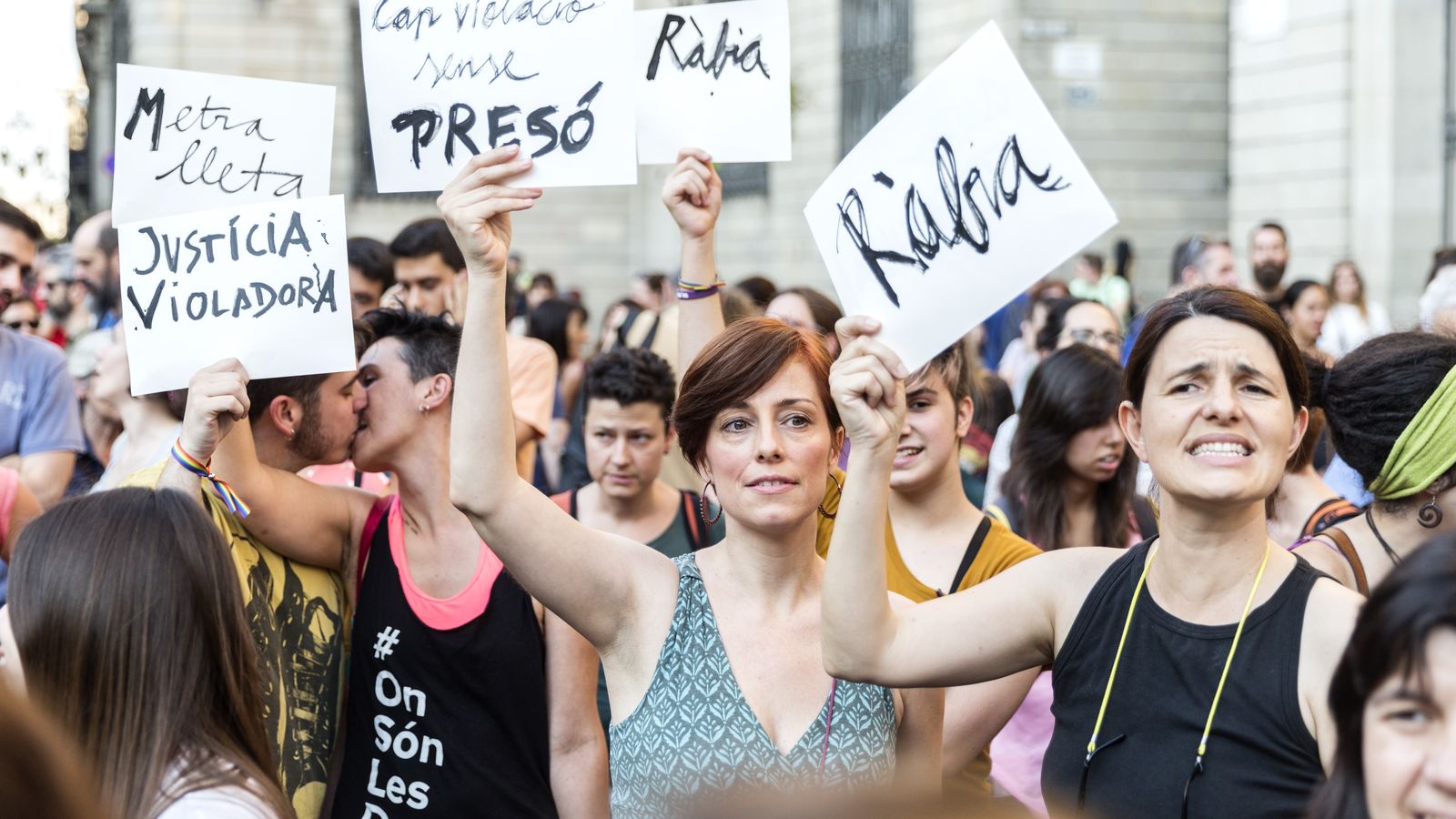
"Women began to realize that they are not the ones who should be ashamed," emphasizes García, for whom feminism was strengthened, because it became evident that "an assault cannot be understood individually". There were demonstrations in which many adolescents debuted in feminism, and it was proclaimed that it is time to rally around the victims. From here arises the "Sister, I do believe you"present at the mobilizations, which was the cry of "Enough is enough" – as was the Me Too movement – according to lawyer Nahxeli Beas, from the Antígona research group at UAB.
From the street to the laws
Those massive demonstrations in support of women managed to change the Spanish legal system with the approval of Organic Law 10/2022, known as the law of only yes is yes, driven by the then Minister Irene Montero under strong political pressure. The law eliminated the distinction between sexual abuse and sexual assault and put consent at the center. As Beas points out, cultural change implies that the victim no longer has to demonstrate that they resisted, but rather that everything is based on explicit will: "It is made visible that certain practices can be consented to and others cannot, or can be consented to at one time and not at another".
Although feminism denounces that the law was politically instrumentalized to attack Montero – amid reticences that reached the same Spanish Prime Minister, who stated that the "feminism "uncomfortable" his friends–, the reform changed the way victims were treated, as it reduced stigma and fostered mutual support.
More complaints, but with old resistances
As a consequence of this greater awareness, sexual violence complaints have seen a constant increase, although they are still the least reported. According to experts, this does not necessarily mean that more assaults are occurring, but rather that women are daring to report incidents that were previously normalized or silenced.
Despite this, the judicial system still shows resistance. Gemma Sahún, a criminal lawyer from Serena, warns that the tendency to blame the victim persists. As deterrents, the experts point to recent judicial decisions: such as the acquittal of Dani Alves – considered exemplary in the first instance – which opened cracks in the appeals process, or the harassment to which victims like actress Elisa Mouliaá are subjected. In this context, García presents a recent ruling in which a defendant accused of rape by chemical submission was acquitted on the premise that the fact that the woman was unconscious due to alcohol did not make her an "immobile body", and it was understood that she could have maintained "voluntary relations that she later did not remember".
Pending assignments
Experts, however, warn that nothing has been won yet. Beas regrets that the debate on the only yes is yes law became bogged down in political bickering over sentence reductions or the release of rapists, and relegated fundamental rights to the background. She warns that key aspects of the law, such as universal free legal aid or comprehensive victim support, still remain to be fully implemented.
Meanwhile, the reality of assistance is precarious. García denounces that organizations like AADAS, which support survivors in their recovery process, receive fewer and fewer public subsidies, which translates into waiting lists of more than six months for an initial consultation. But, despite the pending issues, it is undeniable that the Manada shook mental, social, and judicial frameworks.

Gratuïts i confidencials
Generalitat de Catalunya
Emergències
Mossos d’Esquadra
900 900 120 / 016
112
601 00 11 22
(WhatsApp)

Gratuïts i confidencials
Generalitat de Catalunya
Emergències
900 900 120 / 016
112
Mossos d’Esquadra
601 00 11 22
(WhatsApp)

Gratuïts i confidencials
Generalitat de Catalunya
Emergències
900 900 120 / 016
112
Mossos d’Esquadra
601 00 11 22
(WhatsApp)
