Gemma Calvet: "Some entities feel overlooked by the Ombudsman"
Aspiring ombudsperson of Barcelona

-
CAT -
CAST
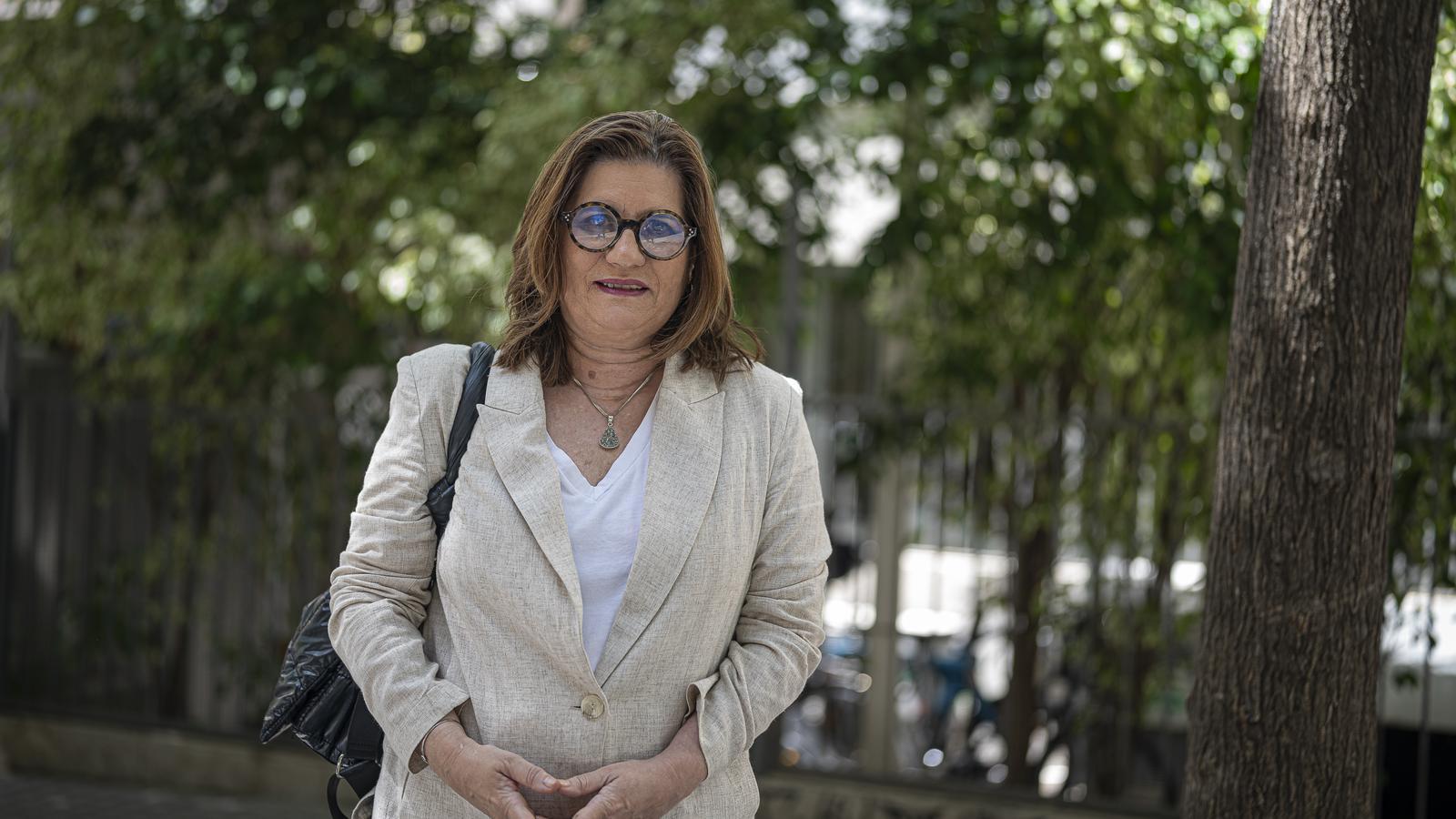
BarcelonaGemma Calvet (Barcelona, 1966) has a long career as a lawyer specializing in human rights. For ten years director of the AMB's Transparency office, she also served as a member of Parliament for a time. Now she aims to be the new ombudsman of Barcelona. A race she considers unequal because her adversary, David Bondia, continues to serve as ombudsman in the meantime.
What should be the role of an ombudsman of Barcelona?
— First of all, be visible and known. I'm finding that many people don't know the Ombudsman's Office. And this is a deficit, because it defends everyone's rights. Those of the vulnerable population, but also those of middle-class neighbors who are increasingly entering the territory of impoverishment, that is, of deprivation of rights.
What do you think makes you a better candidate?
— My resume. My vision of consensus and alliances. The city deserves to manage political pluralism from an integrative vision. The Ombudsman does not engage in politics, neither party politics nor any other kind. The Ombudsman defends rights.
What moves her to take the step?
— A passion for public service and good governance.
What would be your main priorities for the upcoming term?
— Radically reduce municipal bureaucracy at all levels; work hand in hand with the Sindicatura de Greuges de Catalunya on concrete projects, such as institutionalized minors; be a Sindicatura close to the neighborhoods permanently and not improvised, and that accountability is not an annual report but quarterly.
What do you think was not done well enough in the last term?
— Some social entities focused on maximum vulnerability and social volunteering have said that compared to the previous stage, the ombudsman has only acted in an isolated manner. They feel overlooked. The ombudsman's activity has intensified in the months before and during the campaign.
In an interview on Betevé he said that there is a risk of polarizing the debate or falling into magical solutions. Does it feel like that has been the case?
— Yes. In the matter of housing, for example. I believe that the large-scale speculative operation that Barcelona is suffering from is a scandal. But we must differentiate between the large, speculative real estate owner and middle-class people who own two apartments. To say that being a homeowner is being a speculator seems like an outrage to me.
Do you agree with the Casa Orsola resolution?
— I can't say I'm against what was done because I wasn't there, but I think a longer path should have been followed and other stakeholders included to find solutions.
Is the Barcelona Ombudsman overstepping its functions?
— When you defend the rights of people living in Catalonia and Barcelona, you never overstep. You have to find ways of coordination.
He says he wants to bring the Ombudsman's Office to the neighborhoods. How is it done?
— Making a plan and with dialogue tables from the Board of Auditors. Permanent conversation is needed, going to each district at least once a month.
With the current template, is it feasible to do this?
— If well planned, it can be done.
Another important problem in the city is insecurity. What can be done about it, from the Ombudsman's Office?
— An in-depth study of the real impact of insecurity in the city. But I have always advocated for local police to be present in the districts, not in offices.
In an event, he spoke of a pact for fraternity. What does it consist of?
— In finding a way to end polarized discourses and confrontation with the adversary. Creating a pact of fraternity is to recover a vision of social action from political pluralities. And finding common denominators. That even, for example, collectives who want to protest, which is legitimate, can find a language or a modus operandi that minimally disturbs the general interest. And that this does not detract from their capacity for social impact.
What can be done from the Ombudsman's Office regarding homelessness?
— Ensure compliance with the homelessness law and request its approval as soon as possible.
In the program, she advocates for the feminist aspect. What does she want to contribute in this regard to the Board of Directors?
— The inclusion of the gender perspective transversally in all the work of the Ombudsman's Office, which has not been the case until now. I believe it is time for women to be leading administrations. I believe that women have a special sensitivity for social care, for care and for the defense of rights.
Have you missed this feminist accent in the Board of Auditors?
— My vision of the Audit Office is that it has not had a gender perspective at any time. Nor has it fought against sexist violence.
It also places great emphasis on reducing bureaucracy. How?
— Diagnostics of procedures must be carried out. It cannot be that there are establishments that take two years to move a shutter one meter.
