One in four forest fires in the last 40 years have been intentional
Between 1986 and 2026, only 15% of the fires registered in Catalonia have been due to natural causes

-
CAT -
CAST
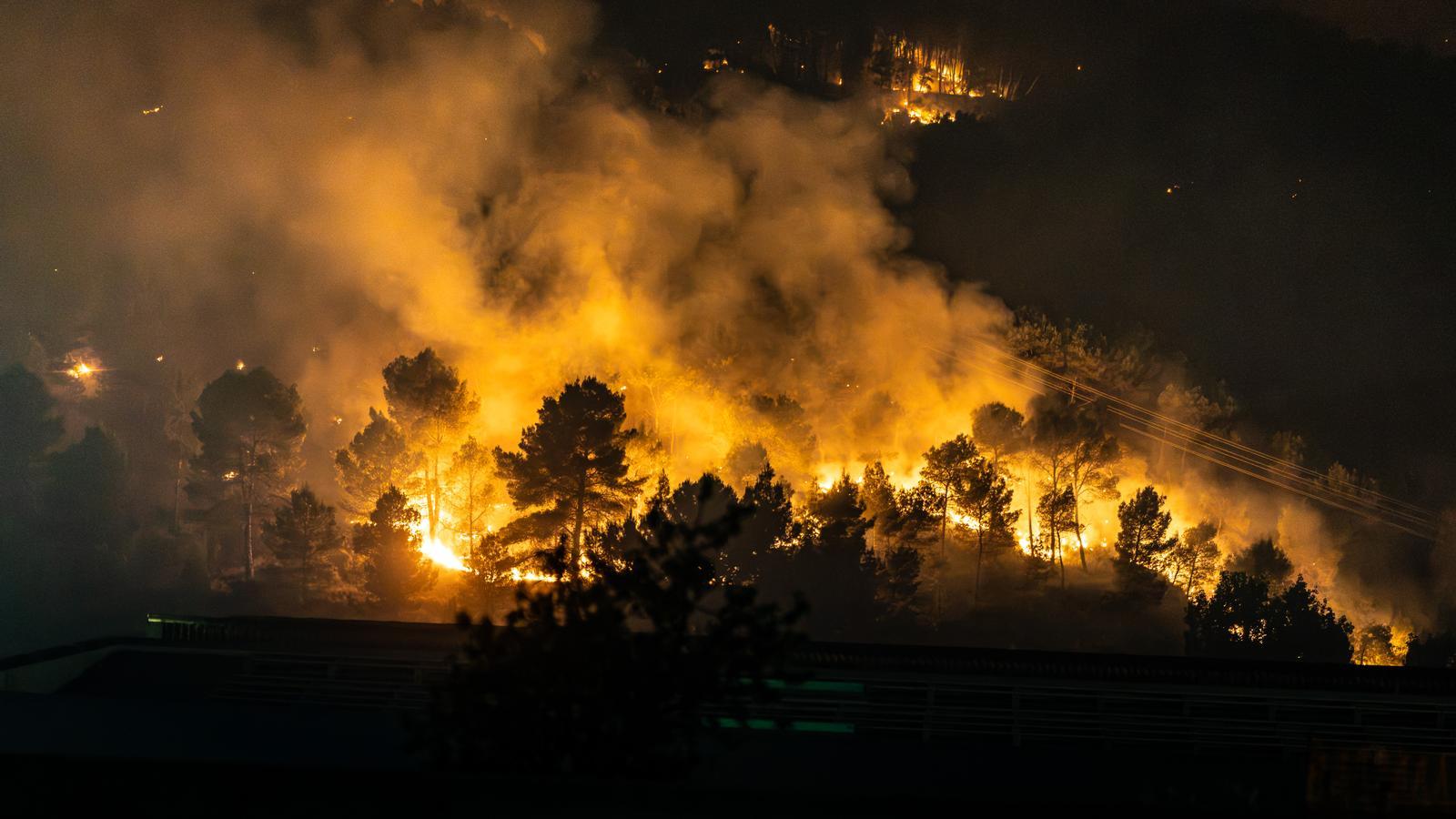
BarcelonaLast week was critical, one of the most complicated the Bombers de la Generalitat have experienced, and it has confirmed that it will be a complex summer of fires in Catalonia. All fires start with a spark that can ignite in many ways. By lightning, wiring, a plowing machine, a cigarette butt, or an arsonist who puts flammable liquid in the forest to burn. The reality is that Catalonia, as a Mediterranean territory with a lot of vegetation, has always been prone to fires. According to data from the Agents Rurals accessed by ARA, in the last forty years 14,410 forest fires have been declared — not including agricultural fires — up to July 6, 2026. How many of these were caused by human activity?
68% of all fires since 1986 have been accidents, negligence, or intentional fires. Only 32% have been due to natural causes — such as lightning — unknown causes, or fires that were already burning and have reignited. The data from the Agents Rurals, which divides fires by their causes, also shows that 25% of fires, one in four, have been intentional. As was the one in Tiana, caused by an arsonist who set four different points in the forest on fire last June.
The passage of years has not managed to reduce intentional fires. If the decade between 1986 and 1995 represented 22% of all fires, from 2016 to 2026 they have accounted for 24%. The record is found between 1996 and 2005, when they reached three out of every ten fires. In fact, there used to be many more fires than currently, as the last decade is when there have been the fewest forest fires of all, with 2,727 fires declared. The most? From 1986 to 1995, with almost double the fires.
The background
Xavier Úbeda, a geographer from the University of Barcelona (UB), states that currently fires are more powerful and intense than before. And the reason, precisely, is caused by the fires we had in the 80s and 90s: he describes that these forests that burned years ago grew back chaotically, without forest management, and this chaos is now ideal terrain for fires to grow chaotically, without forest management, and this chaos is now ideal terrain for fires. To this uncontrolled growth, we must add the fact that many farmers and ranchers have abandoned rural life, a fact that Úbeda recalls is not new, as in 1928 some writers were already talking about the well-known rural exodus.
Here, the expert describes, climate change and its effects must still be added, such as drought, in many cases chronic, which has stressed forests that were not accustomed to being dry before. This is one of the reasons that also explain why Catalonia experiences episodes of simultaneous fires: practically the whole country can ignite with a spark.
"There have always been sparks"
And this, according to Úbeda, is one of the keys: it is important to analyze the causes, but he admits that "sparks will always exist" and it is essential to have firebreaks to prevent the fire from spreading. In fact, the cause that has grown the most, by far, in the last forty years is accidents. Like a car catching fire or an industry releasing sparks. If in the first decade analyzed (1986-1995) accidents represented 8.8% of forest fires, now they are (from 2016 to 2026) 18.7%. On the other hand, negligence has decreased by nine percentage points, such as work with an angle grinder that was prohibited, but caused the Gavarres fire, or pyrotechnics — which cannot be used near nature — which was the origin of the Gavà fire. Both ignited last week.

According to data from the Rural Agents accessed by ARA, 344 forest fires were declared in Catalonia in 2025. Of these, four were reignitions, in 90 cases the cause was negligence, in 87 we are talking about an accident and in 49 natural causes. Last year's intentional fires were 54, although this figure could rise, as in 60 fires the cause is still not entirely clear. In 2026 —data is up to July 6 of this year— 154 forest fires have been declared. Of these, up to 25 have been intentional. Negligence, however, is even higher, and has been the cause of 45 fires. This year there have been 36 accidental fires, 10 natural ones, 37 in which the cause is still not clear and only one that has reignited.
The figure of the arsonist
When talking about intentional fires, they are often linked to the figure of an arsonist. Antonio Andrés Pueyo, professor of Psychology at the University of Barcelona, explains that pyromania is a pathology in which the sufferer feels attraction, pleasure from fire. However, he warns that it is a very rare pathology and that it is rarely detected in those convicted of starting fires. Pueyo sees an intentional fire as a form of violence, like a punch or a stab. For this reason, they can often be linked to personal revenge. In this regard, a recent study concludes that the vast majority of people tried for fires have a record of other offenses, usually linked to property. "There is no clear pattern," he summarizes.
