Nine heads of the Mossos in nine years: "And what if this happened in a company with 20,000 employees?"
Sources from the body speak of "uncertainty" while waiting for how the new commissioner will move the various positions

-
CAT -
CAST
BarcelonaThe year 2017 changed many things, including the Mossos d'Esquadra police force. From the beginning of the deployment throughout Catalonia in the 90s until the October 1st referendum, the Catalan police only had four heads of the force, the last one being Josep Lluís Trapero. The prosecution of the major of the Mossos for the events of the autumn of 2017 opened a period of instability that has not yet closed – although now it is strictly due to the internal tensions of Catalan politics and the force itself –. Since 2017 there have been nine appointments for head of the Mossos, one per year. "Can you imagine a company with more than 20,000 employees that changes its CEO every year? It wouldn't be sustainable," comments a police source.
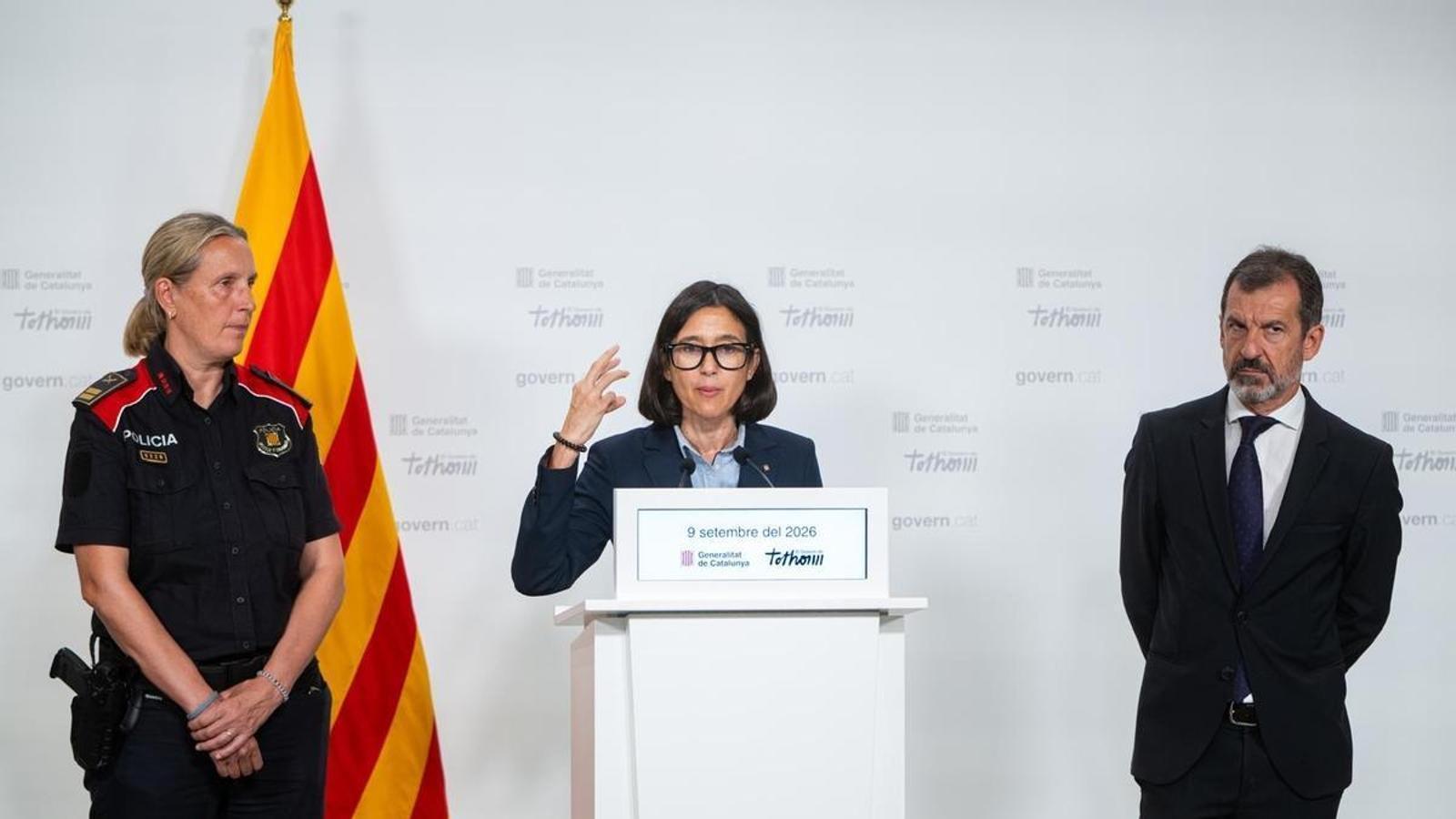
Commissioner Miquel Esquius will stop being head of the Mossos because he is retiring and he will be replaced by Commissioner Sílvia Catà. Precisely because since Esquius assumed the position in 2024, it was known that he would retire at the end of 2026, this succession was meant to be the first change of head of the Mossos in nine years that, on paper, was to occur in a natural, continuous way. Without many political tensions in between, without a change of government deciding it, without a dismissal of the current head to place another one due to disagreements. But the resignation of Josep Lluís Trapero as director of the police, in disagreement with the appointment of Catà, has once again splashed this decision with political discrepancies.
When the head of the Mossos is changed, what several police sources call the "domino effect" usually begins. The first piece to fall is that of the top operational leader of the force, but the last ones affected can reach the rank-and-file officers. They exemplify this by explaining that not only does a new CEO arrive in this company, but this new position usually surrounds itself with trusted people – who in the Mossos cannot be external to the force and must have a certain rank –. These trusted people make up the police headquarters. Minister Núria Parlon said that this new stage would be "continuous". Catà will have to decide if she keeps the current leadership.
"Uncertainty"
All this movement of pieces may lead to changes in the heads of police regions – the one in Girona, for example, which is the one Catà occupied and will have to be replaced one way or another – or of the general commissariats. In turn, these new heads will have to decide whether to change people who are lower down. And so on, successively. Because of all this, one of the most repeated words in the force is "uncertainty". During the Esquius stage, some relevant changes had already been made and more were still expected. Some high-ranking police officers already saw themselves changing offices. Now, the playing board is much more indecipherable.
Obviously, the police sources consulted state that this domino effect of positions cannot move rank-and-file agents or lower-ranking positions, but these can indeed notice some strategic movements. For example: the prefecture prior to Miquel Esquius', that of Eduard Sallent, created a new structure for the Mossos. The Criminal Investigation Division (DIC) was then divided into two large branches, one territorial and one central, with their respective heads. When Esquius arrived at the prefecture, the DIC was reorganized again and came to have only one head. "What will happen now?", ask police sources.
Ordering the game
These movements not only affect commissioners, but also intendants, inspectors, and lower ranks. At the DIC, in fact, since the arrival of Esquius, several relevant changes took place, with the replacement of the division chief and the deputy chief. "The balls are always the same, but each chief can decide how to arrange them," exemplifies a police source. Another adds that every time a chief changes, the way of working usually changes too.
Above all, police sources reflect that what officers working on the street notice the most is the change in strategies. That is, now at the DIC there was a very clear commitment to try to tackle fraud. With the new leadership, this could change. Many efforts had also been dedicated to the Kanpai plan to address multi-recidivism or the fight against bladed weapons on the street. These strategies affected everyone from the city's highest police command to the last officer driving a patrol car.
Because of all this, even if the new phase is one of continuity, the word uncertainty continues to appear in conversations. In fact, a police source warns of the risk that the Mossos base might disconnect from the leadership after so many changes in so few years. More than one officer says that they are not interested in politicking.
This police politicking is also currently in a moment of uncertainty. The departure of Eduard Sallent from the force to dedicate himself to the private sector heralded a phase of less confrontation with Trapero's sector. However, with Trapero's resignation, a new interpretation of how the factions within the force remain will be needed.
