"I have worked 18 hours in a day and more than two days in a row"
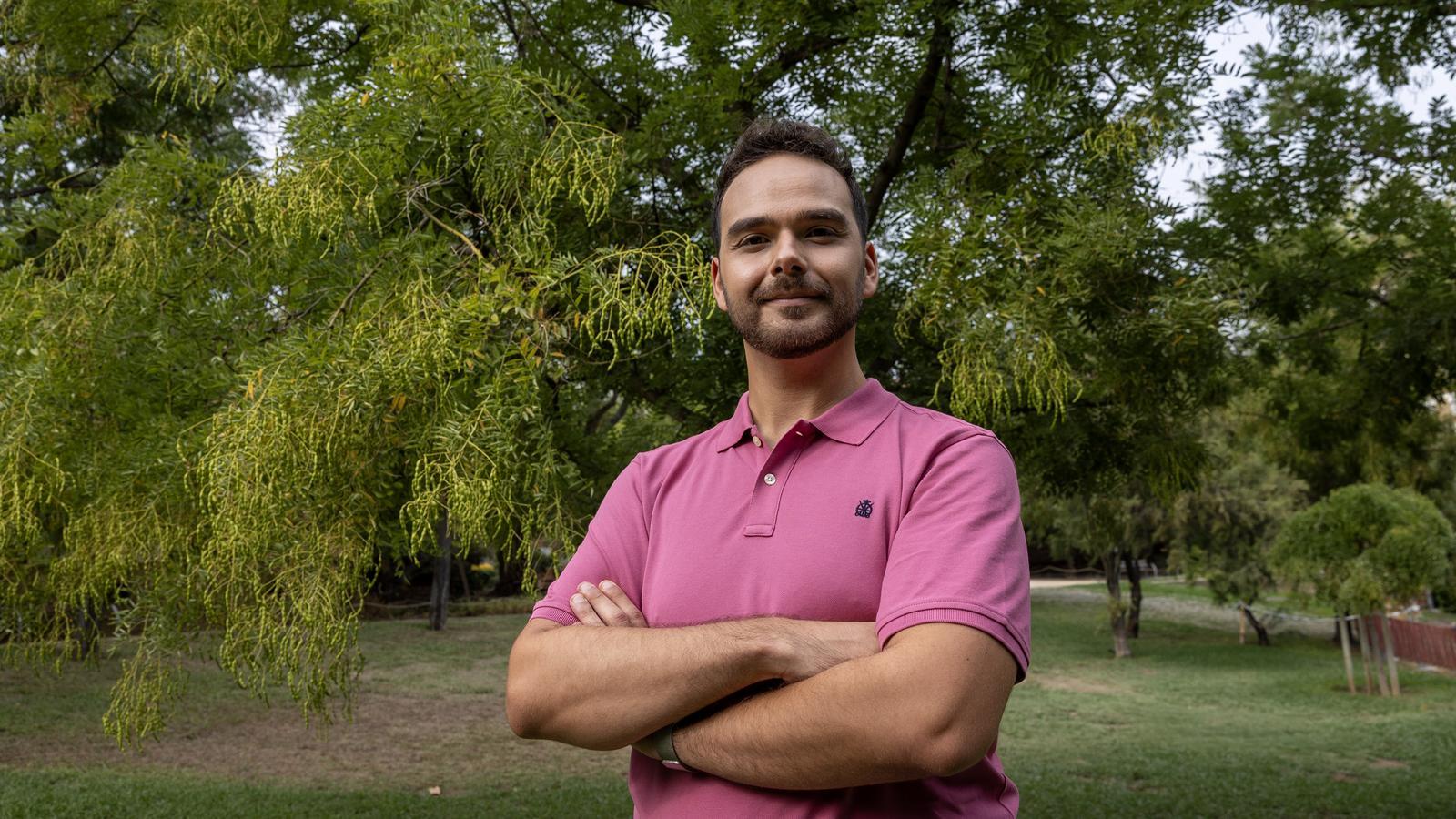
Luís Filipe Costa Póvoas is a biomedical researcher and has just completed his doctorate in Barcelona

-
CAT -
CAST
Luís Filipe Costa Póvoas (Porto, 1996) had always imagined that he would end up having an academic career. He liked science and for years he saw himself one day directing his own laboratory or being a university professor. His doctorate, however, has changed his plans. Not because he has stopped loving research, but because he now has other priorities: "Having a flat, having a family, a stable life." And he is not sure that all this is compatible with a scientific career.
Póvoas arrived in Barcelona in January 2021, after a classmate from his master's degree suggested he try his luck in the Catalan capital. After finishing his master's, he wasn't sure whether to do a doctorate or specialize in a discipline like bioinformatics first. They accepted him and he decided to try. "I've always been quite curious and I've tried to answer all the questions I had," he explains.
His doctoral thesis studies SLIMP, a protein with various functions discovered by his laboratory that they believe has an impact on the cell cycle. The research is carried out with Drosophila melanogaster, the small fly that often appears in kitchens. Our body's cells need to divide, and when this process doesn't work, problems like cancer can arise. Flies serve as a model because they share many genes with humans and allow us to study biological mechanisms in a simpler way. In the conclusions of his thesis, Póvoas has also been able to study the role of SLIMP in the fly's development.
The other side of research
The problem is that behind every discovery there is much more time than results. "The most frustrating thing is the amount of work that goes in the trash," he explains. There are experiments that have a low probability of working, but that he has to do because he needs that data. The result can be that three or four months of work end up being for nothing and only one experiment works.
The workday can also be extended to extremes that are difficult to reconcile with any normal life. In fact, Póvoas has worked 18 hours in a single day and more than two days in a row with endless shifts. He slept very little and, in theory, should not have worked so many hours, but there are experiments that cannot wait, he assures. "You can't say that, when the eight hours are up, you leave and continue tomorrow," he explains. If he leaves the lab, he might lose the experiment. "You can't leave and disconnect because, in the end, the project is your life."
Doctoral students can have contracts, salaries, and unemployment benefits, but a scientific career continues to be marked by uncertainty. Scholarships are very competitive, international mobility is almost essential for progress, and lack of funding creates stress in laboratories. Póvoas has decided that he will probably not continue in academia. "I have been investing so much time for so many years without return that in the end you reach a point where, when you think about the future, you don't think about what you will do professionally, but about having an apartment, a family, a stable life." Now he is looking towards the pharmaceutical and biotechnology industries, where he hopes to continue to be involved in science from a more applied perspective.
"I love science and I love what I do," he says. What has changed after his doctorate is not his curiosity, but his way of understanding the future. He has spent the last few years studying how life works at a microscopic level, and now what worries him most is a much simpler question: being able to build a life for himself.

