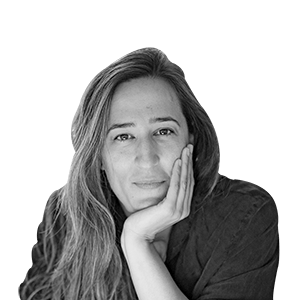
Daniela de Francisco: "Disability is a filter for idiots"
Founder of the anti-ableist student association
-
CAT -
CAST
Daniela de Francisco was told she would never walk or speak again after suffering a cerebral hemorrhage at just 12 years old. But today she speaks, walks, and has completed her final year at the UPF in the degree of philosophy, politics, and economics, one of the most competitive courses in Spain. She has founded the anti-ableist student association.
What do you remember about the hemorrhage?
— I had started first year of ESO at a new school, it was lunchtime and I noticed I had a bad headache. What I remember afterwards are ambulances, emergencies and operations.
And the prognosis?
— After a few weeks of being admitted, the doctors told us that it would not be easy for me to get out of bed by myself again.
And speech?
— It didn't take me long, I've always loved to talk a lot. It might seem like a joke, but I was stubborn and insistent and I started talking a few weeks later. Mobility was more complicated. They told me that if I didn't recover within six months, it wasn't very feasible that I would improve. And six months later, I was in a wheelchair.
But you walk.
— It was many hours of incredible professionals, sport, everything very gradual. Until I walked.
How does a twelve-year-old person face this?
— My way of processing it was not processing it. It's a pain, but I've realized over time the drastic change it has brought: of projections or how you relate to your body. Everything.
Was sport key?
— A couple of years after the hemorrhage, I started adapted swimming. All of us had some type of disability. Sport always helps, obviously, but the most important thing was meeting other people with disabilities. Around me, there was no one who had one. I was the disabled one. And it was healing. Even though we have different disabilities, we have lived through very similar situations and we are united by how society perceives us.
How do you perceive it?
— Disability has very few representations in culture, in the media, in our daily lives, and the few that do exist tell tragic stories or stories of individual overcoming. I, for example, when I had some adaptation problems in high school, the narrative was clear: this problem exists because you are there. The weight is not placed on the structure.
For example?
— I am right-handed and couldn't hold a pen, so I had to learn to write. And obviously, I am slower. When people think of accessibility, they think of ramps and elevators, but accessibility also means that I can take adapted exams. And it's not taken into account. Or when excursions were made outside, I couldn't go because they weren't accessible for me. They literally told me that I would hold the group back. That's very hard.
And you said nothing?
— Now I would be very demanding, but I had never experienced a disability up close, nor had my family. I didn't know what I was entitled to. And there is a lot of talk about great stories of overcoming, but not about the daily reality of disability, which is much more important.
You have created the anti-ableist student association.
— Ableism is discrimination based on disability. And it's everywhere, but it's not talked about. And if you don't say things, they don't exist.
What do you miss at university?
— I wouldn't even know where to start. At many times you find yourself unprotected, because what is said on paper does not correspond with the student's experience. There are problems with communication adaptations, inappropriate comments from professors, or discriminatory attitudes from classmates. It doesn't happen to me because my disability is not visible. And that... is not good either.
Isn't it good?
— I had a moment where it was visible and I suffered rejection. Therefore, I would be lying if I didn't say that it has made my life easier that I am less noticeable, even though that, in itself, already seems problematic to me. And I have experienced violent situations, for example, on public transport, because I don't seem to have a 66% physical disability and reduced mobility. And it also happens that when the disability is not the first thing that is seen, you always have the doubt of when to say it.
Tell it to whom?
— In labor relations, love relations… Very recently I had an offer as a monitor, they told me they loved my experience, everything. And when they asked me what I preferred to do between two options, I told them that everything seemed fine, but that I had a physical disability. They told me they would call me the next day, and they never heard from me again.
And don't you want to tell everyone that it has been difficult for you that you are happy, that you are having a difficult career, that you are doing very well...?
— Many times, yes, but you also have to know which battles to fight. And you'll forgive my expression, but disability is an idiot filter.
Do you live with discomfort?
— I have pain in my arm and back, if I stand for a long time my knee hurts, and this discomfort will not go away no matter how inclusive the environment is. This is how it is, this is my life and I only have one body. But I am in a good moment.
I know it shouldn't be noteworthy, but you speak Catalan very well.
— It is thanks to friends, culture and, evidently, love. The turning point to talk about it was my partner, who one day told me: "With all that you understand, couldn't you talk about it?" And I told her: "Man, I would love to." And she said a very simple thing that stuck with me like fire: "Well, if you want to, talk about it." I simply had to accept that I wouldn't wake up one day in bed being Pompeu Fabra and that, at first, evidently, I would make more mistakes.
