Barcelona, among the great cities of the world with fewer murders
The Catalan capital has registered the same number of crimes in half a year as during all of 2025

-
CAT -
CAST
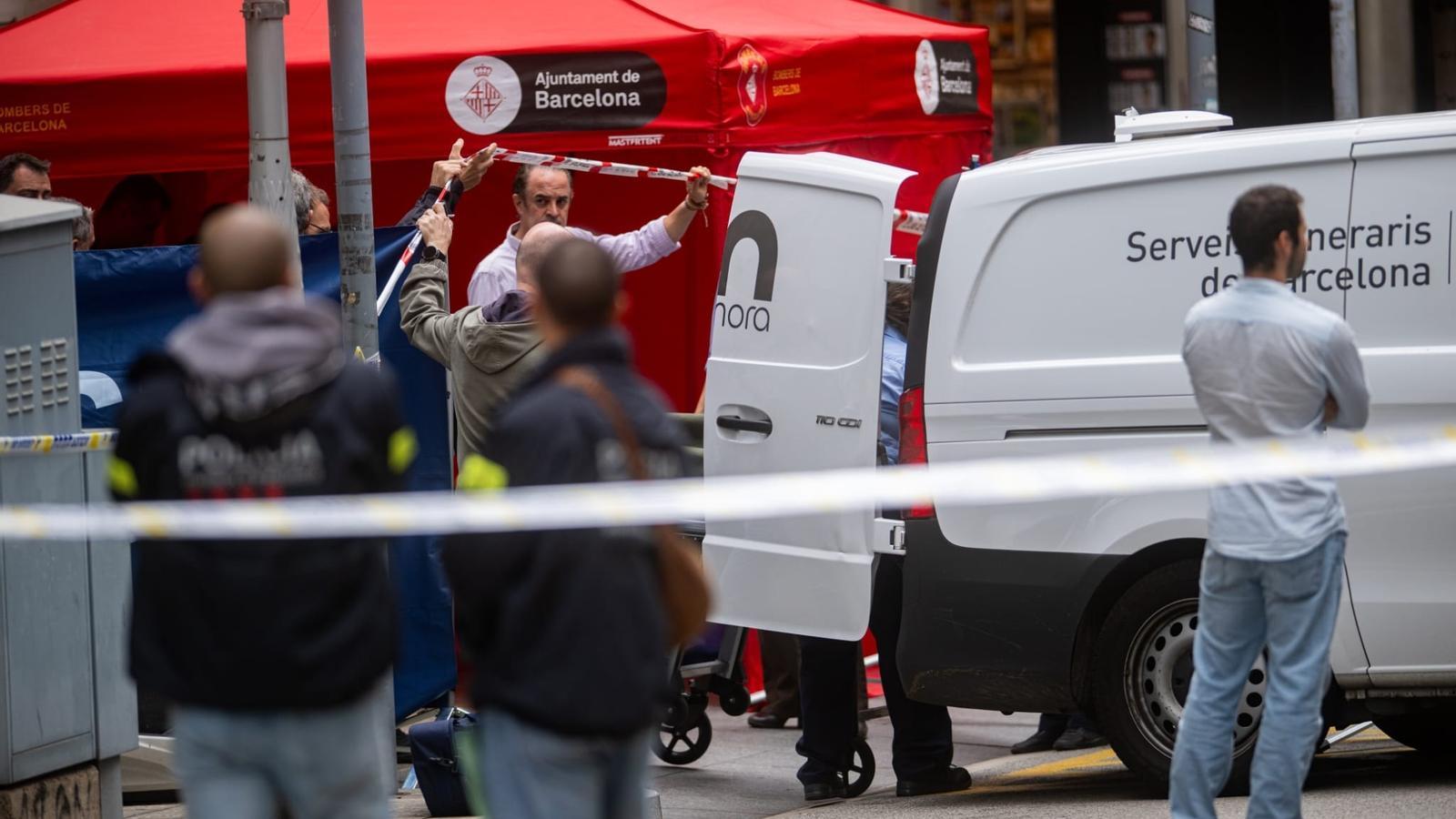
BarcelonaWhich city would top a ranking of the world's major cities with the fewest homicides? And in what position would Barcelona appear? The fact that nine murders have occurred in six months has generated insecurity – especially for residents living near the scenes of the crimes – and criticism from the opposition, both in the Generalitat and the municipal government. As this newspaper has learned, the same number of crimes have been committed in Barcelona in six months as in the whole of last year, and the vast majority are linked to organized crime – such as the execution on Carrer Balmes – and clan disputes.
The reality is also that Barcelona has historically not been and is not a city with many homicides if we compare it with its European surroundings. Much less if we compare it with other cities in the world. The Minister of the Interior, Núria Parlon, reproached a few days ago that "unnecessary alarmism" was being generated about security.
Based on UN data on the homicide rate per 100,000 inhabitants in the three main cities of each country, with data ranging from 2005 to 2023 and averaging all available years, ARA has compiled a ranking. Since not all cities have provided figures each year – Barcelona has done so from 2013 to 2023, for example – urban centers with very unrepresentative or very old samples have been excluded. In total, 159 cities remain, and among them, Barcelona is the fourteenth with the fewest homicides.
Barcelona has a rate of 0.80 homicides per 100,000 inhabitants, slightly higher than Madrid (0.60) and also above those recorded in Rome (0.77), Milan, and Munich. However, among cities with the lowest homicide rates, Irbid in Jordan stands out with a rate of 0.43, followed by Krakow (Poland), Trondheim (Norway), and Rijeka (Croatia). In sixteenth place in the ranking is Valencia (0.81), followed by cities such as Zurich, Hamburg, Athens, Lyon, Oslo, Warsaw, or Vienna.

But capitals like Paris (2.02) or Berlin (2.32) have a rate much higher than Barcelona's. On the negative side, Marseille stands out with a rate of 4.69 homicides, placing it practically in the middle of the table. Shortly after, we find New York, in the USA, but with much higher figures than European cities (5.16). However, the cities with the most homicides are found in Honduras (there are two) and Jamaica, Kingston. Specifically, the Jamaican capital has a rate of 128 homicides – and let's remember that Barcelona's is 0.80.
The Barcelona figures go up to 2023, but it should be taken into account that incorporating the balances for 2024 and 2025 would not increase the rate. Only if the rebound observed in 2026 were to consolidate in the coming years could the rate eventually increase. In any case, Barcelona occupying one of the most favorable positions in the ranking does not prevent the police from being concerned about the rise of organized crime and its gun-related vendettas. Once again, however, this is not just a Catalan problem.
The ports, the key element
to the banks", but by exchanging goods in the ports. Technically, in English it is called
Jordi Bonshoms, professor of criminology at the UPF's law department, explains that port cities with industrial areas like the Zona Franca "attract the interest of organized crime". They are particularly interested in the "transfer of goods" due to the arrival of cocaine from South America, but also because mafias no longer launder money by "introducing cash into banks", but by exchanging goods in ports. Technically, in English it is called trade based money laundering.In this regard, Bonshoms explains that traditional drug mafias have dispersed and have also tried to diversify their businesses, placing some in the formal economy. "And they don't dispute so much with violence against the State," he explains. But several police sources, both those fighting drugs in southern Spain and in Catalonia, warn of the rise of new, more violent clans, such as the so-called Swedish and Belgian Mocro Maffia, the mafias from Marseille or those from Montenegro, which have already left several fatalities in Catalonia.
Relevant increases
Precisely, UN homicide data shows an increase in crimes in certain parts of Europe starting in 2021. These cities again coincide with important ports: Marseille has an upward trend, as does Hamburg, Germany's main port. In Rotterdam (Netherlands), the second largest port for cocaine entering Europe, the homicide rate has also increased in recent years.
A police source specializing in the fight against drug mafias exemplifies that the main objective of the police fight must be to prevent these clans from settling in Catalonia, as there is a risk that smaller and less violent criminal groups may "mimic" the conduct of the big mafias. In cases of executions in Catalonia, the Mossos detect that they are more linked to drug traffickers fleeing justice who are hiding in Barcelona and are murdered by rival clans rather than by criminal structures rooted in the territory.
The next question, however, is why they choose Barcelona. The first thought that a police source has is that they are looking for good weather and beaches. It may seem irrelevant, but they say it is not. The high percentage of foreign residents - almost half a million - also contributes, which allows fugitives to go unnoticed. Police sources agree, once again, that the fact that Barcelona has a very active port in drug trafficking means that groups want to have a presence in the city. This is not only stated by the Mossos, but also by Europol, which defines it as a hub for drug distribution, especially South American cocaine.
