Vergés and Argimon, acquitted of the case for the covid vaccination of national police and civil guards
The Barcelona Court condemns the police associations Jupol and Jucil to pay the costs of the trial
-
CAT -
CAST
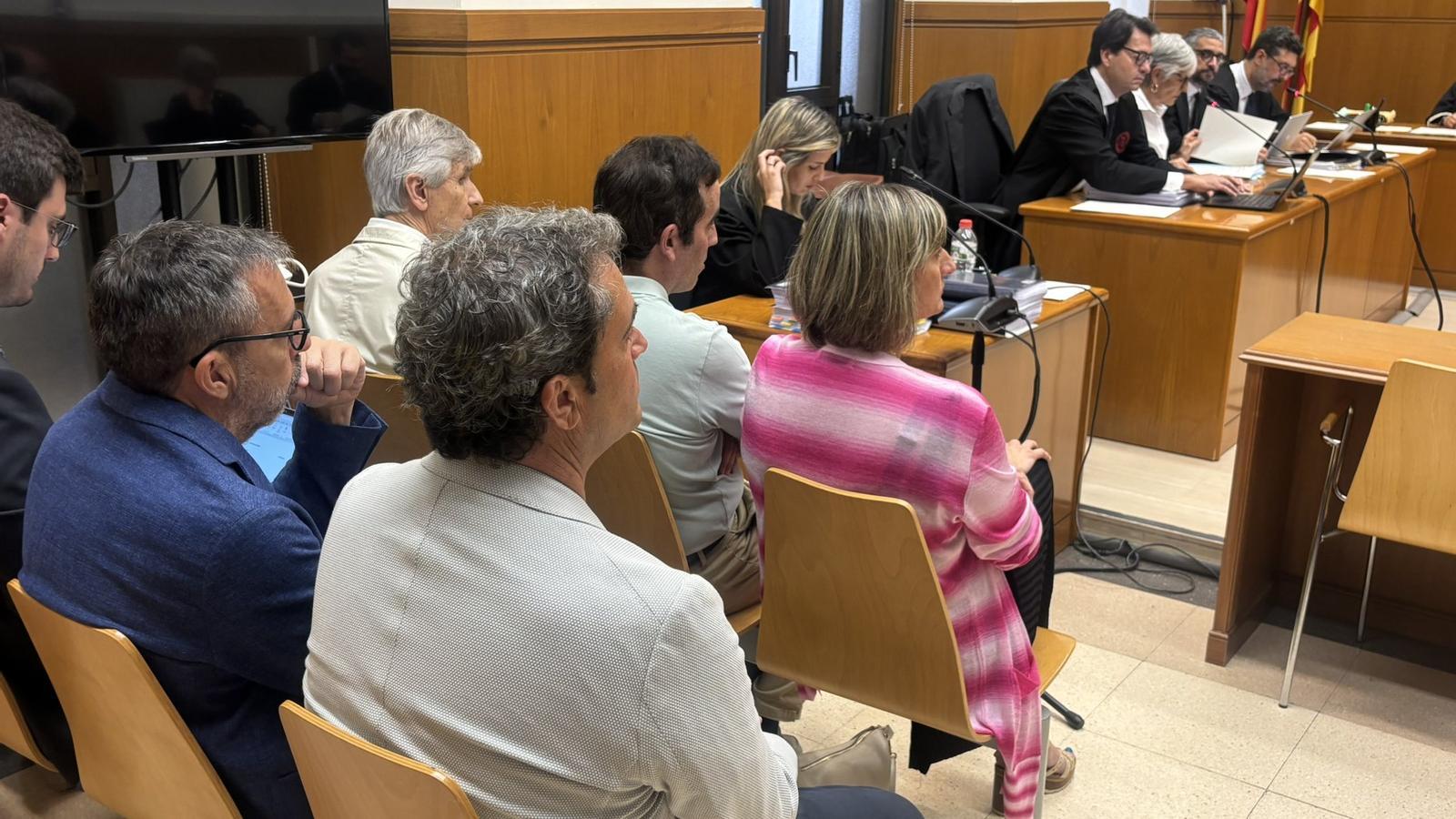
BarcelonaThe Barcelona Court acquits Alba Vergés and Josep Maria Argimon. The court that judged the two former Health ministers has exonerated them of the accusation that hung over them: "discriminating" against national police and civil guards in the COVID vaccination campaign and vaccinating the Mossos d'Esquadra faster than them. The ruling, to which ARA has had access, states that the Health Department prioritized health criteria, especially age, and also acquits the rest of the former department officials who sat in the dock: Marc Ramentol, Adrià Comella, and Xavier Rodríguez.
Furthermore, the court has ordered the police associations Jupol and Jucil to pay the costs of the proceedings; they acted as the prosecution in the case and maintained their request for sentences of up to 15 years of disqualification until the end of the trial, when the Prosecutor's Office withdrew them. These two entities will have to cover the trial expenses, except for the defense of Xavier Rodríguez, the only one against whom they withdrew the accusation.
The three judges who signed the ruling base their argument on the fact that it has not been proven that the accused acted with the intent to discriminate, as would be necessary for the crime of prevarication for which they were accused. This crime only applies to public officials or judges, and consists of issuing an unjust resolution intentionally, knowing that it contravenes the law.
In fact, the judges explain that this lack of intent among the former Health officials is compatible with the 2021 ruling in which the High Court of Justice of Catalonia (TSJC) convicted the Generalitat, in the civil court, for discriminating against the officers with the vaccination schedule and forced them to vaccinate them within a period of ten days. The ruling published this Monday, from the criminal jurisdiction, clarifies that a situation can be discriminatory without there being intent, an element that would be necessary for a criminal conviction. "We have to rule on an unjust decision," they explain.
"Everything was prepared"
The judges insist that "it is unquestionable that everything was prepared" to vaccinate the officers as soon as the vaccination centers and censuses were chosen. In fact, they recall that it was the affected police forces themselves that asked to be vaccinated outside the general vaccination system, because they preferred to receive the doses in their own facilities instead of receiving them in public health centers. The judges also point out that making the censuses of officers to be vaccinated was much easier in the case of the Mossos d'Esquadra and the local police, because the Generalitat already has their data. Furthermore, they make it clear that the vaccination with AstraZeneca, which was the one the police were receiving, was suspended when it was decided to prioritize the population over 60 years of age and after cases of thrombosis as side effects.
Beyond the specific circumstances that interfered with the pace of vaccination, the judges highlight that analyzing this case has been especially complicated taking into account that the vaccination process itself already entailed "evident difficulties," not only in the case of the police. "As anyone who lived through such a turbulent time knows, in the implementation of the vaccines, situations of paralysis occurred. The fear of side effects meant that vaccination with certain vaccines was suspended, and this necessarily implied delays," the judges explain.
The investigation of this case began in an instruction court in Barcelona, which elevated it to the TSJC because at that time Vergés continued to be protected by parliamentary immunity as first vice-president of the Parliament and deputy of ERC. In 2022, the TSJC ended up ruling that there was no evidence against Vergés, but she was investigated again when Argimon provided the court with some WhatsApp messages that confirmed that she was informed of everything.
